Departure
94%
vs 95% ▼ 1
 MY FS FLIGHTS
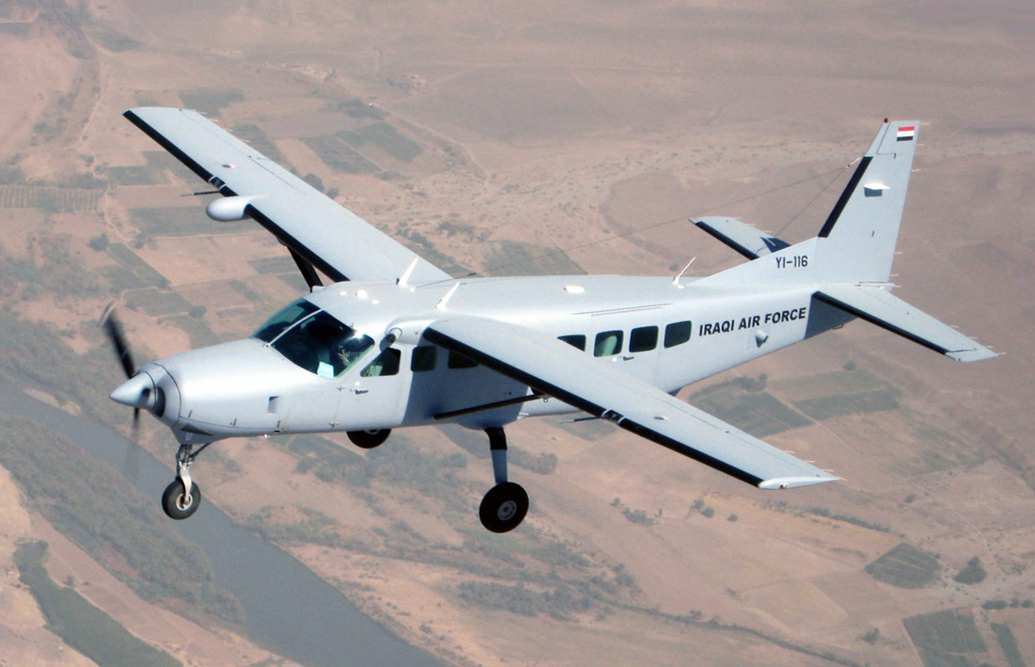
The Cessna 208B Grand Caravan is a single-engine, high-wing turboprop developed by Cessna as a stretched, higher-capacity derivative of the original 208 Caravan, built primarily to satisfy FedEx's demand for greater cargo volume. It is the largest single-engine aircraft Cessna has produced, prized for its simple systems, rugged fixed-gear airframe and short-field capability, and it remains a mainstay of feeder cargo, commuter and utility operations worldwide, making it a natural subject for simulator pilots interested in turboprop bush and regional flying.
The Cessna 208B Grand Caravan is a single-engine, high-wing turboprop aircraft with fixed tricycle landing gear, built in the United States by Cessna. It is the largest single-engine airplane Cessna has ever produced and is used across a wide range of missions including passenger transport, cargo hauling, medical evacuation and aerial survey work. It typically requires only a single pilot and is known for its durability, payload capacity and adaptability to rough, remote airstrips.
Cessna delivered the first Caravan in 1985, and the type's early success was driven largely by FedEx's requirements as a cargo feeder aircraft. FedEx discovered that its original 208 Caravans were limited by cabin volume rather than by weight, so Cessna stretched the fuselage by 20 inches ahead of the wing and 28 inches behind it, adding 34 percent more internal volume. This produced the 208B, marketed in cargo configuration as the Super Cargomaster. Cessna delivered the first Grand Caravan, the passenger-oriented version of the stretched 208B, in 1990. The type has since been continuously refined, culminating in the Grand Caravan EX variant with a more powerful engine.
The 208B is a strut-braced high-wing monoplane with fixed tricycle landing gear, powered by a Pratt & Whitney Canada PT6A-114A turboprop engine developing 675 horsepower in the standard Grand Caravan. The stretched fuselage gives the 208B a cargo volume of 340 cubic feet, with an optional belly cargo pod adding a further 111.5 cubic feet and 1,090 pounds of capacity. The cabin can be configured to seat up to 14 occupants or converted for cargo-only use, with a payload capacity of up to 3,675 pounds. The aircraft is unpressurized, and systems are kept deliberately simple; a chemical toilet is available as an option for passenger configurations.
The standard 208B Grand Caravan has a maximum cruise speed of approximately 162 knots (186 mph) and a range of up to 964 nautical miles, with a maximum operating altitude of 25,000 feet. In practice the aircraft is commonly flown up to around 23,700 feet, provided pilot and passengers use supplemental oxygen. It possesses strong short takeoff and landing (STOL) capability, allowing operation from unpaved or minimally developed airstrips. Aside from the starting procedure for its Pratt & Whitney PT6A turbine, handling characteristics are described as not being markedly different from a basic piston-engine trainer such as the Cessna 172.
The original Model 208 Caravan is roughly four feet shorter than the 208B and was the baseline design before the fuselage stretch. The 208B Grand Caravan is the lengthened variant, developed in cargo form as the Super Cargomaster to meet FedEx's volume requirements and later offered in passenger configuration. The Grand Caravan EX is a further development fitted with a more powerful 867-shaft-horsepower Pratt & Whitney PT6A-140 engine, offering a maximum cruise speed of around 185 knots, a range of over 900 nautical miles and a useful load exceeding 3,500 pounds.
The 208B has been widely used as a cargo feeder aircraft, most notably in support of FedEx's package network, as well as for commuter and charter passenger services, air ambulance and medevac work, and aerial survey missions. Its STOL performance and rugged, simple systems have made it particularly suited to operations in remote or rugged areas with limited runway infrastructure, and it continues to be a popular choice for operators needing high payload capacity combined with single-pilot operation.
For a simulator pilot, the Grand Caravan offers an accessible introduction to turboprop single-engine flying: its systems are straightforward, and beyond the turbine start sequence its handling is not dramatically different from a light piston trainer. Its combination of load-carrying ability, unpressurized cabin, and strong short-field performance make it a natural platform for bush-style and utility flying scenarios, reflecting the varied cargo, passenger and remote-area roles it performs in real-world service.