Departure
83%
vs 95% ▼ 12
 MY FS FLIGHTS
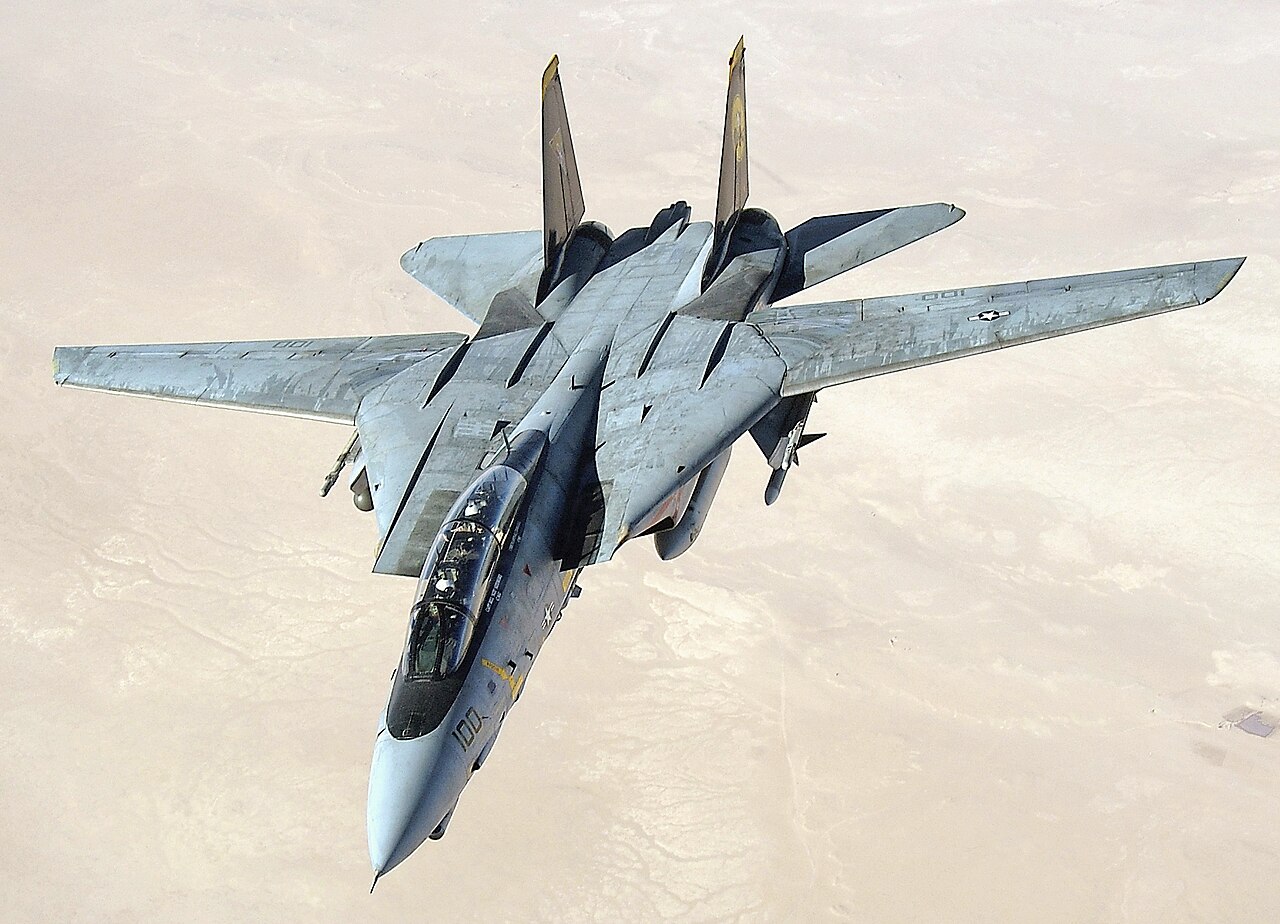
The Grumman F-14D Tomcat, known as the Super Tomcat, was the final and most advanced production variant of the United States Navy's long-serving carrier-based air superiority and fleet-defense fighter. It combined the swing-wing airframe of earlier Tomcats with uprated engines and modernised avionics, and it represents the ultimate expression of the Tomcat family before the type's retirement in favour of the F/A-18E/F Super Hornet.
The F-14D was the last and most capable production model of the Grumman F-14 Tomcat family, a twin-engine, two-seat, variable-sweep-wing fighter built for the United States Navy. Designed primarily as a long-range fleet-defense interceptor operating from aircraft carriers, the Tomcat family also took on strike and reconnaissance roles later in its career, and the D model was intended to bring the airframe up to a common, modernised standard before the type's eventual retirement.
The F-14D emerged as the final development stage of the Tomcat programme, following the original F-14A and the interim F-14B upgrade. It was conceived to address the persistent underpowering and avionics obsolescence of earlier Tomcats by combining a modern engine fit with improved radar and cockpit systems, making it the definitive version of the airframe before Tomcat production and, later, service life came to a close.
The F-14D retained the swing-wing, twin-tail configuration and side-by-side twin-engine layout of the Tomcat family, but was fitted with General Electric F110-series engines in place of the original Pratt & Whitney powerplants, addressing the thrust and reliability shortcomings of the earlier A model. It also introduced digital avionics and a more capable radar fit compared with the F-14A, giving the crew improved detection and tracking performance for both the fleet-defense and strike missions the type eventually undertook.
The switch to more powerful and more reliable engines in the F-14D gave it markedly better acceleration, climb and overall thrust-to-weight performance than the original F-14A, correcting one of the most criticised aspects of the earlier Tomcat variants. Combined with its variable-sweep wing, the aircraft retained the type's characteristic ability to operate efficiently across a wide speed range, from carrier approach speeds up to high-speed intercept profiles.
The F-14D stood as the final variant in a lineage that began with the F-14A and continued through the re-engined F-14B, representing the culmination of incremental upgrades to engines and avionics across the Tomcat programme. A small number of F-14A airframes were also brought up to a similar standard through rebuild programmes, blurring the line between new-build D models and upgraded earlier aircraft.
Like the rest of the Tomcat family, the F-14D served exclusively with the United States Navy from carrier decks, initially in the fleet-defense role for which the type was designed and later increasingly in precision strike and reconnaissance missions as the Tomcat's role broadened in its final years of service. The type was retired as the Navy transitioned its carrier air wings to the F/A-18E/F Super Hornet.