
Departure
91%
vs 95% ▼ 4
Track every flight, analyse your performance,
and master your flying skills with My FS Flights
Get 10 flights free every month!
Tracked and analysed flights over miles
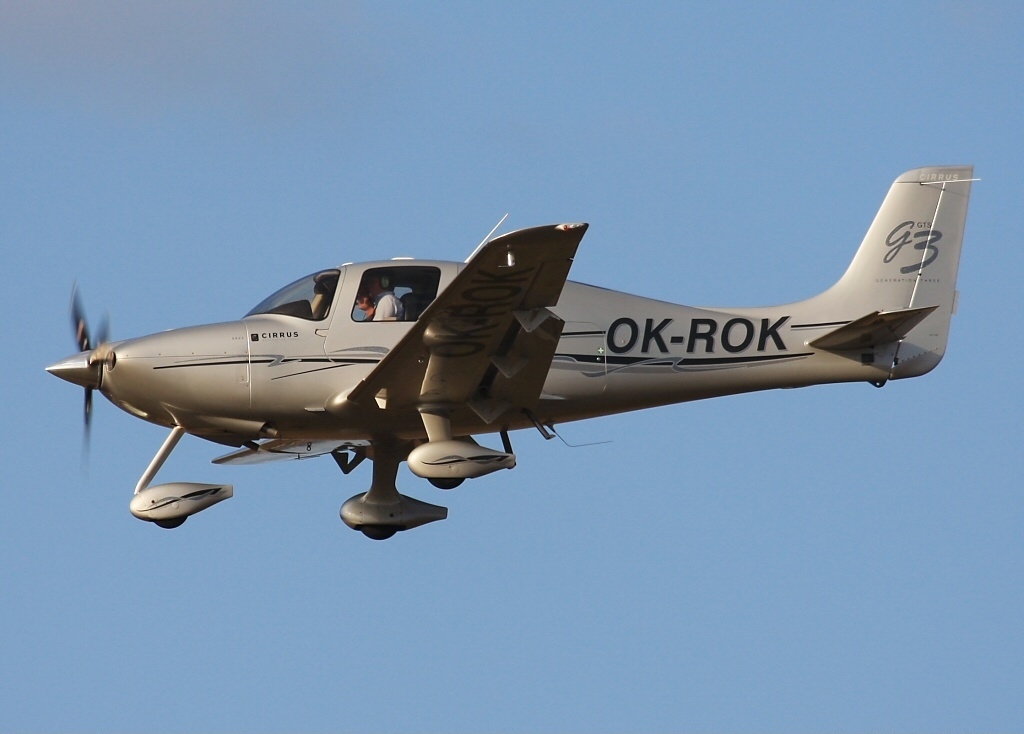
The Cirrus SR22 is a single-engine, four- to five-seat composite aircraft built by Cirrus Aircraft of Duluth, Minnesota, and has been in continuous production since 2001. Developed from the smaller SR20, it introduced a full glass cockpit to light general aviation and became the first certified aircraft to carry a whole-airframe parachute as standard equipment. It has been the world's best-selling general aviation aircraft every year since 2003, making it one of the most familiar and influential types a simulator pilot is likely to encounter.
The SR22 is a low-wing, cantilever monoplane of composite construction with fixed tricycle landing gear, built by Cirrus Aircraft as a civil utility and personal-travel aircraft. It is a more powerful derivative of the Cirrus SR20, offering a larger wing, greater fuel capacity and a nose-mounted piston engine of 310 or 315 horsepower depending on model. The type is distinguished within its class by side-stick
The SR22 was certified in November 2000 and entered production in 2001 as a more powerful development of the earlier SR20, which had itself been introduced in 1999. Together the SR20 and SR22 marked a departure from earlier Cirrus kit-plane designs, bringing all-composite construction, improved aerodynamics, larger windows and an ergonomically designed side-yoke cockpit into certified general aviation. In 2003 a Cirrus SR22 (registration N266CD) became the first single-piston-engine aircraft certified by the FAA with a fully integrated glass panel, a milestone that is now marked by the aircraft's inclusion in the Smithsonian National Air and Space Museum's Thomas W. Haas We All Fly exhibition, which opened in 2022. The aircraft's defining safety feature, the Cirrus Airframe Parachute System (CAPS), traces back to co-founder Alan Klapmeier surviving a mid-air collision in 1985, after which he vowed that any aircraft he and his brother Dale designed would include a parachute system. Cirrus introduced the SR22 G2 in 2004, with fuselage modifications, followed by the G3 in 2007, which revised the wing and landing gear. There was no G4; the G5 followed in 2013 with an increase in gross weight to 3,600 lb (1,633 kg) and a standard five-seat cabin arrangement, receiving further minor updates in 2014 including integrated LED lighting and Beringer brakes. Cirrus continued to refine the design through the 2010s, adding Bluetooth connectivity, remote keyless entry and improved lighting in 2016, before launching the G6 in 2017 with major avionics upgrades and new navigation lighting. A training-oriented TRAC variant followed in September 2019, and in January 2020 Cirrus introduced the Cirrus IQ mobile app for remote aircraft monitoring. In January 2022 Cirrus announced speed and aesthetic improvements to the G6, including a 9-knot increase in cruise speed. The G7 generation arrived in January 2024 with a substantial overhaul of interior and avionics bringing the cockpit closer to that of the Cirrus Vision Jet, followed by the G7+ in May 2025, which introduced the Safe Return emergency autoland system, making the SR22 the first piston aircraft to offer autoland. By December 2025 Cirrus had completed its 11,000th SR-series aircraft. With 8,246 SR22 units delivered between 2001 and 2024, and 10,178 when combined with SR20 production, the type is the most-produced general aviation aircraft of the 21st century and the most-produced aircraft made from composite material, accounting for nearly half of the entire piston aircraft market.
The SR22 is built as a low-wing cantilever monoplane of composite construction, with fixed, non-retractable tricycle landing gear featuring a castering nose wheel and steering achieved through differential braking on the main wheels. The standard engine is a nose-mounted 310 hp (231 kW) Continental IO-550-N, while turbocharged models use a 315 hp (235 kW) Continental TSIO-550-K driving, on later aircraft, a four-blade composite propeller in place of the earlier three-blade Hartzell unit. The four-seat cabin, which became a standard five-seat arrangement from the G5 onward, is accessed through doors on both sides of the fuselage; the cabin measures 49 in (124 cm) wide and 50 in (127 cm) high. Base weight is 2,272 lb (1,028 kg), with a useful load of 1,328 lb (606 kg) and a cabin payload of 963 lb (439 kg) with three hours of trip fuel and 45 minutes of reserve. Wingspan is 38 ft 4 in (11.68 m), overall length 26 ft (7.92 m) and height 8 ft 11 in (2.7 m). The SR-series is the only production aircraft in its class fitted with side-stick flight controls, described by the manufacturer as a side yoke that combines aspects of a traditional yoke. Standard safety features across the range include the Cirrus Airframe Parachute System (CAPS), Electronic Stability and Protection (ESP) built into the digital three-axis autopilot, flap airspeed protection, a NASA-developed cuffed wing with a discontinuous leading edge intended to reduce the potential for spin entry after an inadvertent stall, and stick shakers integrated into the side yokes. The avionics fit centres on the Cirrus Perspective+ system by Garmin, with 10-inch (later optional 12-inch) screens, Synthetic Vision Technology, dual WAAS GPS/Comm/Nav radios, a GFC 700 autopilot, dual ADAHRS, ADS-B In and Out, and a 406 MHz ELT. Optional equipment includes a Known Ice Protection system using a TKS-based fluid system with dual windshield sprayers and dual TKS tanks, an Enhanced Vision System using infrared imaging, and active-traffic and terrain-awareness upgrades.
With the standard 310 hp Continental IO-550-N engine, the SR22 has a maximum cruise speed of 183 KTAS and a stall speed with flaps of 60 KCAS. Takeoff distance is 1,082 ft (330 m), extending to 1,868 ft (569 m) over a 50 ft obstacle, with a climb rate of 1,270 ft/min (6.45 m/sec) and a maximum operating altitude of 17,500 ft (5,334 m). Landing ground roll is 1,178 ft (359 m). The turbocharged SR22T variant raises maximum cruise speed to 213 KTAS and maximum operating altitude to 25,000 ft, with a maximum range of 1,021 nm at 55 percent power and a useful load of 1,238 lb. The turbonormalizing conversion, which includes twin turbonormalizers, twin intercoolers, built-in oxygen and a lightweight composite propeller, reduces useful load compared with the naturally aspirated model, a reduction compounded further if air conditioning is also fitted.
The SR22 line began with the base SR22, a more powerful derivative of the SR20 with a larger wing, greater fuel capacity and a 310 hp Continental IO-550-N engine. The SR22 Turbo, introduced in 2006, added a Tornado Alley turbonormalizing kit under a Supplemental Type Certificate, later formalised as the factory SR22T with the 315 hp TSIO-550-K engine. Generational airframe updates followed: the G2 (2004) revised the fuselage, and the G3 (2007) modified the wing and landing gear. There was no G4. The G5 (2013) increased gross weight to 3,600 lb and introduced a standard five-seat cabin, receiving further refinement in 2014. The G6 (2017) brought major avionics and lighting upgrades. A dedicated training variant, the TRAC, was introduced in September 2019 with a simplified interior, more durable seating, a backseat radio transmit switch, integrated engine indication and crew alerting systems, and simulated retractable landing gear controls for instructional use, while retaining permanently fixed gear. The G7 (announced January 2024) overhauled the interior and avionics to bring the cockpit closer to that of the Cirrus Vision Jet, and the G7+ (May 2025) added the Safe Return emergency autoland system, the first such system on a piston aircraft.
The SR22 has served predominantly as a personal and private-travel aircraft, and the SR22 and SR22T have been the best-selling four- to five-seat fixed-wing aircraft in the world for over a decade running, with the SR22 series the best-selling general aviation airplane every year since 2003. Its CAPS whole-airframe parachute has become closely associated with the type, earning it the nickname "the plane with the parachute" and contributing significantly to its commercial success. The introduction of the TRAC variant in 2019 extended the type's role into flight training, with features specifically aimed at cadets and instructors. The type's cultural and technical significance has been formally recognised: a 2003 SR22 is displayed in the Smithsonian National Air and Space Museum's Thomas W. Haas We All Fly general aviation exhibition, marking its status as the first single-piston-engine aircraft certified with a glass cockpit.
For a simulator pilot, the SR22 offers a distinctive handling experience built around its side-stick, or "side yoke", controls rather than a traditional centre-mounted yoke, a feature unique to the SR-series among production aircraft in its class. The aircraft's heavy reliance on the Cirrus Perspective+ Garmin avionics suite, with its large synthetic-vision displays and GFC 700 autopilot, makes it a useful platform for practising glass-cockpit workflow, and the Electronic Stability and Protection system built into the autopilot is designed to passively correct unusual attitudes even when the autopilot itself is not engaged. The cuffed wing leading edge and integrated stick shakers reflect a design philosophy oriented toward forgiving stall behaviour, while the CAPS parachute system, standard across the range, underlines the type's identity as a safety-first personal aircraft. Its consistent status as the best-selling aircraft in its class, along with continuing generational upgrades culminating in the G7 and G7+ autoland-equipped models, means the SR22 represents a recognisable and technically rich modern piston single for those wanting to fly a contemporary, well-equipped touring aircraft.