Departure
95%
vs 95%
 MY FS FLIGHTS
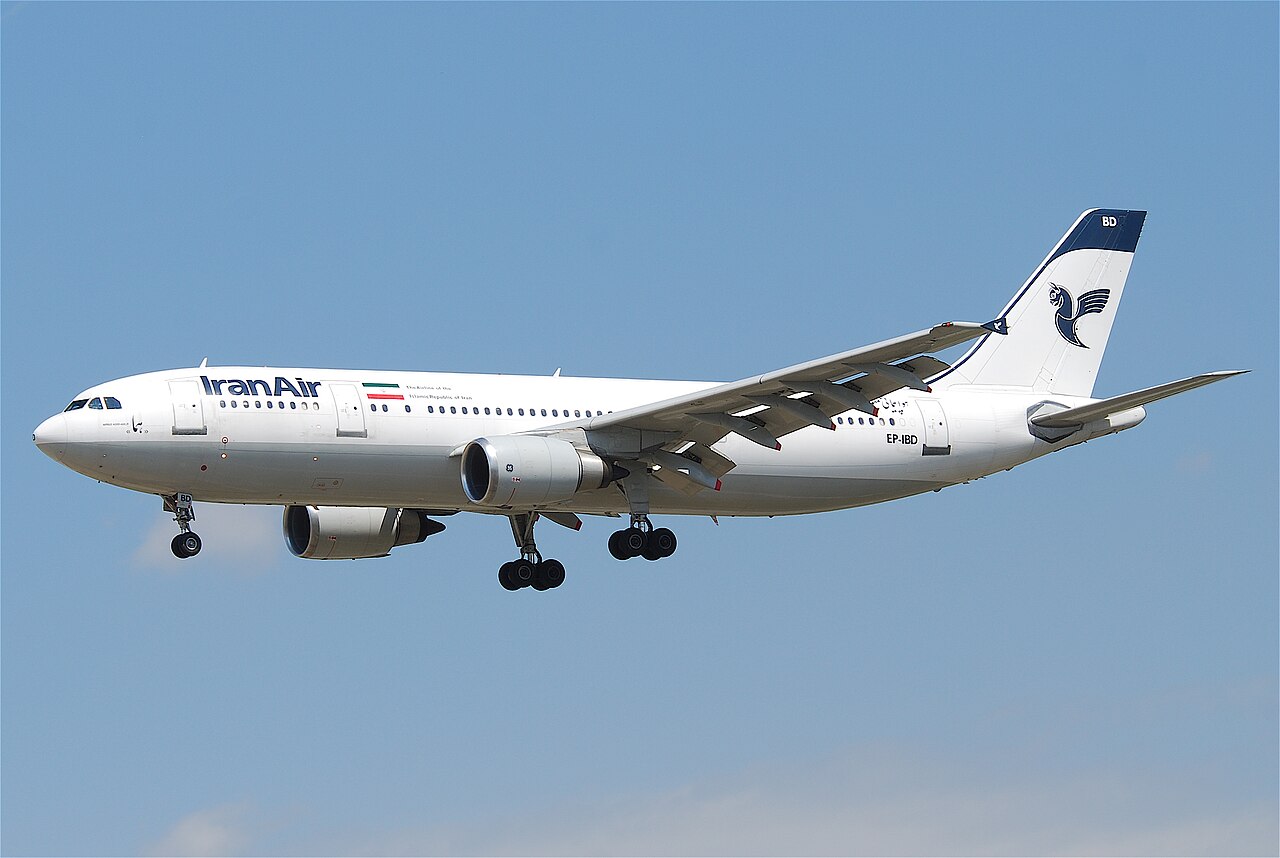
The Airbus A300 was Airbus's first production aircraft and the world's first twin-engine, wide-body airliner, developed by the multinational Airbus Industrie consortium and manufactured from 1971 to 2007. Seating around 266 passengers over medium-haul ranges, it broke the tri-jet and quad-jet convention for large aircrav and became the foundation for the entire Airbus wide-body family. For a simulator pilot it offers a distinctive experience among Airbus types: a conventional yoke and no fly-by-wire, giving it a more traditional feel than later Airbus fly-by-wire designs.
The Airbus A300 is a short- to medium-range wide-body twin-engine jet airliner and the first aircraft produced by Airbus Industrie, the European consortium that later became Airbus. It was the world's first twin-engine, wide-body airliner, breaking from the three- and four-engine convention that had dominated large civil aircraft design up to that point. Manufactured between 1971 and 2007, it became the basis for the entire subsequent Airbus wide-body lineage, including the A310, A330, A340 and the oversize Beluga transport.
European ambitions for a large new airliner date to the 1960s, when British and French manufacturers such as Hawker Siddeley, the British Aircraft Corporation and Sud Aviation separately studied 200-seat designs, including a stretched Hawker Siddeley Trident and the BAC Two-Eleven. A 1965 British government study, the Plowden Report, concluded that fragmented national programmes made British aircraft production up to 20 percent more costly than American equivalents and recommended multinational collaboration. On 26 September 1967 the French, West German and British governments signed a Memorandum of Understanding to develop a 300-seat Airbus. Frenchman Roger Beteille became technical director and Henri Ziegler, formerly of Sud Aviation, became general manager, with German politician Franz Josef Strauss chairing the supervisory board. A revised, 250-seat configuration avoiding the need for a new Rolls-Royce RB207 engine was proposed in December 1968 and renamed the A300B. The British government withdrew from the project on 10 April 1969, prompting France and West Germany to reach a firm agreement on 29 May 1969; Hawker Siddeley remained on as a contractor, developing the wings. Airbus Industrie GIE was formally created on 18 December 1970 to develop and produce the aircraft, with its headquarters moving to Toulouse in January 1974. The A300 prototype first flew on 28 October 1972, and the type entered commercial service with launch customer Air France on 23 May 1974. Demand was slow at first but grew steadily as the aircraft proved itself in service. The improved, two-crew A300-600 first flew on 8 July 1983 and entered service later that year. Production ended in July 2007 after 561 deliveries.
The A300 has a fuselage diameter of 5.64 m (18 ft 6 in), with overall length ranging from 53.61 m (175 ft 11 in) to 54.08 m (177 ft 5 in) depending on variant, and a wingspan of 44.84 m (147 ft 1 in). The cabin is a spacious twin-aisle layout typically arranged eight-abreast, seating around 266 passengers in a two-class configuration, with higher-density layouts accommodating over 300, and freight variants able to carry up to 22 standard LD3 containers. Initial variants were powered by a choice of General Electric CF6-50 or Pratt & Whitney JT9D turbofans and used a three-crew flight deck. The improved A300-600 introduced a two-crew cockpit alongside updated General Electric CF6-80C2 or Pratt & Whitney PW4000 engines. Unlike most later Airbus types, the A300 retains a conventional control yoke and does not use fly-by-wire flight controls. It was among the first airliners to introduce a glass cockpit, replacing traditional mechanical dials with electronic flight instrument displays, which simplified flight management for its crews.
The A300 typically carries around 247 passengers in two classes over a range of 5,375 to 7,500 km (2,902 to 4,050 nmi; 3,340 to 4,660 mi). The A300-600R variant has a maximum range of 7,500 km (4,050 nmi), a cruise speed of Mach 0.78 (833 km/h or 518 mph), and a service ceiling of 40,000 ft (12,200 m). Its capacity is broadly similar to the Boeing 767-300, introduced in 1986, though the A300 lacked the range of the extended-range 767-300ER.
The original A300B established the aircraft's basic configuration, powered by General Electric CF6-50 or Pratt & Whitney JT9D engines and flown with a three-person flight crew. The A300-600 was a significant update, introducing a modernised two-crew cockpit and more powerful CF6-80C2 or PW4000 engines; it first flew on 8 July 1983 and entered service later that year. The platform was also adapted into freighter versions, both as original builds and through passenger-to-freighter conversions, which became especially popular with cargo operators from the 1990s onward. The A300's fuselage cross-section was carried over to the smaller A310, first flown in 1982, and retained for the larger four-engined A340 (1991) and larger twin-engined A330 (1992). The type also formed the basis of the A300-600ST Beluga oversize cargo transport, which first flew in 1994.
Launch customer Air France introduced the A300 into service on 23 May 1974. After a slow initial reception, orders picked up over three decades as the type proved itself in early service. During the 1990s the A300 became particularly popular with cargo operators, both as passenger-to-freighter conversions and as purpose-built freighters, owing to its combination of range and payload capacity. Production ceased in July 2007 after 561 aircraft had been delivered. The type remains in limited passenger service and continues in cargo operations, with principal current operators including FedEx Express, UPS Airlines and European Air Transport Leipzig; Iran Air remains its largest remaining passenger operator. As of December 2025 some 209 A300 family aircraft remain in commercial service.
For a pilot used to modern Airbus fly-by-wire aircraft, the A300 stands apart in retaining a conventional yoke rather than a sidestick, and it has no fly-by-wire flight control system, giving it handling characteristics closer to traditional airliners of its generation than to later Airbus products. Early-build aircraft require a three-person flight deck crew, while the improved A300-600 introduced a modernised two-crew glass cockpit that simplified flight management. Its role as the progenitor of the entire Airbus wide-body family, and its continued relevance as a cargo workhorse for major freight operators, make it an interesting type for simulator pilots wanting to fly a genuine pioneer of twin-engine wide-body airliner design.