Departure
89%
vs 95% ▼ 6
 MY FS FLIGHTS
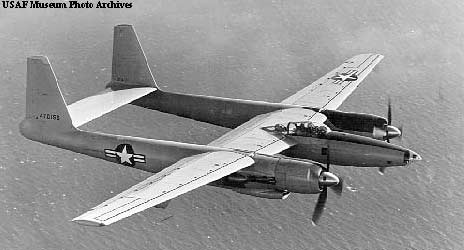
The Hughes XF-11 was a prototype long-range photographic reconnaissance aircraft designed by Howard Hughes and built by the Hughes Aircraft Company for the United States Army Air Forces, first flown in 1946. A twin-boom, twin-engine machine resembling a much enlarged Lockheed P-38 Lightning, it was intended to give the USAAF a fast, high-altitude reconnaissance platform capable of reaching targets across the Pacific. Only two prototypes were completed and the type never reached production, but it remains a fascinating study for simulator pilots owing to its dramatic first flight, which nearly killed Hughes, and its unusual contra-rotating propeller installation.
The XF-11 was a prototype military reconnaissance aircraft, designed and personally flown by Howard Hughes and manufactured by the Hughes Aircraft Company for the United States Army Air Forces. It was a twin-engine, twin-boom, all-metal design that visually recalled the Lockheed P-38 Lightning and Northrop P-61 Black Widow, though considerably larger and heavier than either. Conceived to meet the same USAAF requirement as the Republic XF-12 Rainbow, it was intended as a fast, long-range, high-altitude photographic reconnaissance platform, crewed by a pilot and a navigator/photographer. The programme was cancelled after only two prototypes were built, and the aircraft was briefly redesignated XR-11 in 1948 before the project ended entirely.
The XF-11 grew directly out of Hughes' privately funded D-2, an aircraft he had originally promoted as a fighter but which the USAAF Air Materiel Command rejected, partly over its wooden Duramold construction and partly because it fitted neither the fighter nor bomber role. Determined to secure a military contract, Hughes lobbied hard in Washington, including enlisting his father's friend, Secretary of Commerce Jesse Holman Jones, who raised the project with President Franklin Roosevelt in June 1942 without conclusive result. Around the same time the USAAF was seeking a purpose-built long-range, high-altitude reconnaissance aircraft, driven by the need to cover targets in Japan that lay beyond the reach of most existing Allied aircraft following the loss of bases in China. A formal procurement effort began in January 1943, with preliminary specifications issued that April; Boeing proposed a modified B-29, Lockheed a reconnaissance version of its experimental XP-58, while the Hughes and Republic Aviation proposals became the XF-11 and XF-12 respectively. Hughes' cause was helped considerably when Colonel Elliott Roosevelt, the president's son and a USAAF reconnaissance commander, visited Hughes Aircraft in August 1943 while surveying proposals; Hughes' public relations agent lavishly entertained Roosevelt, who subsequently recommended the Hughes design to General Henry "Hap" Arnold. Arnold ordered 100 F-11s for delivery from 1944, overriding strong objections from the Air Materiel Command, which doubted Hughes Aircraft's industrial capacity, and later admitted he had approved the contract "much against my better judgment and the advice of my staff." A preliminary contract worth around 43 million dollars was issued on 11 October 1943, but was contested by Hughes over compensation for the D-2 and over USAAF-mandated changes to all-metal construction and self-sealing fuel tanks; negotiations dragged on for nearly ten months before a final contract was signed on 1 August 1944, with Hughes receiving 1.6 million dollars in reimbursement. Engine deliveries arrived seven months late, in September 1945, and management turmoil, including the firing of production chief Perrell after Hughes personally intervened, further delayed the programme. The first prototype was not completed until early 1946. It flew for the first time on 7 July 1946 from Hughes Aircraft's private airport at Culver City, California, with Hughes himself at the controls, but suffered a hydraulic failure that put one propeller into reverse pitch; Hughes elected to keep flying rather than following the test plan, and the aircraft crashed into three houses in Beverly Hills, destroying the prototype and critically injuring him. A second prototype, built without the contra-rotating propellers of the first, flew in April 1947 and was used briefly for testing before the whole programme was cancelled, with the intended reconnaissance role instead filled by the Northrop F-15 Reporter and Boeing RB-50 Superfortress, both derived from existing combat types already in production. The second aircraft was scrapped in 1949. The controversy surrounding the contract, cost overruns, and delays led the United States Senate to investigate both the XF-11 programme and Hughes' H-4 Hercules flying boat in 1946-1947.
The XF-11 was an all-metal, twin-engine, twin-boom aircraft with tricycle landing gear, configured for a crew of two, a pilot and a navigator/photographer, in keeping with its dedicated reconnaissance role. The first prototype was 65 feet 5 inches (19.939 metres) long, with a wingspan of 101 feet 4 inches (30.886 metres) and a height of 23 feet 2 inches (7.061 metres). Empty weight was 37,100 pounds (16,828.3 kilograms) and maximum takeoff weight was 58,300 pounds (26,444.4 kilograms). Power came from two Pratt & Whitney R-4360-31 (Wasp Major TSB1-GD) air-cooled, supercharged, four-row 28-cylinder radial engines of 4,362.49 cubic inches (71.49 litres) displacement each, with a 7:1 compression ratio. Each engine was rated at 2,550 horsepower at 2,550 rpm at 5,000 feet (1,524 metres) for normal power, and 3,000 horsepower at 2,700 rpm for takeoff; each measured 4 feet 4.50 inches (1.334 metres) in diameter, 9 feet 6.25 inches (2.902 metres) in length, and weighed 3,506 pounds (1,590 kilograms). On the first prototype, each engine drove a pair of contra-rotating four-bladed propellers through a 0.381:1 reduction gearbox, a complex system that used centrifugal force and hydraulic pressure to vary blade angle of attack in flight. The second prototype dispensed with the contra-rotating propellers in favour of a more conventional single-propeller-per-engine arrangement. The design was intended to carry advanced camera systems for the photographic reconnaissance mission, and, unlike the wooden Duramold construction of the earlier D-2, was built entirely of metal at the USAAF's insistence.
Planned performance figures for the XF-11 called for a maximum speed of 450 miles per hour (724 kilometres per hour), a service ceiling of 44,000 feet (13,411 metres), and a range of 5,000 miles (8,047 kilometres). In practice, the type's flight test record was dominated by the failure of the first prototype rather than sustained performance evaluation. During the maiden flight on 7 July 1946, a hydraulic fluid leak caused the rear propeller of the right engine to move into reverse pitch after roughly an hour aloft. Rather than shutting down the affected engine and feathering its propellers to reduce drag, Hughes kept full power on the right engine while reducing power on the left in an attempt to limit the resulting adverse yaw, then tried to reach the Los Angeles Country Club rather than returning to Culver City. The aircraft could not be recovered and crashed into houses in Beverly Hills; an investigating board attributed the accident to pilot error, criticising Hughes for departing from the flight test plan and remaining airborne too long. The second prototype, flown for the first time in April 1947 without the earlier contra-rotating propeller arrangement, underwent only brief further testing before the programme was cancelled.
Two prototypes were built. The first, 44-70155, was fitted with contra-rotating four-bladed propellers on each engine and was destroyed in the July 1946 crash. The second, 44-70156, dispensed with the contra-rotating propellers in favour of a conventional arrangement and flew in April 1947; it was used briefly for testing before being scrapped in 1949. The type was redesignated XR-11 in 1948 shortly before the programme's end. No production F-11s were built despite an initial order for 100 aircraft in 1943.
The XF-11 never entered operational service. The 100-aircraft production order placed in 1943 was overtaken by delays that pushed the programme past the end of the Second World War, by which time the USAAF's reconnaissance requirement was being met by converted combat aircraft, the Northrop F-15 Reporter and Boeing RB-50 Superfortress, both cheaper derivatives of existing production types. With the production contract cancelled, the two XF-11 prototypes were used solely for company and USAAF test flying before the programme was terminated and the surviving airframe scrapped in 1949.
As only two prototypes were built and neither survives, there is no historical flying experience of the XF-11 beyond its brief and troubled test programme, most notably Hughes' near-fatal first flight. For simulator pilots, the type has been recreated for Microsoft Flight Simulator by developer Flying Fries, published by Just Flight, offering an opportunity to fly the aircraft's twin-boom, contra-rotating-propeller configuration and to explore the handling characteristics implied by its size, power, and unconventional propulsion in a way that was never possible in real-world service.