Departure
94%
vs 95% ▼ 1
 MY FS FLIGHTS
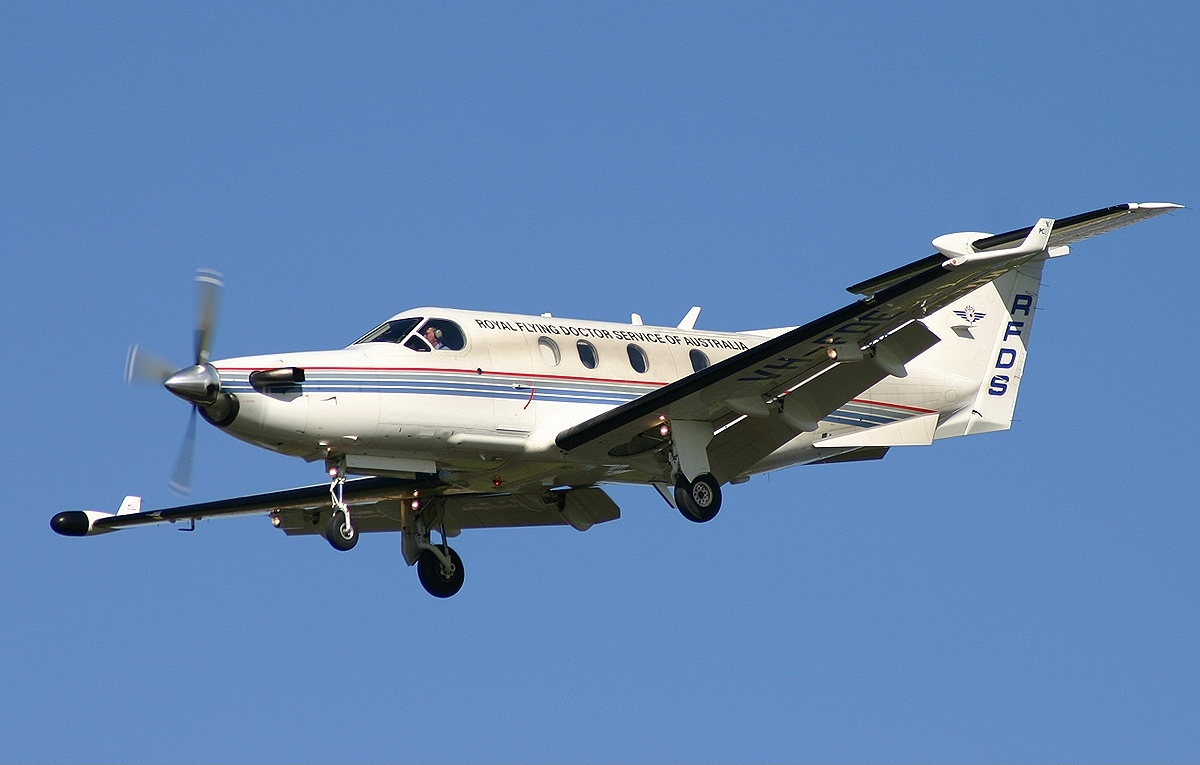
The Pilatus PC-12 is a pressurised, single-engine turboprop business and utility aircraft built by Pilatus Aircraft of Stans, Switzerland, since 1991. Combining a large cabin, a big aft cargo door and genuine short and rough-field capability, it has become one of the most versatile aircraft in its class, serving everything from corporate transport and fractional ownership programmes to air ambulance work, government surveillance and military duties. For a simulator pilot it represents the archetypal single-engine turboprop workhorse: fast, long-legged and able to operate from airstrips that would defeat most cabin-class aircraft.
The PC-12 is a pressurised, single-engine, turboprop-powered business aircraft produced by Pilatus Aircraft of Stans, Switzerland, since 1991. It was conceived as a high-performance utility machine, fitted with a large aft cargo door in addition to its main passenger door, allowing it to switch between passenger, cargo and combination roles. That versatility has made it popular across a very wide range of operators, from corporate flight departments and fractional ownership schemes to small regional airlines, air-ambulance services and government agencies such as police forces and armed services. The type entered service in 1994 and remains in production, with the 2,000th example delivered in May 2023.
Pilatus announced development of the PC-12 in October 1989 at the National Business Aviation Association convention, though the project had already been underway in secrecy for some time, with assembly of the first prototype begun before the announcement was made. Pilatus judged that no existing aircraft served the niche it had in mind: a single-engined type with a large cabin capable of high speed over long distances. Two prototypes were completed on 1 May 1991, with the first flight following on 31 May 1991. Certification, originally targeted for mid-1991, was delayed by a wing redesign that increased wingspan and added winglets to meet performance guarantees. The Swiss Federal Office of Civil Aviation issued the type certificate on 30 March 1994, followed by Federal Aviation Administration approval on 15 July 1994. Since then Pilatus has continually refined the aircraft, raising maximum takeoff weight, fitting more powerful engines, introducing new avionics, adding noise-reduction measures and new propellers, and offering improved interiors and inflight entertainment. Third-party firms such as Finoff Aviation Products have also produced aftermarket enhancement packages for the type. Pilatus opened a Chinese headquarters at Chongqing Liangjiang in December 2012 with plans for future Asia-Pacific manufacturing there, and from 2016 production of various PC-12 NG aerostructures moved to Tata Aircraft Systems in India, work previously carried out by PZL-Swidnik in Poland.
The PC-12 is built around a Pratt & Whitney PT6 turboprop driving a four-bladed propeller, feeding a pressurised cabin with a flat floor, a main passenger door and a large aft cargo door that allows freight, stretchers or bulky equipment to be loaded independently of passenger seating. Cabin volume has been quoted at around 330 cubic feet, with configurations ranging from six executive seats up to nine passengers in the current PRO model. The PC-12NG, launched at NBAA in 2007 and delivered from May 2008, introduced the more powerful Pratt & Whitney PT6A-67P engine, a Honeywell Primus Apex glass cockpit with automatic pressurisation control and cursor-controlled navigation inputs, and revised winglets. The PC-12NGX, announced at NBAA in October 2019, went further with a PT6E-67XP engine featuring full-authority digital engine control and a low-speed propeller mode to reduce cabin noise, updated Honeywell avionics with autothrottle, cursor control device and touchscreens, a cabin adapted from the PC-24 with windows 10 percent larger and new seating, scheduled maintenance intervals extended to 600 flight hours, and time between overhauls increased from 4,000 to 5,000 hours. The latest PC-12 PRO, announced in March 2025, introduces a new Advanced Cockpit Environment, ACE, powered by Garmin G3000 Prime, along with autoland capability, high-resolution touchscreens, a digital autothrottle, a redesigned overhead panel, digital autopilot and electronic stability and protection functions, plus a BMW Designworks interior with fully reclining seats, larger windows and a lavatory.
The PC-12NG raised maximum cruise speed to 280 knots true airspeed. The PC-12NGX increased this further to 290 knots true airspeed, equivalent to 537 km/h. The current PC-12 PRO is quoted with a take-off distance of 2,485 feet, a maximum cruise speed of 290 KTAS and a maximum range of 1,765 nautical miles. Throughout its development the aircraft has retained the ability to operate from short runways and unmade grass, gravel, earth or snow strips, giving it access to airfields that many other cabin-class aircraft cannot use.
The original PC-12 was followed by the PC-12NG, or Next Generation, launched in 2007 with a more powerful PT6A-67P engine and a Honeywell Primus Apex glass cockpit. A multipurpose derivative, the PC-12M, carries a more powerful electrical generation system to support mission equipment for roles such as flight inspection, air ambulance, aerial photography and aerial surveillance, and can be fitted with an optional utility door for parachute operations; in the United States this variant is marketed as the PC-12 Spectre special missions platform. The PC-12NGX, certified and announced in 2019, brought a FADEC-equipped PT6E-67XP engine, a low-speed propeller mode, enlarged cabin windows adapted from the PC-24, and extended maintenance intervals. The newest variant, the PC-12 PRO, was announced in March 2025 with deliveries expected from early autumn of that year, featuring the Advanced Cockpit Environment built around Garmin G3000 Prime avionics and a redesigned BMW Designworks cabin.
The PC-12's combination of cabin size, cargo capability and rough-field performance has attracted a broad customer base. The Royal Flying Doctor Service in Australia was the launch customer and remains a major operator, using the type for medical evacuation across remote regions. Fractional ownership programmes such as PlaneSense and regional operators such as Tradewind Aviation have built substantial fleets around the aircraft for corporate and scheduled use, while the United States Air Force is among the military users. Beyond passenger transport, PC-12 variants are used by government agencies and police departments for surveillance, flight inspection and other special missions, reflecting the aircraft's adaptability across civil, commercial and government roles.
For a simulator pilot the PC-12 offers the profile of a genuine long-range, high-speed single-engine turboprop combined with unusually rugged short-field ability, able to reach unpaved, grass, gravel or snow airstrips that most business aircraft cannot use. Later cockpit standards, from the Honeywell Primus Apex of the NG through to the Garmin G3000 Prime-based Advanced Cockpit Environment of the PRO with its digital autothrottle and autoland functions, bring the type into line with contemporary glass-cockpit business aircraft, while the underlying PT6 turboprop is widely regarded for its mechanical robustness. The aircraft's mix of size, performance and access to remote strips makes it a popular choice for pilots wanting a capable, versatile single-engine type that can credibly serve corporate, utility and bush-flying roles alike.