Departure
89%
vs 95% ▼ 6
 MY FS FLIGHTS
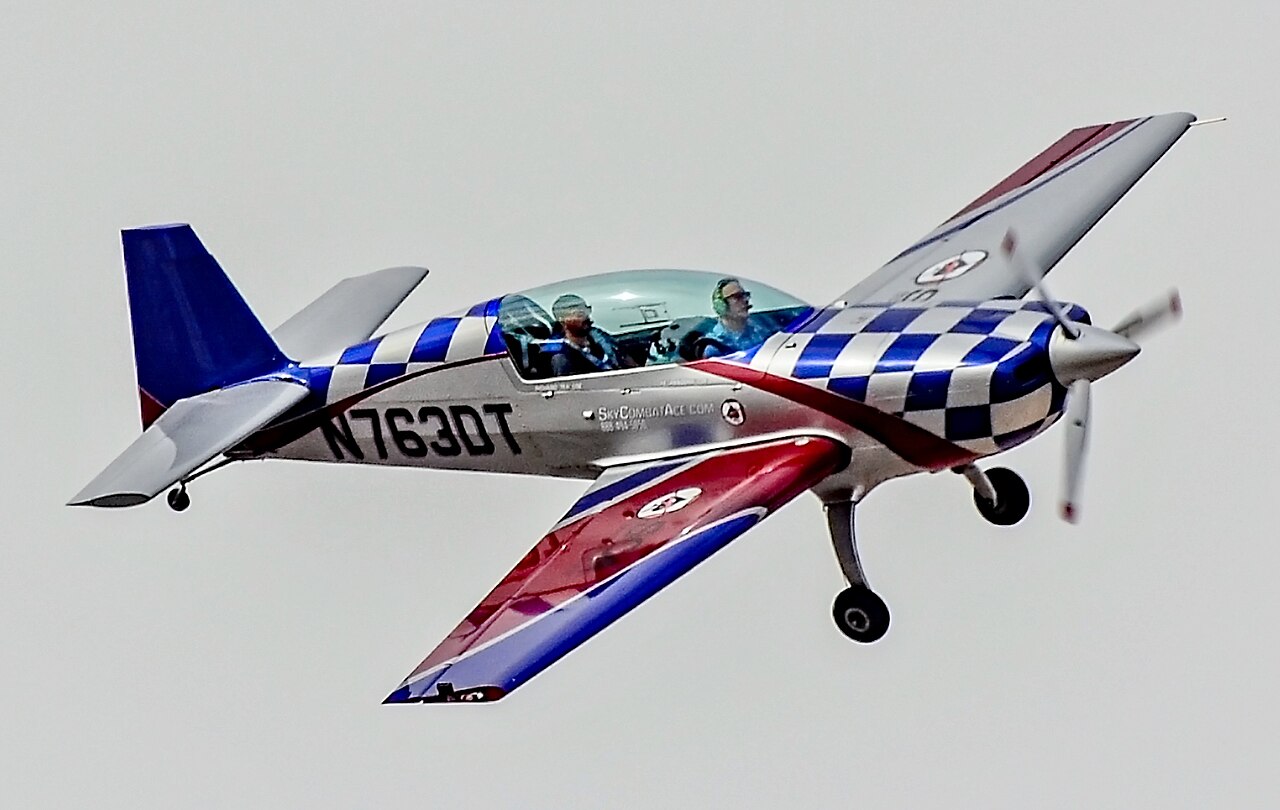
The Extra 330 is a German-built, single- and two-seat aerobatic monoplane from Extra Aircraft, developed as the direct successor to the long-running Extra 300 series and built specifically for unlimited-category competition and freestyle aerobatic flying. Powered by a 315 hp Lycoming AEIO-580-B1A and certified to extreme load factors, it has become the dominant type in world aerobatic championships since its introduction, making it a benchmark aircraft for pilots wanting to explore the outer limits of aerobatic performance.
The Extra 330 family comprises low-wing, taildragger aerobatic monoplanes produced by Extra Aircraft, a German manufacturer founded in 1980 by an accomplished aerobatic pilot. The range includes the single-seat Extra 330SC, built for the unlimited competitor or freestyle pilot, and the two-seat, tandem-arrangement Extra 330LX, intended for competition flying and aerobatic flying schools. Both share a common design philosophy of carbon composite wings mated to a steel-tube fuselage, and both are certified to very high load factors, placing them firmly in the unlimited aerobatic category. Extra Aircraft has produced over 850 aircraft across its model range, from the original Extra 230 through to the latest Extra NG and 330SX.
The Extra 330SC entered production in July 2008 as the refined, single-seat evolution of Extra's earlier aerobatic designs, and it has gone on to dominate the competition landscape worldwide, being named World Champion Aerobatic Aircraft in 2009, 2013, 2014, 2015, 2016, 2017, 2019, 2022 and 2023. The two-seat Extra 330LX followed as the evolution of the legendary Extra 300L, incorporating improvements developed for the 330SC into a tandem two-seat platform intended for both competition and instructional use. Extra Aircraft's broader history stretches back to 1980, and the 330 series sits within a lineage that also includes the Extra 230, Extra 300 family, Extra 330SX and Extra NG, with the manufacturer stating that its aircraft made up 86 percent of the field at the last world aerobatic championships.
Both the 330SC and 330LX share a common structural approach: a carbon fibre wing assembly with an integral fuel tank, a carbon composite empennage, and a fuselage assembly built from 1.7734 steel. Each has a steerable, lightweight tailwheel on a fiberglass landing gear spring, carbon pushrods, and a titanium firewall. Power comes from a Lycoming AEIO-580-B1A six-cylinder engine producing 315 hp, driving a Muehlbauer MTV 9-B-C/C198-25 three-blade propeller, with two fuel pumps (one engine-driven, one electric), a Gomolzig 6-in-1 exhaust system and a single oil cooler. The 330SC has a single-seat bubble canopy and a wingspan of 24.6 ft (7.5 m), a length of 22.1 ft (6.7 m), a height of 8.4 ft (2.6 m) and a wing area of 105.6 sq ft (9.8 sq m); it is EASA certified to a load factor of +/-10g. The 330LX has a two-seat bubble canopy over its tandem cockpits, front and rear Hooker safety harnesses with ratchets, an electric stall warning system and a 65 amp alternator; it has a wingspan of 26.3 ft (8.0 m), a length of 22.8 ft (6.9 m), a height of 8.6 ft (2.6 m) and a wing area of 115.2 sq ft (10.7 sq m), and is FAA/EASA certified to +/-10g. Typical equipped empty weight is 1,291 lb (585 kg) for the 330SC and 1,455 lb (660 kg) for the 330LX. Standard panel equipment on both includes an airspeed indicator in knots, an altimeter, a mechanical accelerometer, a magnetic compass, a slip and skid indicator, a digital RPM indicator and CHT/EGT and oil pressure/temperature gauges; the 330SC additionally carries an Aresti card holder and MAP/FF indicator, while the 330LX has analog fuel and engine gauges plus a digital volts/amps indicator.
Both variants share a never-exceed speed (Vne) of 220 kts and a manoeuvring speed (Va) in the acrobatic regime of 158 kts. On the 330SC, stall speed is 61 kts at 1,720 lb (780 kg) and 64 kts at 1,918 lb (870 kg). Maximum take-off weight is 1,918 lb (870 kg) in the normal category (+6/-3g) and 1,720 lb (780 kg) in the acrobatic category (+10/-10g). Total fuel capacity is 59.2 US gal (224 litres), with 58.4 US gal (221 litres) usable, of which 26.7 US gal (101 litres) is held in the acro tanks alone. On the 330LX, stall speed is 55 kts at 1,808 lb (820 kg) and 60 kts at 2,095 lb (950 kg). Maximum take-off weight is 2,095 lb (950 kg) in the normal category (+6/-3g), 1,918 lb (870 kg) for two-pilot acrobatic flight (+8/-8g), and 1,808 lb (820 kg) for single-pilot acrobatic flight (+10/-10g). Total fuel capacity is 49.9 US gal (189 litres), with 49.4 US gal (187 litres) usable and 17.7 US gal (67 litres) in the acro tanks alone.
The Extra 330 family sits within a wider lineage from Extra Aircraft that began with the single-seat steel-fuselage Extra 230. The Extra 330SC is the single-seat, unlimited-competition variant introduced in July 2008, refined and repeatedly proven as an eight-time world championship winner. The Extra 330SX is described as an evolution of the 330SC, offering further improved performance for the unlimited competitor or freestyle pilot. The Extra 330LX is a two-seat, tandem evolution of the earlier Extra 300L, incorporating 330SC-derived improvements, and represents the pinnacle of Extra's steel-fuselage two-seaters with unlimited-capable performance. The Extra 330LT is a related steel-fuselage two-seat grand tourer that retains full aerobatic capability while adding a comprehensive glass panel for cross-country travel. The Extra NG is described as the technically advanced next generation successor within the broader Extra range.
The Extra 330SC has been the dominant aircraft in unlimited single-seat aerobatic competition, credited with World Champion Aerobatic Aircraft honours in 2009, 2013, 2014, 2015, 2016, 2017, 2019, 2022 and 2023, and forming the large majority of the competitive field at recent world championships. The two-seat Extra 330LX is used both for competition flying and as a platform for aerobatic flying schools, reflecting its role as a trainer as well as a competitive mount. Across the model range, Extra Aircraft states it has delivered over 850 aircraft in total, with multiple examples still rolling off the production line each month.
The 330's combination of a 315 hp engine, light empty weight and certification to +/-10g places it among the most capable unlimited aerobatic types available, and this performance envelope is what makes it such a demanding and rewarding subject for pilots practising high-level aerobatic sequences. The single-seat 330SC, tuned purely for competition and freestyle flying, and the two-seat 330LX, developed for training as well as competition, offer two distinct perspectives on the same high-performance airframe, giving pilots the choice between a pure competition mount and a platform that supports dual instruction.