Departure
96%
vs 96%
 MY FS FLIGHTS
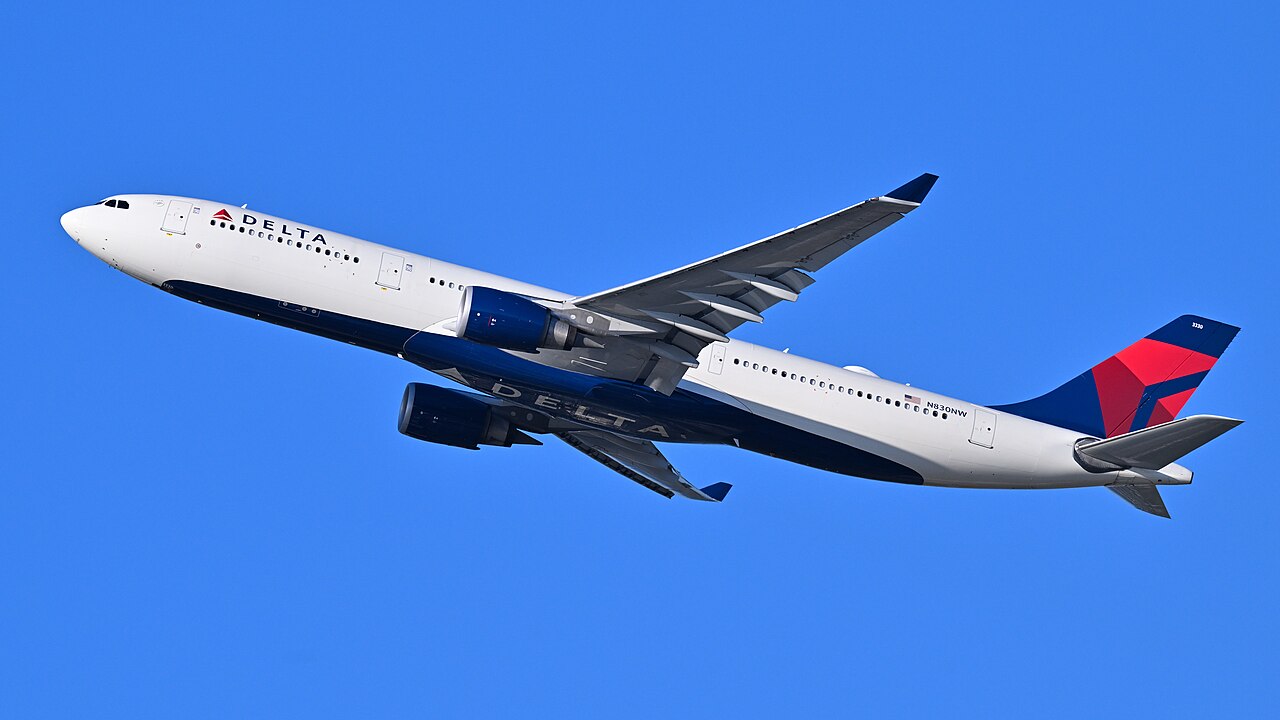
The Airbus A330-200 is a shortened, longer-range member of Airbus's A330 twin-aisle wide-body family, which first flew in 1997 and entered service in 1998 with Canada 3000. It combines the fly-by-wire controls and glass cockpit of the wider Airbus range with a choice of three engine types. For a sim pilot it is a long-haul twinjet that shares its flight deck and type rating with the A330-300 and the A330-200F freighter.
The A330-200 is a two-engined, long-range wide-body airliner built by Airbus. It is a shortened derivative of the A330-300 with a 222-inch-wide twin-aisle fuselage. It typically carries between 210 and 250 passengers, and can be configured with as many as 406 seats in higher-density layouts. It was developed in part as a replacement for the A300-600R and as a competitor to the Boeing 767-300ER. It sits within the A330 family, which Airbus now calls the A330ceo (current engine option) to distinguish it from the re-engined A330neo.
The A330 family traces back to the mid-1970s, when Airbus began work on the A300B9, a lengthened A300 with the same wing and the most powerful turbofans available. The B9 was later re-designated TA9 (twin aisle) and eventually became the A330, launched together with the A340 in June 1987. The A330-300 flew first, in November 1992, and entered service with Air Inter in January 1994. The A330-200 followed in response to a decline in A330-300 sales, growing market penetration by the Boeing 767-300ER and airline requests for more range and a smaller aircraft. It was known during development as the A329 and A330M10, and was expected to offer nine per cent lower operating costs than the 767-300ER. The aircraft was aimed at the 11,900 km (6,430 nmi; 7,390 mi) sector, where Airbus predicted demand for 800 aircraft between 1995 and 2015. The project, with US$450 million in expected development costs, was approved by the Airbus Industrie Supervisory Board on 24 November 1995. The first order, for 13 aircraft from ILFC, followed in February 1996. The A330-200 first flew on 13 August 1997. The sixteen-month certification process involved 630 hours of test flying. Deliveries began in April 1998. The aircraft leased from ILFC by Canada 3000 made that airline the type's first operator. By June 2002, 108 A330-200s had been built.
The A330-200 shares near-identical systems, airframe, flight deck and wings with the A330-300. The main difference is fuselage length, since the -200 is 10 frames shorter. It also gains a centre fuel tank, which raises its fuel capacity over the -300's. The A330 shares many underpinnings, including the wing components, with the early A340 variants, but has two main landing gear legs rather than three and lower weights. Like the A340, it has fly-by-wire controls and a glass cockpit. It was Airbus's first airliner to offer a choice of three engines: the General Electric CF6-80E, the Pratt & Whitney PW4000 series or the Rolls-Royce Trent 700. Published dimensions are: overall length 58.82 m (193 ft 0 in), cabin length 45.00 m (147 ft 8 in), fuselage width 5.64 m (18 ft 6 in), maximum cabin width 5.26 m (17 ft 3 in), geometric wing span 60.3 m (197 ft 10 in), height 17.39 m (57 ft 1 in), track 10.68 m (35 ft 1 in) and wheelbase 22.18 m (72 ft 10 in). Published weights are: maximum ramp weight 251.90 tonnes, maximum take-off weight 251.00 tonnes, maximum landing weight 186.00 tonnes and maximum zero fuel weight 176.00 tonnes. Maximum fuel capacity is 139,090 litres (36,750 US gallons). The underfloor hold takes 27 LD3 containers, or 8 pallets plus 3 LD3.
The maximum operating Mach number (Mmo) is M0.86. Airbus quotes routes of up to 7,250 nm for typical operations, and its key figures list a range of 15,094 km (8,150 nm). Another published figure gives 13,450 km (7,260 nmi; 8,360 mi) with 247 passengers, compared with 11,750 km (6,340 nmi; 7,300 mi) with 277 passengers for the A330-300. Fly-by-wire controls and a cockpit common to other Airbus types are intended to make handling and training consistent across the range.
The passenger A330-200 sits alongside the longer A330-300, and both are now grouped as A330ceo. The A330-200F is a dedicated freighter, launched in 2007 with first service in 2010. It carries up to 22 pallets on the main deck, and is the only mid-size freighter to accommodate 96x125 in pallets side by side. Its lower deck takes 8 pallets plus 2 LD3, or 26 LD3. Published figures include a maximum payload of 61 tonnes, a range of 7,400 km, a maximum take-off weight of 187.00 tonnes and fuel capacity of 97,530 litres. It has the same type rating as the passenger A330-200 and -300 and the A330-200P2F and -300P2F, so the same pilots can fly all of them. The A330-200P2F is a passenger-to-freighter conversion supported by Airbus. Other family derivatives include the A330 MRTT military tanker, the ACJ330 corporate jet and the CC-330 Husky. The re-engined A330neo (A330-800 and -900) entered service with TAP Air Portugal in December 2018.
Canada 3000 was the first operator, flying aircraft leased from ILFC. The A330-200 was offered to carriers seeking long-haul capacity on thinner intercontinental routes and as a replacement for older wide-bodies. The A330 family as a whole is operated by 150 operators, and Delta Air Lines is its largest operator with 81 aircraft. The A330 is the second most delivered wide-body airliner after the Boeing 777.
For the sim pilot, the A330-200 offers the Airbus fly-by-wire flight deck with a glass cockpit, in a twin-engined long-haul airliner. Its commonality with the A330-300 and the A330-200F, which share the same type rating, means procedures and handling carry across the family. Engine choice between the CF6-80E, PW4000 and Trent 700 gives liveries and variants some real-world variety. Its range suits long sectors, and the fuel capacity of 139,090 litres makes it a good choice for transcontinental and intercontinental flights.