Departure
94%
vs 95% ▼ 1
 MY FS FLIGHTS
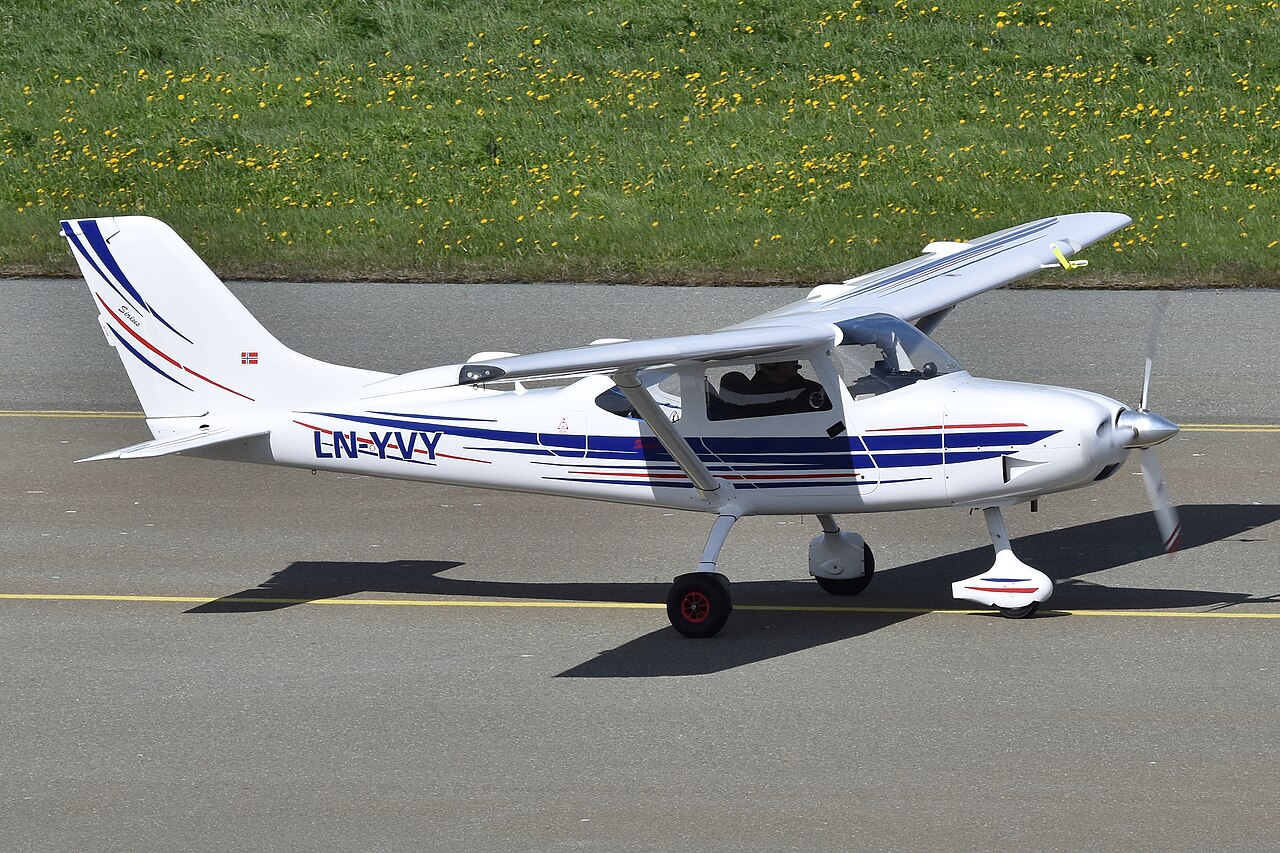
The TL-3000 Sirius is a two-seat, high-wing ultralight and light-sport aircraft designed and built by TL Ultralight of Hradec Kralove in the Czech Republic. Constructed largely from carbon fibre and glass-fibre composites, it is the high-wing sister ship to the manufacturer's established low-wing TL-2000 Sting, sharing many of that aircraft's components and its Rotax powerplants. For a sim pilot it offers a modern, docile-handling light-sport type with a spacious cabin, a range of Rotax and Turbotech engine options, and configurations that extend from basic ultralight trainer to float-equipped tourer.
The TL-3000 Sirius is a conventional single-engine, high-wing, two-seat-side-by-side ultralight and light-sport aircraft of Czech origin, produced by TL Ultralight (later marketed as TL Sport Aircraft) at Hradec Kralove. It sits in the same product family as the company's low-wing TL-2000 Sting, with which it shares many structural components, and it was conceived from the outset to satisfy both the European ultralight microlight category and the US light-sport aircraft (LSA) rules. The type has been accepted by the US Federal Aviation Administration as an approved special light-sport aircraft.
The Sirius programme was announced in early 2007, and an unflown prototype or mock-up was shown at the Aero trade show that year. Development continued through into 2010 before the design was ready for series production. The aircraft made its first flight on 21 May 2008, though that prototype was lost in a fatal accident the following July. By September 2010, twenty-two examples had been sold to customers in Angola, Australia, the Netherlands, New Zealand, Norway and the United States, though only four aircraft appeared on European civil registers (Russia excluded) by mid-2010, three in the Czech Republic and one in Norway. By 2015 total production stood at around 100 airframes. The manufacturer's own material states the Sirius has been in production for 25 years with over 300 deliveries worldwide, and traces its engineering lineage to more than 700 examples of its low-wing siblings, the Star and the Sting.
The TL-3000 is a mostly composite aircraft with a carbon-fibre wing and a glass- and carbon-fibre fuselage. The high wing has a constant-chord centre section with tapered outer panels carrying downturned tips, and is braced to the lower fuselage by a pair of forward-leaning lift struts. The swept fin carries a wide dorsal fillet and a horn-balanced rudder, while the tapered, mass-balanced elevators are mounted at mid-fuselage. The underwing cabin features a single-piece windscreen, glazed side doors that open upwards on hydraulic struts, rear side windows and an upper rear transparency; cabin width is 45 inches, giving generous room for larger occupants, and headroom is sufficient for pilots up to 6 feet 6 inches. The undercarriage is a fixed tricycle arrangement, with the mainwheels mounted on composite cantilever spring legs on the fuselage, a steerable nosewheel, hydraulic differential disc brakes, and wheel fairings enclosing all three legs; a parking brake and tail skid are also fitted. A float installation has been developed to permit water operations. Original production aircraft were offered with a choice of Rotax flat-four engines, the 59.6 kW (80 hp) 912UL or the 73.5 kW (98.6 hp) 912ULS, driving a three-bladed Woodcomp propeller. Current production broadens this considerably, with engine options spanning the Rotax 912ULS/iS, 914iS and 916iS, and the Turbotech TP-R90 turboprop rated at 140 hp, matched to DUC Swirl, DUC Flash, DUC Tiger constant-speed or TL Predator constant-speed propellers. Standard equipment includes electric flap controls, elevator trim, a lockable canopy, four-point seat belts, a rear luggage compartment of 6.5 cubic feet with a 55 lb allowance, cabin heat, front canopy ventilation, navigation and landing lights, and a Stratos Magnum ballistic parachute recovery system. Avionics range from basic VFR instrumentation up to full Garmin glass-panel fits, including dual GDU 460 or single GDU 450 G3X displays, the GMC 507 autopilot with GSA smart servos, and IFR-capable navigation and communication equipment.
Per Jane's All the World's Aircraft data for the Rotax 912ULS-powered aircraft, maximum speed is 225 km/h (140 mph, 121 kn), stall speed with flaps down is 65 km/h (40 mph, 35 kn), never-exceed speed is 250 km/h (160 mph, 130 kn), maximum rate of climb at sea level is 6.0 m/s (1,180 ft/min), and range is quoted at 1,400 km (870 mi, 760 nmi). Empty weight is given as 297 kg (655 lb) against a maximum take-off weight of 472.5 kg (1,042 lb) in ultralight configuration or 598 kg (1,320 lb) as an LSA, with a fuel capacity of 130 litres (34.3 US gal). Current manufacturer figures for the range of available engines quote cruise speeds up to 155 kt TAS with the Rotax 916iS, a stall speed (Vso) of 35 KCAS and Vs1 of 40 KCAS, a manoeuvring speed of 108 KIAS, a never-exceed speed of 138 KIAS, best rate of climb speed (Vy) of 65 KIAS and best angle of climb speed (Vx) of 59 KIAS, with a climb rate of 2,400 fpm on the 916iS. Take-off ground roll is 350 ft, extending to 1,400 ft over a 50 ft obstacle, while landing distance is 460 ft, or 1,050 ft over a 50 ft obstacle. The load factor is rated at +4/-2g, fuel consumption is quoted at 3.8 to 7.2 US gal/hr depending on engine choice, and range is given as 750 miles. Test flying by the manufacturer's founder and president, Jiri Tlusty, showed the aircraft to have very responsive low-speed handling and docile flight characteristics; the manufacturer also states that strong crosswind landings present no difficulty, aided by the large wing area and effective electric flaps.
The Sirius has been offered across a widening range of engine fits over its production life: the original 912UL and 912ULS Rotax flat-fours, followed by the 912ULS/iS, 914iS and 916iS, and more recently the Turbotech TP-R90 turboprop rated at 140 hp, each paired with a choice of fixed or constant-speed propellers from Woodcomp, DUC or TL Predator. A float-equipped, water-capable version has been developed for amphibious operation, and the airframe's aerodynamics and flap effectiveness make it suitable as a glider-tug when configured for aero-towing. The cabin door can also be opened in flight or removed on the ground for aerial photography work. The aircraft is built to order with custom avionics fits ranging from basic VFR to full IFR-capable glass-panel installations.
The Sirius was designed from the outset to satisfy both the European ultralight microlight category and the US light-sport aircraft rules, and it holds FAA acceptance as an approved special light-sport aircraft. Early sales, by September 2010, reached customers in Angola, Australia, the Netherlands, New Zealand, Norway and the United States, with the manufacturer citing use by flight schools, corporate operators and private family fliers. Its amphibious float option and glider-towing capability broaden its role beyond straightforward touring and training, and the removable door has found favour for aerial photography work.
The manufacturer's own test flying describes the Sirius as offering very responsive low-speed handling with docile flight characteristics, qualities that should translate into forgiving, predictable behaviour for a simulator pilot exploring the type's flight envelope from just above the stall through to a fast cruise. Its large wing area and electric flaps are reported to make it capable in a stiff crosswind, and its glider-towing and float-plane capability broaden the kinds of operations a virtual pilot might replicate, from short-field training circuits to water take-offs and landings.