Departure
97%
vs 96%
 MY FS FLIGHTS
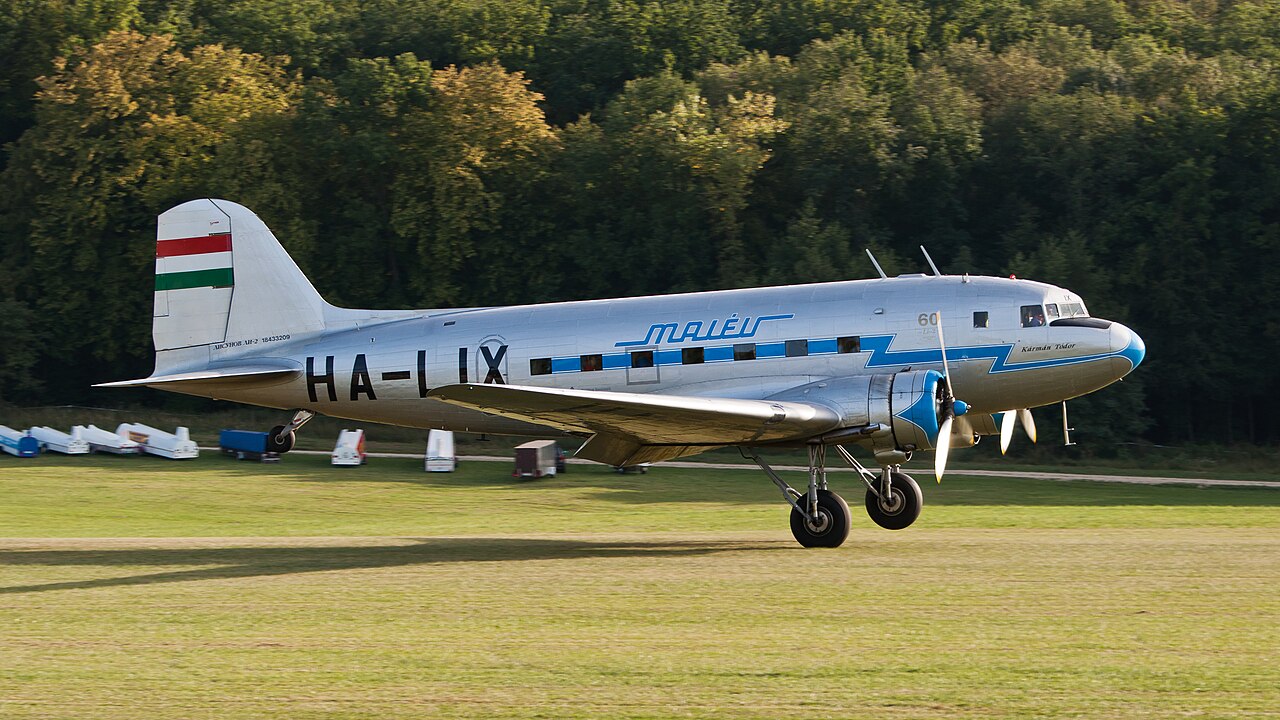
The Lisunov Li-2 was a Soviet-built version of the Douglas DC-3, produced under licence for both Aeroflot and the Soviet armed forces from 1939 into the early 1950s. Directed by engineer Boris Pavlovich Lisunov after two years spent at the Douglas Aircraft Company translating the American design into Soviet metric standards, it became a wartime and post-war workhorse for transport, bombing, ambulance and reconnaissance duties across the USSR and its allies. For anyone interested in classic piston-twin airliners, it offers a fascinating window onto how the DC-3 airframe was reborn under very different industrial and military conditions.
The Lisunov Li-2, known to NATO by the reporting name Cab and originally designated PS-84, was a licence-built Soviet derivative of the Douglas DC-3, produced by State Aviation Factory 84 (GAZ-84) at Moscow-Khimki and, from 1941, at the Tashkent Aviation Production Association. Conceived as a passenger and cargo utility aircraft, it was pressed into service as a light bomber and general military transport once war reached the Soviet Union, and it went on to serve both the Soviet Air Force and Aeroflot in large numbers.
The Soviet Union received its first DC-2 in 1935 and went on to order 18 DC-3s on 11 April 1936, with the government ultimately purchasing 21 DC-3s for Aeroflot before the Second World War. A production licence was awarded to the USSR on 15 July 1936, and Boris Pavlovich Lisunov spent from November 1936 to April 1939 at the Douglas Aircraft Company translating the design for Soviet manufacture, accompanied by engineer Vladimir Mikhailovich Myasishchev. Design work and production were centred at State Aviation Factory 84 in Khimki, where the aircraft was designated PS-84 (Passazhirskiy Samolyot 84). Although the intention was to change as little as possible, the GAZ-84 works issued around 1,293 engineering change orders to the original Douglas drawings, largely to metricate the design from US customary units to Soviet standards. The first PS-84s emerged from the production line by 1939. By the time Germany invaded the USSR on 22 June 1941, 237 PS-84s had been built, all in civil passenger configuration. The invasion prompted the relocation of much of the Soviet Union's industrial capacity eastward, and production shifted to GAZ-33 in Tashkent, which was producing PS-84s again by January 1942 after a major reconstruction effort. GAZ-124 at Kazan built ten aircraft before the outbreak of war, and GAZ-126 at Komsomolsk-on-Amur built 353 Li-2Ts between 1946 and 1950 before that plant switched to MiG-15 production. The aircraft was renamed Li-2 in 1942 in honour of Lisunov. Overall production is put at 6,157 aircraft, though later research suggests a figure of 4,937, manufactured between 1939 and 1952.
The Li-2 retained the basic layout of the DC-3 but incorporated a slightly shorter wingspan and numerous structural and systems changes to suit Soviet manufacturing practice. The passenger door was moved to the right-hand (starboard) side of the fuselage, with a top-opening cargo door fitted on the left (port) side in place of the original passenger door. Skins were slightly heavier than on the American aircraft because metric gauge equivalents did not exactly match the original alloy sheet thicknesses, and standard Soviet metric hardware, engine mounts, landing gear, wheels and tyres all differed from the Douglas original. Later production allowed for ski landing gear for operation in Arctic and remote regions. Power came from two Shvetsov ASh-62IR nine-cylinder air-cooled radial engines, a Soviet development of the Wright R-1820 Cyclone 9 that had also powered the earliest DC-3 variants, and Soviet practice called for fully shuttered engine cowlings to cope with extreme temperatures. Military versions carried bombing equipment absent from the unarmed American C-47, including a bomb sight, bomb racks and a defensive dorsal turret; the MV-3 turret initially mounted a 7.62 mm ShKAS machine gun, later replaced by a 12.7 mm UBT heavy machine gun, and two further ShKAS guns on pivot mounts could be fitted on either side of the rear fuselage near the cargo door. The dedicated military variant, the Li-2VV, had a redesigned nose housing an additional ShKAS gun and could carry up to four 250 kg bombs under the centre fuselage, with smaller bombs stowed inside and thrown out of the cargo door by the crew. Reported dimensions include a length of around 19.6 metres and a wingspan of about 29.8 metres, with an empty weight in the region of 7,700 kg and a maximum take-off weight of around 11,280 kg. The aircraft could seat up to 28 passengers in its airliner configuration.
The Li-2, powered by its pair of Shvetsov ASh-62IR radial engines each rated at around 1,000 hp, was reported capable of speeds up to 354 km/h and a service ceiling of about 5,600 metres. For short-range operations a maximum load of around 2,000 kg could be carried aboard the aircraft. These figures place the Li-2 broadly in line with the DC-3 family from which it was derived, reflecting a solid, dependable transport rather than an especially fast one.
The type began life as the PS-84, the original Soviet passenger designation, before being renamed Li-2 in 1942. The Li-2VV was a dedicated military variant with a redesigned nose carrying an extra machine gun and underfuselage bomb racks for up to four 250 kg bombs. The Li-2T was a transport version, with 353 examples built by GAZ-126 at Komsomolsk-on-Amur between 1946 and 1950. A passenger derivative, the Li-2P, is also recorded among surviving and preserved airframes. Beyond these, the aircraft was adapted for a wide range of roles including cargo carriage, reconnaissance, aerial photography and medical evacuation, with a dedicated medevac cabin fit.
The PS-84 flew with Aeroflot chiefly as a passenger transport before the Second World War. Following the German invasion in 1941, many aircraft were taken into military service and redesignated Li-2, equipped with a dorsal machine gun turret and used for transport, partisan supply, bombing and ambulance duties. The type served with the Soviet Long-Range Air Force in support of the Slovak National Uprising, flying a total of 1,199 take-offs between 4 September and 24 October 1944, transporting the 2nd Czechoslovak Paratroopers Brigade and Allied aid to insurgent territory, and carrying up to around 2,000 personnel and some 639.1 tons of material into the insurgent-held area. LOT Polish Airlines operated up to 40 Li-2s as passenger airliners into the 1960s, and the type saw extensive use across Eastern Europe until that decade. In China, a total of 214 Li-2s were imported for military and civil use, including operation by forestry and smokejumper units, with the last examples retired from Chinese service in 1986; the final survivors elsewhere were still noted in service in China and Vietnam during the 1980s.