Departure
98%
vs 95% ▲ 3
 MY FS FLIGHTS
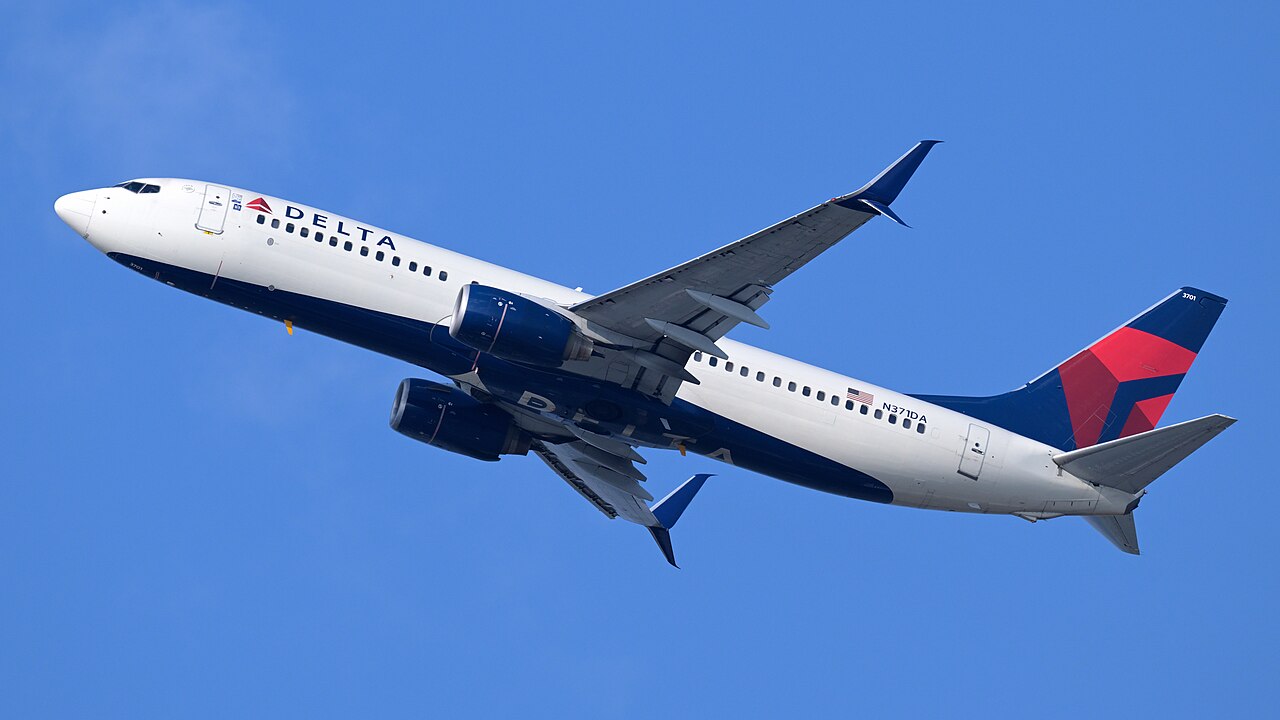
The Boeing 737-700 is a narrow-body, twin-engined jet airliner built by Boeing Commercial Airplanes as the smallest mainline member of the 737 Next Generation family. Launched by Southwest Airlines and first flown in February 1997, it became a workhorse of short and medium-haul domestic flying for operators worldwide, and its systems and handling underpin the wider 737NG series that dominates the narrow-body market alongside the Airbus A320.
The Boeing 737-700 is a narrow-body jet airliner and the first of the third-generation 737 Next Generation (737NG) variants to fly, sitting alongside the -600, -800 and -900 in a family seating between 108 and 215 passengers. It replaced the earlier 737 Classic -300 in the product line, offering a redesigned wing, greater fuel capacity and a glass cockpit, and it also forms the basis for the Boeing Business Jet (BBJ1) and the US Navy's C-40A Clipper. Its main competitor is the Airbus A320 family, and it remains a common sight in the fleets of major airlines such as Southwest Airlines, Delta Air Lines, United Airlines and WestJet.
The 737 Next Generation programme was prompted after United Airlines, a longstanding Boeing customer, chose the more technologically advanced, fly-by-wire Airbus A320, spurring Boeing to modernise the slower, shorter-range 737 Classic. Boeing initiated development of the updated series in 1991, and after working with potential customers the 737NG programme was formally announced on November 17, 1993. Southwest Airlines became the launch customer on 18 November 1993, placing an order for 63 Boeing 737-700s, 32 of which were converted from existing 737-300 options; that order formally started the 737 Next Generation programme. The first 737NG built was a -700, rolled out on December 8, 1996, and it first flew on February 9, 1997, with pilots Mike Hewett and Ken Higgins, as the 2,843rd 737 built. The CFM56-7B engine, produced by CFM International, a 50/50 joint venture between GE Aerospace and Safran Aircraft Engines, was jointly certified by the FAA and the French DGAC in December 1996 at thrust ratings from 18,500 to 27,300 pounds. Four 737-700 airframes were used in the flight test programme, alongside three 737-800s and three 737-600s, and the FAA awarded type certification on 7 November 1997 after more than 20,000 engineering laboratory and airplane tests. Southwest Airlines received the first production aircraft, registration N700GS, on 17 December 1997, and the variant entered revenue service the following month, with Epic Flight Academy noting first entry into service in 1998. In late 1998 the 737NG received 120-minute ETOPS approval, and in September 1999 the FAA granted 180-minute ETOPS certification, making the 737NG the first single-aisle aircraft in its class to achieve that level, opening overwater routes including services between Hawaii and the US mainland. Boeing launched the extended-range 737-700ER on January 31, 2006, with All Nippon Airways as launch customer. Various performance improvement packages were introduced over the aircraft's production life, including a Short Field Performance package developed in 2004 for Gol Transportes Aereos and carbon brakes offered from July 2008, with Delta Air Lines receiving the first Next-Gen 737, a 737-700, fitted with this brake package at the end of July 2008.
The 737-700 is powered by two CFM International CFM56-7B turbofan engines; the CFM56-7B22 is cited for the -700, and thrust in the region of 24,000 pounds (107 kN) per engine is quoted for the type. Compared with the 737 Classic, the 737NG wing was redesigned with a larger area and wider wingspan, giving greater fuel capacity, higher maximum takeoff weight and longer range. The aircraft features a glass cockpit and upgraded, redesigned interior configurations, and later production could be fitted with Split Scimitar winglets. Optional carbon brakes from Messier-Bugatti-Dowty, introduced from July 2008, reduced the weight of the brake package by 550 to 700 pounds (250 to 320 kg) depending on whether standard or high-capacity steel brakes were being replaced; a 700-pound (320 kg) weight reduction on a 737-800 was said to yield a 0.5 percent reduction in fuel burn, giving an indication of the benefit across the NG family. From 2015 Boeing offered a single wing-root-mounted LED light package across the 737NG range, replacing older HID light sets located at various points on the fuselage. Passenger seating on the -700 is typically quoted in the range of 126 to 149.
The Boeing 737-700 has a quoted maximum speed of 876 km/h (544 mph) and a cruising speed of 828 km/h (514 mph), with a cruise speed elsewhere quoted at around 460 knots (850 km/h). Following FAA approval, the 737NG achieved 120-minute ETOPS in late 1998 and 180-minute ETOPS in September 1999, making it the first single-aisle aircraft in its class to reach that certification level, which enabled overwater routes such as Hawaii to the US mainland. The optional Enhanced Short Runway Package, standard on the 737-900ER and optional on the -600, -700 and -800, increased landing payloads by up to 4,000 lb and takeoff payloads by up to 400 lb on the -600 and -700 when operating from runways under 5,000 feet (1,500 m), through measures including a winglet lift credit that reduces minimum landing-approach speeds and sealed leading-edge slats on all takeoff flap positions for more rapid climb from short fields.
The core 737-700 family includes the 737-700C, a convertible version in which seats can be removed to carry cargo instead, fitted with a large door on the left side of the aircraft; the 737-700ER, a long-range version launched on January 31, 2006, with All Nippon Airways as launch customer; and the BBJ1, the Boeing Business Jet derivative based on the -700 airframe. The military C-40A Clipper is derived from the 737-700C, with the United States Navy as launch customer for that designation. Within the wider 737NG family, the -700 sits between the smaller -600 (of which 69 were produced, the last delivered to WestJet in 2006) and the larger -800 and -900/-900ER variants, the -800 becoming by far the best-selling member of the series.
The 737-700 entered revenue service in January 1998 with launch customer Southwest Airlines, which remains one of its principal operators, and it has gone on to serve with airlines including Delta Air Lines, Sun Country Airlines, WestJet, United Airlines and, in Europe, KLM, which names its -700s after birds and uses them across a variety of European routes. The type's 180-minute ETOPS certification opened overwater operations, including Hawaii to mainland US services. Beyond civil airline use, the -700C derivative underpins the C-40A Clipper military transport, for which the US Navy was launch customer, while the corporate BBJ1 extends the type into the business jet market.
Pilots transitioning onto the 737-700 require a specific type rating for the aircraft, typically arranged through the operating airline, reflecting the type's glass cockpit and 737NG-era systems shared across the -600/-700/-800/-900 family. Its short-to-medium-haul role, common short-field operations, and widespread airline use make it a familiar and versatile type for simulator pilots exploring the 737NG family, with performance packages such as the Enhanced Short Runway option giving it useful capability into restricted airports.