
Departure
88%
vs 95% ▼ 7
Track every flight, analyse your performance,
and master your flying skills with My FS Flights
Get 10 flights free every month!
Tracked and analysed flights over miles
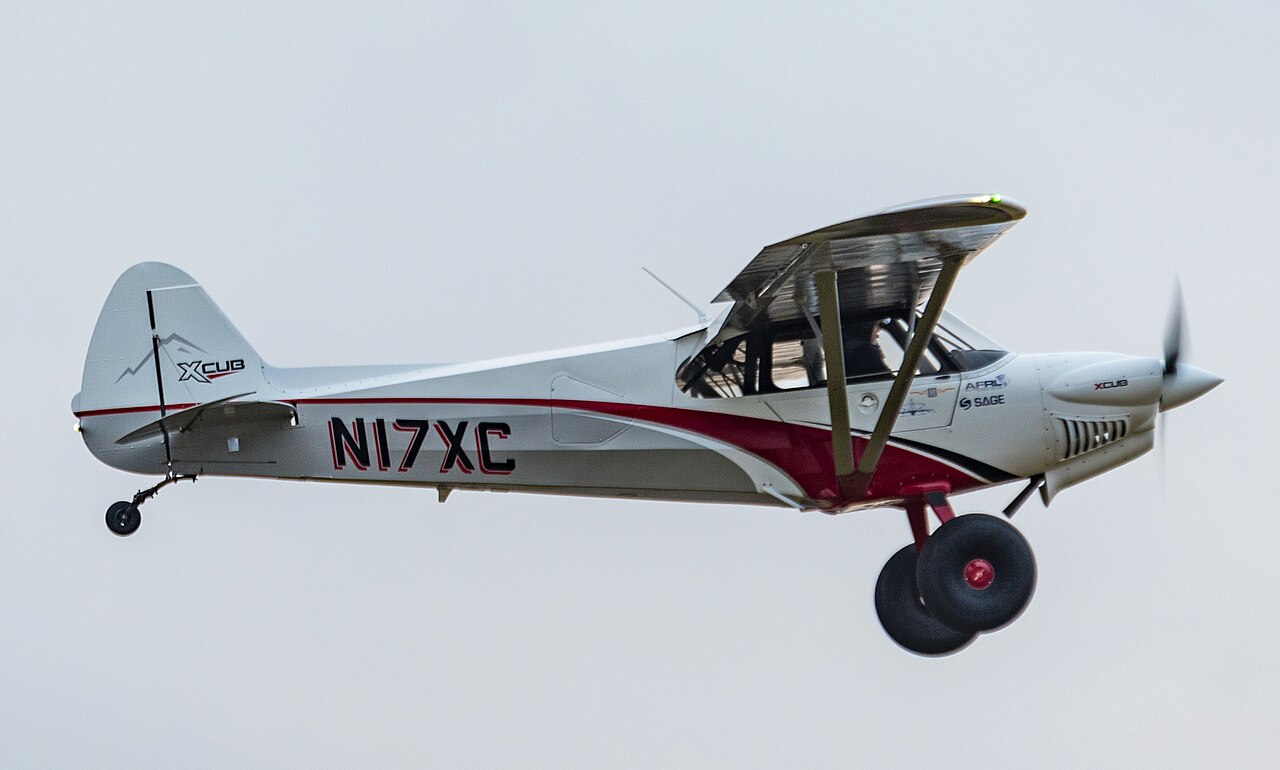
The CubCrafters CC19 XCub is a two-seat tandem, high-wing light aircraft built by CubCrafters of Yakima, Washington, and introduced in June 2016 as a from-the-ground-up evolution of the company's Carbon Cub EX line, itself tracing its lineage to the 1949 Piper PA-18 Super Cub. Designed and certified from scratch to modern FAA Part 23 standards, it combines strong short-field performance with genuine cross-country speed and range, making it a favourite among backcountry and adventure pilots. For a simulator pilot it represents the modern, well-equipped end of the taildragger bush-plane spectrum, offering both STOL capability and comfortable long-range cruising.
The XCub is an American light aircraft manufactured by CubCrafters, designed as a tandem two-seat, high-wing taildragger in the Piper Cub tradition. It is supplied complete and ready to fly, and was developed as a more capable successor to the company's Carbon Cub EX, incorporating further carbon fibre in its structure while retaining a clear lineage back to the 1949 Piper PA-18 Super Cub. It occupies the high-performance, fully certificated end of the modern Super Cub-derived market, aimed at pilots wanting genuine backcountry short-field ability combined with cross-country speed.
CubCrafters developed the XCub in secret over a six-year period from 2010 to 2016, choosing not to announce the programme publicly until FAA FAR 23 type certification had been completed. The certification effort was funded entirely from company resources, without venture capital, loans or customer deposits. FAA type certification for day and night visual flight rules was granted on 2 June 2016, and the CC19-180 went on to receive European Aviation Safety Agency certification on 17 December 2017, followed by certification in Canada and Japan in August 2018. On 26 March 2019 the aircraft was additionally certified by the FAA in the primary aircraft category, for reasons the company has not disclosed. By AirVenture in July 2016, only weeks after launch, CubCrafters announced that 20 CC19-180 XCubs had already been sold.
The XCub is built around a welded, CNC-milled 4130 chromoly steel tube fuselage, meeting current FAA Part 23 certification standards for aircraft of its 2,300 lb (1,000 kg) gross weight class, with flying surfaces covered in doped aircraft fabric. It is a V-strut-braced high-wing design with a two-seats-in-tandem enclosed cockpit accessed via doors, fixed conventional (tailwheel) landing gear as standard, and a single tractor-mounted engine. The wing spans 34.3 ft (10.5 m) with an area of 174.8 sq ft (16.24 sq m) and carries flaps. Roll control uses CubCrafters' G-Series ailerons, with a redesigned airfoil and relocated hinge point, driven by push-rod controls running inside the V-struts rather than the cables and pulleys of earlier designs, eliminating cable stretch. The standard powerplant is a 180 hp (134 kW) Lycoming O-360-C1 (CC363i) driving a Hartzell Trailblazer composite constant-speed propeller; in July 2019 a 215 hp (160 kW) Lycoming IO-390 (CC393i) engine paired with a three-bladed Hartzell Pathfinder propeller was introduced as the CC19-215, requiring a new cowling and baffles. Empty weight is 1,216 lb (552 kg) against a gross weight of 2,300 lb (1,000 kg), giving a useful load of 1,084 lb (492 kg), with fuel capacity quoted at 49-50 gallons. Landing gear options include the traditional bungee-sprung gear or a newer aerodynamic aluminium spring gear, and in 2020 CubCrafters certified the NXCub, a tricycle-gear version available only with the IO-390 engine; an XCub or NXCub can be converted between conventional and tricycle configurations by two people in around four hours. Floats, both straight and amphibious from Wipaire, are also available given the aircraft's gross weight capability. The cabin features high seat positioning, low side windows and a large skylight for panoramic visibility, memory-foam seats, and an optional Garmin G3X 10.6-inch EFIS avionics suite.
CubCrafters quotes a top speed of 153 mph and a cruise speed of 145 mph for the XCub, figures an AOPA evaluation flight confirmed as a true airspeed top speed of 153 mph in level flight. At a 135 mph cruise with the 49-gallon fuel capacity, range extends to 800 miles, and throttling back to an economy cruise of 120 mph stretches operational range beyond 1,000 miles; AOPA reported that at that economy setting fuel burn drops to 6 gph or less for roughly eight hours' endurance from a full tank. Take-off and landing distance at maximum gross weight has been demonstrated at 170 ft (52 m). The aluminium spring landing gear option is reported to add up to 14 mph at 75 percent power cruise compared with the legacy bungee gear, while also giving superior damping on rough strips. Pilot reports describe the aluminium gear as absorbing touchdown energy more gently than steel or bungee gear, producing a firm pushback on a slightly fast landing rather than a sharp bounce or slingshot rebound, without lateral wiggle. One reviewer for Flying magazine noted that the flap mechanism, deployed via a large handle with notched settings, takes some familiarisation, requiring a push before release for the first notch and a pull for the second and third, and that pitch changes noticeably with each flap setting.
The CC19-180 is the original production version with the 180 hp Lycoming O-360-C1 engine and Hartzell Trailblazer propeller. The CC19-215, introduced in July 2019, uses a 215 hp Lycoming IO-390 engine with a three-bladed Hartzell Pathfinder propeller and a revised cowling and baffles. The NXCub, certified in 2020, is a tricycle-gear derivative offered only with the IO-390 engine, and aircraft can be factory-built or field-converted between conventional and tricycle gear. Both XCub and NXCub can also be equipped with straight or amphibious floats.
The XCub is marketed principally as an adventure and backcountry aircraft, combining short-field capability with the speed and range to cover long cross-country distances economically. Its high useful load, up to 1,084 lb, and float compatibility widen its role beyond conventional runway operations to remote strip and water work.
Pilot evaluations of the real XCub highlight qualities that would define the character of a simulated model: crisp, lightweight roll response from the push-rod-actuated G-Series ailerons, smooth control harmony, and a distinctive touchdown feel from the aluminium spring gear that cushions rather than rebounds on a slightly hot landing. The flap system, with its notched handle and marked pitch change on selection, is a genuine handling quirk that a pilot new to the type needs to learn, first pushing forward to release the initial notch and then pulling back for subsequent stages. Its blend of genuine STOL short-field performance with a 153 mph top speed and long, economical cruise legs makes it an appealing type for simmers who want both backcountry canyon and strip flying and realistic long cross-country cruising in the same airframe.