Departure
92%
vs 95% ▼ 3
 MY FS FLIGHTS
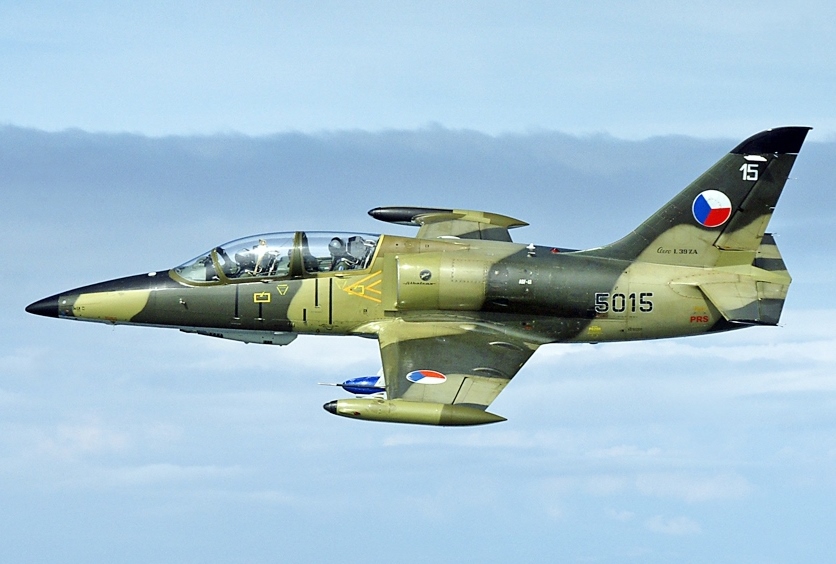
The Aero L-39 Albatros is a high-performance jet trainer designed and built by Aero Vodochody in Czechoslovakia, conceived as the successor to the L-29 Delfin and adopted as the standard primary jet trainer across the Warsaw Pact. Beyond training thousands of pilots, it has also flown light-attack and reconnaissance missions, and its status as the first trainer aircraft in the world fitted with a turbofan engine, combined with its huge production run, makes it one of the most historically significant and widely flown jet trainers ever built.
The L-39 Albatros is a twin-seat, single-engine jet trainer produced by Aero Vodochody in the Czech Republic (formerly Czechoslovakia). It was designed to perform both basic and advanced pilot training and has also been used operationally in a light ground-attack role. Despite originating in the Warsaw Pact, it never received a NATO reporting name, and it has been described as the most widely used jet trainer in the world. It holds the distinction of being the first trainer aircraft in the world equipped with a turbofan powerplant.
The design project began in 1964 at Aero Vodochody under a requirement for a 'C-39' trainer, with a design team led by Jan Vlcek. The aircraft was intended as a replacement for the L-29 Delfin and was envisioned from the outset as a future primary trainer for the whole Warsaw Pact. The type's first flight took place on 4 November 1968. A further prototype, the second airframe and designated 'Prototype X-02', flew on 4 November 1969, piloted by factory test pilot Rudolf Duchon. Serial production of the initial L-39C model began in 1971, and during 1972 the L-39 was formally recognised by the majority of Warsaw Pact countries as their preferred primary trainer, triggering large orders from military customers across the bloc, many of them from the Soviet Air Forces; the type entered service with the Czechoslovak Air Force in 1974. Specialised variants followed quickly: a target-tug version, the L-39V, first flew in 1972; the L-39ZO training and light-combat model, with four underwing hardpoints and a strengthened wing and landing gear, first flew in 1975; and the L-39ZA light-combat variant, adding a fuselage-mounted Gryazev-Shipunov GSh-23 cannon to the ZO's strengthened airframe, first flew in 1977. By the late 1980s roughly 200 L-39s a year were being sold in the jet trainer market, and in 1993 export orders for the L-39 accounted for 80 per cent of the value of all Czech military product exports that year, according to the Stockholm International Peace Research Institute. Following the end of the Cold War, Aero Vodochody began developing versions fitted with Western avionics, engines and weapons, and formed a partnership with Elbit Systems of Israel under which a number of L-39s were upgraded with modern electronics before being re-exported to customers such as the Royal Thai Air Force. Sales fell sharply during the 1990s with the loss of the captive Warsaw Pact market, compounded by difficulties in financing the Czechoslovak defence industry, government inaction and concerns over manufacturing quality. Production of the original L-39 ended in the mid-1990s, by which point manufacturing had run from 1971. Aero Vodochody went on to develop the enlarged and updated L-59 Super Albatros in the 1980s, the L-139 prototype fitted with a Western Garrett TFE731 engine, and the combat-oriented L-159 ALCA, which entered production in 1997. In July 2014, at the Farnborough Airshow, Aero Vodochody announced the L-39NG, a modernised version combining new-build aircraft with rebuilds of existing airframes; in 2023 production resumed under the name L-39 Skyfox, with 34 aircraft on order.
The L-39 Albatros is a twin-seat, single-engine jet aircraft powered by a turbofan engine, making it the first trainer aircraft in the world to use this type of powerplant. The base trainer models were progressively adapted for the light-attack role: the L-39ZO introduced four underwing hardpoints together with a strengthened wing and modified landing gear, while the L-39ZA added a Gryazev-Shipunov GSh-23 cannon mounted beneath the fuselage on top of the ZO's strengthened structure and weapons stations. A dedicated target-tug version, the L-39V, was also produced for training support duties.
The L-39 was marketed and operated as a high-performance jet trainer, capable enough to prepare pilots for advanced types and, in its armed variants, to fly genuine light-attack and reconnaissance sorties. Its adoption as the preferred primary trainer across the Warsaw Pact and its continued combat use by a number of air forces reflect an airframe considered to offer a strong balance of training fidelity and light tactical capability for its era.
The initial production version was the L-39C basic trainer. The L-39V was a purpose-built target tug. The L-39ZO was a combined training and light-combat model with four underwing hardpoints and a strengthened wing and landing gear. The L-39ZA developed this further by adding a fuselage-mounted GSh-23 cannon. Later derivatives extended the family beyond the original type: the L-59 Super Albatros was an enlarged and updated model developed in the 1980s; the L-139 was a prototype fitted with a Western Garrett TFE731 engine; and the L-159 ALCA was a combat-oriented development that entered production in 1997 and was procured by a range of export customers. From 2014 Aero Vodochody offered the modernised L-39NG, combining new-build airframes with rebuilds of existing L-39s, and this programme resumed production in 2023 under the name L-39 Skyfox.
The L-39 became the standard primary jet trainer for most Warsaw Pact air forces from 1972, entering service with the Czechoslovak Air Force in 1974, with large numbers supplied to the Soviet Air Forces and other Eastern Bloc operators. It was subsequently exported worldwide both as a trainer and as a light-attack aircraft, and by the end of the twentieth century more than 2,800 L-39s had served with over 30 air forces, historical and current operators including the Soviet Air Force, the Ukrainian Air Force, the Czechoslovak Air Force and the Libyan Air Force. In the 1990s a number of aircraft were upgraded with modern electronics by Elbit Systems of Israel before being re-exported, including to the Royal Thai Air Force. Since the 1990s the type has also become popular among civilian operators. Individual airframes have passed into museum and private hands, such as an L-39ZA acquired by the American Airpower Museum direct from the Czech Air Force in 2007 in stock condition and kept in flyable status.
For a simulator pilot the L-39's appeal rests heavily on its real-world pedigree as the world's most widely produced jet trainer and its dual identity as both a training aircraft and a genuine light-attack platform, with variants like the ZA carrying a fuselage cannon and underwing stores. Its tandem twin-seat, single-engine layout and its history as the first turbofan-powered trainer give it a distinctive character among Cold War-era jets, and its continuing popularity with civilian owners and display teams after military retirement has helped keep it a familiar and well-documented type for enthusiasts moving from piston trainers into jet-handling and light-attack profiles.