Departure
98%
vs 95% ▲ 3
 MY FS FLIGHTS
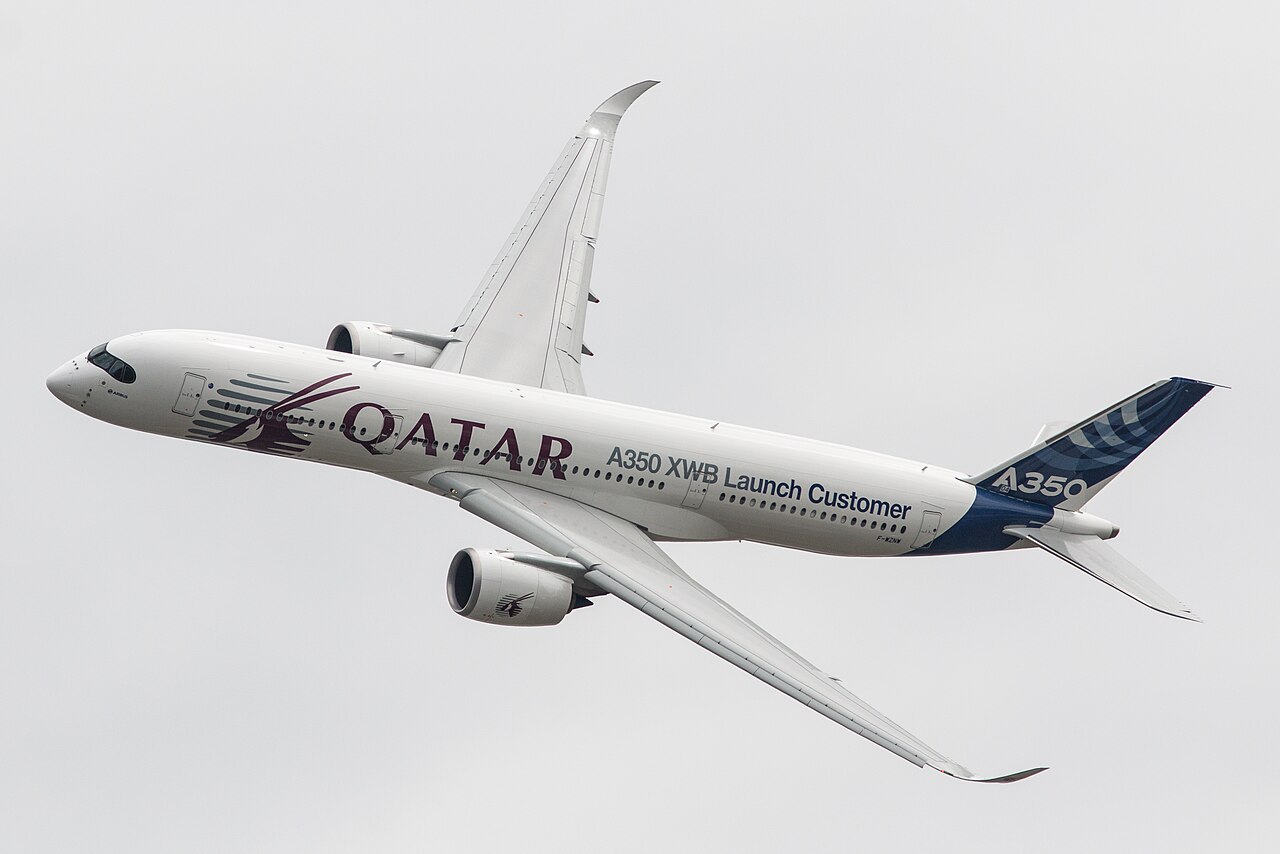
The Airbus A350-1000 is the largest and longest-range member of Airbus's A350 XWB family, a twin-engine composite widebody built in Toulouse for high-capacity, long-haul and ultra-long-haul operations. Stretched some seven metres beyond the baseline A350-900 and fitted with the most powerful Trent XWB engines in the range, it is Airbus's flagship answer to the upper end of the widebody market and the basis for the ultra-long-range A350-1000ULR now entering service with Qantas.
The A350-1000, designated A35K in ICAO code, is a twin-engine, twin-aisle widebody airliner built by Airbus and marketed as the largest passenger variant of the A350 XWB (extra wide-body) family, which also includes the A350-900 and its ultra-long-range derivatives. Designed for high-demand long-haul and ultra-long-haul routes, it combines an advanced composite airframe, powerful Rolls-Royce engines and Airbus's Airspace cabin concept to compete at the top end of the widebody market alongside larger four-engine and twin-engine rivals.
The A350-1000 was launched in the late 2000s as a stretched, more capable development of the A350-900. Final assembly of the first aircraft began in February 2016 and it made its first flight in November of that year. The programme progressed through cold-weather trials in March 2017 and a first long-distance test flight in May 2017, before receiving Federal Aviation Administration and European Aviation Safety Agency certification in November 2017. The aircraft entered commercial service in 2018 with launch customer Qatar Airways. The family has continued to evolve since then: the A350-1000ULR, an ultra-long-range derivative developed for Qantas Airways under Project Sunrise, made its first flight from Toulouse in June 2026 (aircraft MSN 707), flying for three hours 43 minutes and reaching an altitude of slightly above 41,000 feet. A second A350-1000ULR for Qantas was at an advanced stage of final assembly at the time, with first delivery scheduled for April 2027.
Compared with the A350-900, the A350-1000 has a longer fuselage, extending the type by around seven metres, together with a modified wing trailing edge and strengthened main landing gear to cope with a higher maximum take-off weight. The airframe makes extensive use of carbon-fibre composites and a high-aspect-ratio wing to reduce weight and fuel burn. It is powered by two Rolls-Royce Trent XWB-97 turbofans, the most powerful engines in the Trent XWB family, each rated at 94,900 lbf (422 kN) of thrust. The aircraft has an exterior length of 242 ft 5 in (73.90 m), a wingspan of 212 ft 5 in (64.75 m), a fuselage diameter of 18 ft 6 in (5.64 m), and a cabin measuring 210 ft (64.00 m) long, 17 ft 9 in (5.40 m) wide and 7 ft 3 in (2.20 m) high. Baggage volume is 6,251 cu ft (177.0 cu m). Maximum take-off weight is 697,000 lb (316,000 kg), maximum payload is 150,000 lb (68,000 kg), and fuel capacity is 41,950 US gal (158,800 litres, 127,000 kg). The flight deck uses Thales avionics and the aircraft is fitted with an automatic emergency descent function that brings the aircraft down to around 3,000 m and alerts air traffic control if cabin pressure is lost. The Airspace cabin fitted throughout the A350 family offers wider seats, larger windows, advanced lighting and improved cabin pressure and humidity levels aimed at reducing fatigue on long sectors. For the ULR derivative developed for Qantas, Airbus has integrated an additional rear centre fuel tank into the aircraft structure, along with a new fuel system architecture and a lighter, more efficient galley air-cooling system, increasing range by around 1,000 nautical miles over the standard -1000.
The A350-1000 has a maximum cruise speed of around 510 kt (587 mph / 945 km/h) and a service ceiling of about 43,100 ft (13,100 m). Range is quoted at approximately 8,700 nm (10,010 mi / 16,110 km), with take-off distance around 8,550 ft (2,600 m) and landing distance around 6,550 ft (2,000 m). Airbus states that, thanks to the latest-generation Rolls-Royce engines and extensive use of lightweight materials, the A350 family offers a 25 per cent advantage in fuel burn, operating costs and carbon dioxide emissions compared with previous-generation competitor aircraft. The ultra-long-range A350-1000ULR extends this further, with the added rear centre tank allowing Qantas to plan non-stop sectors between Sydney and both New York and London of almost 10,000 nautical miles, with flight times of up to 22 hours.
The core A350-1000 sits alongside the A350-900, A350-900ULR and the newer A350-1000ULR as passenger variants of the A350 family, with an all-new A350F freighter also under development. The A350-1000ULR, built for Qantas Airways under Project Sunrise, differs from the standard -1000 primarily through the addition of a rear centre fuel tank built into the aircraft structure, a revised fuel system architecture, and a new, lighter galley air-cooling system, all aimed at extending range for ultra-long-haul non-stop flying while maintaining cabin comfort on very long sectors.
Qatar Airways introduced the A350-1000 into commercial service in 2018, and the type has since been taken up by a range of major long-haul carriers, including China Airlines, Cathay Pacific, Delta Air Lines, Lufthansa and Virgin Atlantic, the latter operating aircraft such as G-VBOB, G-VEVE, G-VLIB and G-VNVR in a Loft configuration with Upper Class, Premium and Economy Delight seating. Riyadh Air has become the first Saudi Arabian operator of the type, firming up an order for 31 A350-1000 aircraft as part of a wider commitment for up to 50, to support its international network growth under Saudi Arabia's Vision 2030 objectives. Qantas Airways has ordered 12 A350-1000ULRs for ultra-long-haul non-stop flying from Sydney under Project Sunrise, in addition to 12 standard A350-1000s for its wider long-haul network. Across the broader A350 programme, Airbus reported more than 700 aircraft in service with 41 operators and around 1,579 to 1,595 firm orders from 68 customers worldwide during 2026, making the A350 family one of the most successful widebody programmes ever built.