Departure
99%
vs 95% ▲ 3
 MY FS FLIGHTS
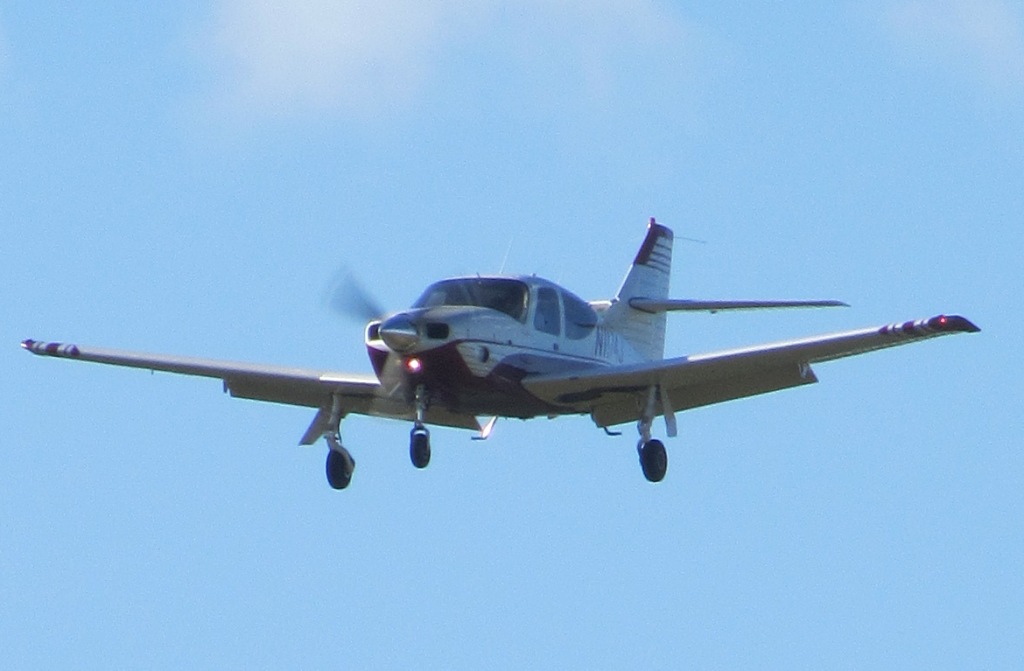
The Commander 114 is an American four-seat, single-engine light aircraft with retractable tricycle landing gear, developed by North American Rockwell/Rockwell International as a more powerful derivative of the earlier Commander 112, and later continued by Commander Aircraft Company. It is distinguished by an unusually roomy, cabin-class-twin style interior, sturdy FAR Part 23 construction and a distinctive, upright stance, making it a popular choice for pilots who value comfort and load-carrying ability over outright speed. For a simulator pilot it represents an interesting step into complex, retractable-gear singles with forgiving, predictable handling.
The Commander 114 is a four-seat, low-wing, single-engine general aviation aircraft with retractable tricycle landing gear, produced originally by North American Rockwell and Rockwell International and later by Commander Aircraft Company. It is a more powerful evolution of the Commander 112 line, fitted with a larger six-cylinder Lycoming engine, and it occupies a niche among light singles for its unusually spacious, cabin-class-twin-like interior and robust airframe. The type has served private owners, aeroclubs and some military users over a production run spanning the 1970s through to the early 2000s.
In 1970 Rockwell's Aero Commander division set out to develop a full line of aircraft spanning fixed-gear four-seaters through to retractable-gear twins. The first products of this effort were two four-seat low-wing monoplanes: the fixed-gear Commander 111, priced at $17,950, and the retractable-gear Commander 112, priced at $22,100. Only two Commander 111 prototypes were built before Rockwell committed solely to the 112. The design was built to the newly introduced FAR Part 23 standards, with their emphasis on gust response and fatigue resistance, giving the airframe considerable structural strength, though this came at the cost of added weight. A prototype Commander 112 suffered a tail failure during testing, prompting a redesign of the tail unit and delaying first deliveries until late 1972; the redesign added further weight, leaving the aircraft, in the view of many observers, underpowered even with its 200 hp Lycoming IO-360 engine (the prototype had used a 180 hp Lycoming O-360). Early production aircraft also suffered from poorly fitting, leak-prone fibreglass composite doors. After 123 aircraft had been built, the improved 112A appeared in 1974, with aluminium doors, a redesigned wing with increased fuel capacity, and a higher maximum takeoff weight of 2,650 lb. In 1976 Rockwell introduced two new derivatives: the turbocharged 112TC, with a 210 hp engine, a 2,850 lb MTOW and a 32-inch wingspan increase, and the Commander 114, fitted with a six-cylinder 260 hp Lycoming IO-540 engine in place of the smaller unit used in the 112 series. The wingspan increase from the 112TC was applied to the base 112 in 1977. Production of the 112/114 line ceased in 1980, by which point around 1,300 examples of all models had been built. The type certificate passed to Gulfstream Aerospace in 1981, which had no interest in restarting single-engine piston production, having acquired the design chiefly for the Turbo Commander. In 1988 Gulfstream sold the rights to Randall Greene, who established the Commander Aircraft Company to support existing aircraft and resume production. This new company introduced the improved Commander 114B in 1992, with upgraded interior and systems, and continued building turbocharged 114TC variants. Aircraft produced between 2000 and 2002 were marketed as the Commander 115. Production ended in 2002 after around 200 114B and 114TC aircraft had been completed, and Commander Aircraft Company was subsequently liquidated. Between 2005 and 2012 the Commander Premier Aircraft Corporation produced spare parts only and explored plans for a new-build Commander 115 series, though financial difficulties left this effort stalled. In total, approximately 1,490 airframes were built across the family: 2 Commander 111s, 803 Commander 112s, 501 Commander 114s plus 154 114Bs, and 30 Commander 115s.
The Commander 114 is a low-wing monoplane of all-metal construction with retractable tricycle landing gear, featuring robust trailing-link main gear and two cabin doors for easier access. Early 112-series aircraft used fibreglass composite doors that fitted poorly and tended to leak; from the 112A onward these were replaced with aluminium doors, which added weight but improved cabin quietness and sealing. The airframe was built to FAR Part 23 standards with particular attention to gust response and structural fatigue life, giving the type notable strength at the expense of some performance. The wing was redesigned on the 112A to increase fuel capacity, and standard fuel tankage of 48 US gallons could be optioned up to 68 US gallons. The 114 is powered by a 260 hp six-cylinder Lycoming IO-540 engine, a substantial step up from the 200 hp Lycoming IO-360 fitted to the standard 112 and the 210 hp turbocharged unit of the 112TC. Maximum takeoff weight rose through the series' development, reaching 2,650 lb on the 112A and 2,850 lb on the turbocharged 112TC. The cabin is notably wide and tall for a single-engine four-seater, giving interior volume closer to that of a cabin-class twin than to contemporaries such as the Piper Arrow or Beechcraft Bonanza.
The extra power of the Lycoming IO-540 gave the Commander 114 markedly better climb performance than the turbocharged 112TC, while delivering roughly the same cruise speed at lower, more practical altitudes rather than the high-altitude cruise the 112TC needed to exploit its turbocharging. The 112TC itself achieved a cruise speed of around 160 knots (300 km/h; 180 mph) when operated as high as 20,000 feet, aided by a 32-inch wingspan increase, but its weak climb performance limited its usefulness to long trips where climb time was not critical. In cruise at 6,000 feet with 23 inches of manifold pressure and 2,400 rpm, a 114B has been reported producing about 69 percent BHP from its Lycoming engine while burning around 12.4 US gallons per hour, with an initial climb of around 850 feet per minute to reach that altitude. Handling is widely described as forgiving, with no notable bad habits, making the type well suited to pilots transitioning into complex, retractable-gear aircraft. The main performance trade-off, consistently noted, is that the 114 and 114B are not especially fast for their power and cabin size, sacrificing some cruise speed in exchange for their roomy cabin, strong structure and good load-carrying capability.
The family began with the Commander 111, a fixed-gear four-seater of which only two prototypes were built, and the Commander 112, its retractable-gear counterpart that became the production model, of which 803 were built. The 112A, introduced in 1974, brought aluminium doors, a redesigned wing with greater fuel capacity, and an increased maximum takeoff weight of 2,650 lb. The 112TC, launched in 1976, added a 210 hp turbocharged engine, a 2,850 lb MTOW and a longer wingspan for improved high-altitude cruise. The Commander 114, also introduced in 1976, replaced the 112's engine with a more powerful 260 hp Lycoming IO-540, offering better climb performance at similar cruise speeds and lower operating altitudes than the 112TC; the 114A followed with further refinements, and a turbocharged 114TC was also offered. After Commander Aircraft Company acquired the design, it introduced the 114B in 1992 with improved interior and avionics, of which around 92 to roughly 150 or more examples were produced depending on source and period counted. Aircraft built between 2000 and 2002 were marketed as the Commander 115, essentially a continuation of the 114B under a new model name, with 30 examples completed before production ceased.
The Commander 112/114 family has been used primarily by private individual owners and aeroclubs, with some military use also recorded. Under Commander Aircraft Company, the 114B was marketed aggressively toward the business community, with advertisements placed in publications such as The Wall Street Journal, Forbes and Fortune, and supported by an
Pilot accounts of the Commander 114 and 114B consistently emphasise forgiving, predictable handling and an absence of bad habits, qualities that make the type a sound platform for pilots moving up into complex, retractable-gear singles, a transition that translates well into simulated flying. The wide, tall cabin and trailing-link landing gear give an impression of solidity on the ground and in the circuit, while the straightforward fuel system, which normally operates from a single