Departure
94%
vs 95% ▼ 1
 MY FS FLIGHTS
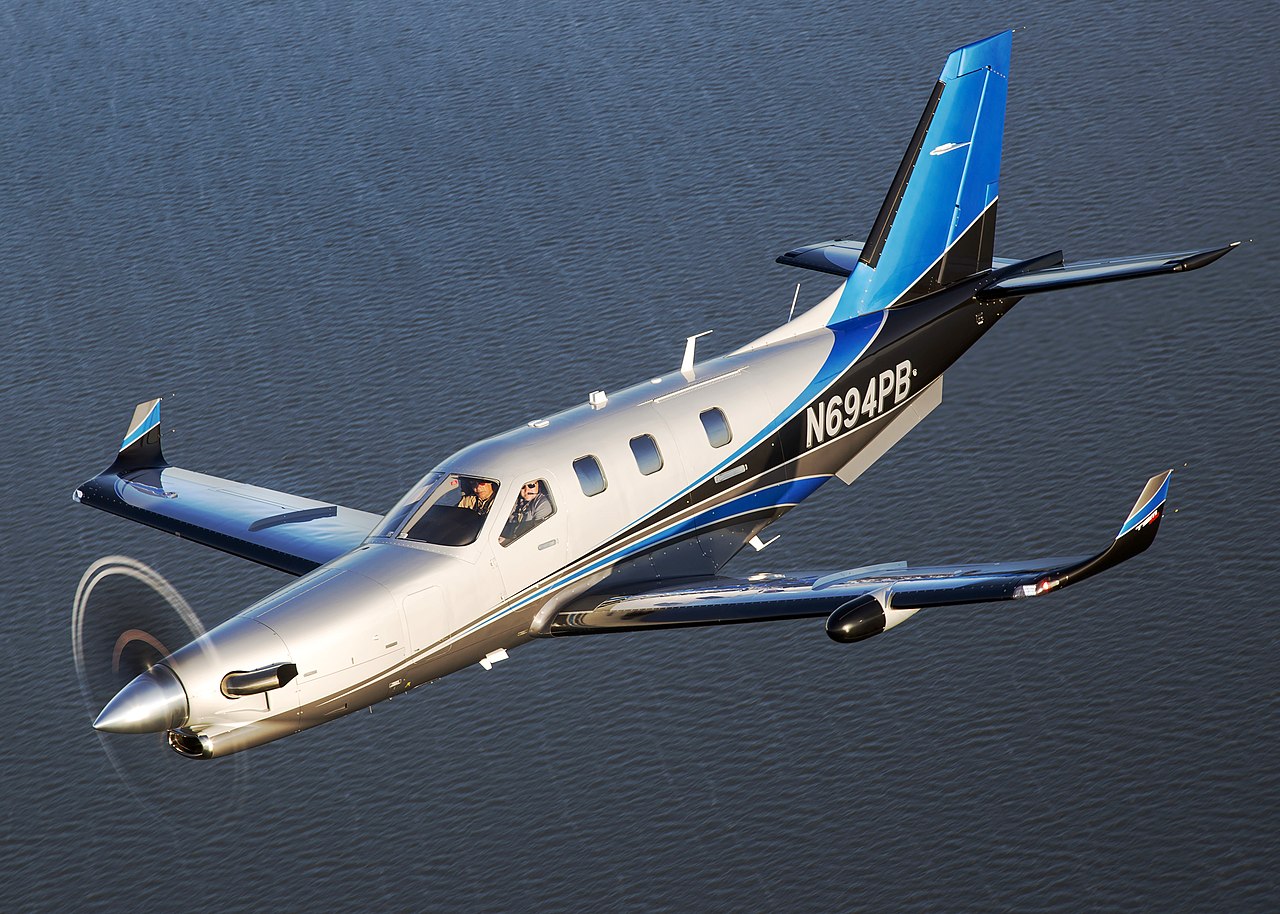
The Daher TBM 930 is a six-seat, pressurised single-engine turboprop business aircraft built in Tarbes, France, and marketed as the fastest certified single-engine turboprop in production. Introduced in 2016 as an avionics-led evolution of the TBM 900, it paired the established TBM airframe with Garmin's first touchscreen-controlled all-glass flight deck, making it a favourite among owner-pilots wanting jet-like speed and short-field capability from a single engine.
The TBM 930 is a high-performance, cabin-class, single-engine turboprop built by Daher (formerly SOCATA Daher) at Tarbes in France. It belongs to the long-running TBM family of business and utility aircraft that trace their lineage back to the Mooney 301, and it occupies a niche between piston singles and light jets, offering pressurised six-seat accommodation with speed and altitude performance well above typical single-engine types.
The TBM line originated with the Mooney 301, a six-seat pressurised piston design that first flew on 7 April 1983. Following Mooney's acquisition by French owners in 1985, the company entered a joint venture with SOCATA, named TBM International, in June 1987, to develop a turboprop derivative; the TBM 700 prototype first flew on 14 July 1988 and received French certification on 31 January 1990 and FAA certification on 28 August 1990. Mooney withdrew from the venture in May 1991, leaving SOCATA to continue development alone. The family subsequently progressed through the TBM 700N, marketed as the TBM 850, and the aerodynamically refined TBM 900, made available from March 2014. The TBM 930 was introduced in April 2016 as a further development of the 900, adding the Garmin G3000 touchscreen avionics suite and an upgraded interior; it did not replace the TBM 900 but was sold alongside it in the lineup. Seventy-four TBM 930s had been built since 2016, before the type was itself succeeded in the lineup by the TBM 940.
The TBM 930 is powered by a single Pratt & Whitney PT6A-66D turboprop, flat rated at 850 shp from a thermodynamic rating of 1825 SHP. Its centrepiece avionics fit is the Garmin G3000 suite, described as the first-ever touchscreen-controlled, all-glass flight deck designed for light turbine aircraft, operated via GTC 580 tactile touchscreen controllers alongside dual 12 inch GDU 1200W primary flight displays and a multi-function display handling engine, pressurisation, electrical, fuel, flap and trim indication and crew alerting. Safety systems include Garmin Electronic Stability Protection (ESP), Underspeed Protection (USP), an Emergency Descent Mode, an angle of attack indicator, and an L3 flight data recorder. The cabin seats six in genuine leather with adjustable backrests, individual air vents and reading lights, a fully enclosed lavatory, and a baggage compartment with straps and nets. Dimensions comprise a wingspan of 42 ft 1 in, length of 35 ft 2 in and height of 14 ft 4 in. Maximum take-off weight is 7,394 lb, against a basic empty weight of 4,629 lb, giving a maximum payload of 1,403 lb and a standard useful load of 2,500 lb; usable fuel capacity is 291 US gallons.
The TBM 930 has a maximum cruise speed of 330 ktas and a maximum range of 1,730 nm with 45 minutes reserve. Maximum approved altitude is 31,000 ft, which the aircraft can reach in 18 minutes 45 seconds. Take-off distance over a 50 ft obstacle is 2,380 ft, and landing ground roll is 2,430 ft without thrust reversers, figures that give it short-field capability more commonly associated with light jets alongside its high cruise speed.
The TBM 930 sits within the wider TBM family that began with the TBM 700 and progressed through the TBM 850 (originally designated TBM 700N) and the aerodynamically refined TBM 900. Introduced in April 2016, the 930 added the Garmin G3000 touchscreen avionics suite and an upgraded interior to the existing TBM 900 airframe and powerplant, and was sold in parallel with the 900 rather than replacing it. The TBM 930 was in turn superseded in the lineup by the TBM 940.
The TBM family has been used for executive transport and light utility work, with Daher citing a cult following of owner-pilots; the wider TBM lineage had attracted nearly 800 owners by the time the 930 was reported on. The TBM 930 itself is aimed at private and business operators wanting six-seat cabin-class comfort combined with speed, range and short-runway performance, and continues to circulate on the used-aircraft market with typical equipment including RVSM certification, traffic advisory and weather radar systems, and satellite datalink.
The TBM 930 is well represented in desktop simulation, most notably as one of the default aircraft in Microsoft Flight Sim, where it is popular for IFR flying and VR use among enthusiasts, some of whom have built dedicated hardware cockpits and 3D-printed throttle quadrants for it. Third-party developers have also produced enhanced or alternative versions of the TBM series, including steam-gauge and older-variant treatments of the TBM 850 and dedicated cockpit builds for the 930, reflecting sustained community interest in the type's blend of turboprop speed and single-pilot complexity.