Departure
96%
vs 96%
 MY FS FLIGHTS
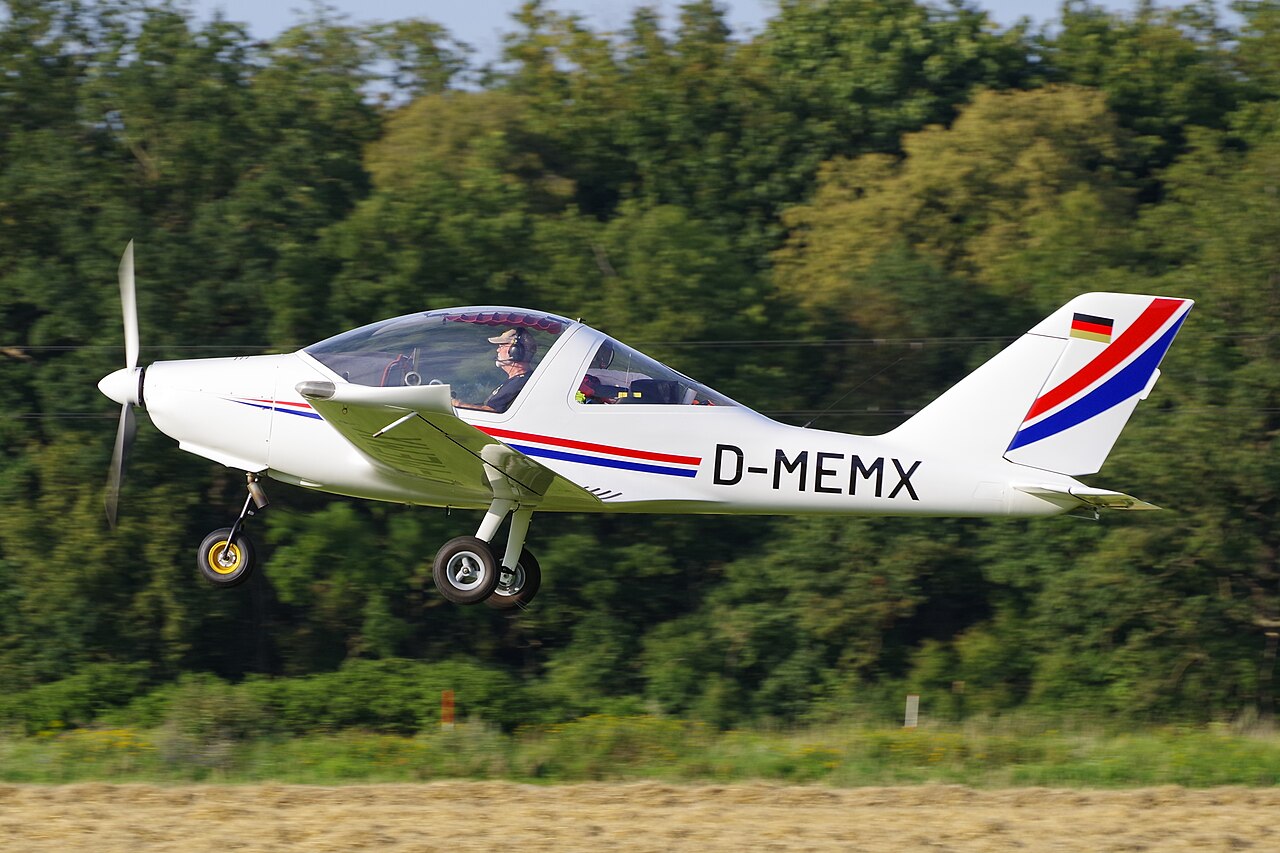
The Sting S4 is a carbon-composite, side-by-side two-seat light sport aircraft built by the Czech manufacturer TL-Ultralight, refined through four generations from the earlier Sting Carbon. In Microsoft Flight Simulator it is modelled as a detailed payware add-on by FSReborn, fitted with Garmin G3X Touch glass cockpit avionics that were updated to Working Title's new G3X system ahead of Sim Update 15, making it a popular choice for pilots wanting a fast, modern LSA with a credible glass panel.
The Sting S4 is a light sport aircraft produced by TL-Ultralight, an all-composite, side-by-side two-seat design with the engine mounted in the nose and a bubble canopy offering wide visibility. It sits at the sporty end of the LSA class, intended for pilots who want cruise performance and cabin comfort closer to traditional general aviation types than to a typical ultralight. In the simulator it is represented as a payware aircraft from FSReborn, built around Garmin G3X Touch avionics, and marketed through the Microsoft Flight Simulator Marketplace.
The Sting S4 follows on from the Sting Carbon, a model produced in nearly 400 units over more than ten years, with TL-Ultralight incorporating owner and pilot feedback from that aircraft into a long and careful development programme for its successor. TL-Ultralight itself has been building aircraft since 1989. The Microsoft Flight Simulator rendition was produced by FSReborn and sold through the in-sim Marketplace; a significant update in May 2024, version 1.9.2.0, replaced the aircraft's original Garmin G3X implementation with the new Working Title G3X avionics code, timed to coincide with the Sim Update 15 beta period, with the developer pushing the PC version out ahead of the official release and the Xbox version following shortly after once it cleared Marketplace certification.
The airframe is of all-composite construction, intended to be strong and light while exceeding structural standards for the class, with a nose gear built to handle hard landings and a steerable nosewheel operated through the rudder pedals, supplemented by toe-operated hydraulic differential disc brakes for tight turns. The cabin is 45 inches wide and can accommodate occupants up to 6 feet 3 inches tall, with the passenger side of the panel angled to improve the pilot's forward view, dual controls, adjustable rudder pedals, electric aileron and elevator trim, and electric flaps. Overall length is 20.3 ft, height 6.3 ft, wingspan 30 ft, wing area 113 square feet, and wing loading 11.68 lb per square foot at the maximum take-off weight of 1320 lb. Empty weight runs from 820 to 870 lb, fuel capacity is 32.5 gallons, and the rear luggage compartment holds up to 55 lb across 5.1 cubic feet. Power comes from the Rotax 912ULS/iS, Rotax 914 Turbo/iS, or Rotax 914iS engine. Every Sting S4 is fitted with a Stratos Magnum Ballistic Parachute Recovery System (Magnum 501, 600 kg) as standard, along with a locking canopy, locking gas caps, wheel fairings, cabin heat with canopy defog vents, anti-collision and landing lights, and a tail skid. The avionics fit centres on the Garmin G3X Touch, available as a single GDU 450 display or dual GDU 460 displays for VFR operation, paired with a GMC 507 autopilot driving GSA smart servos, GTR 205 and GTR 20 radios, a Garmin G5 and GI 275 standby instruments, and a TCW backup battery; the IFR package adds a GNX 375, GNC 355, GTN 650Xi, GNC 215 nav/com, GMA 245 audio panel, a second GSU-25C sensor unit, and a heated GAP 26 angle-of-attack probe.
Published figures give a cruise speed of 120 KTAS and a range of 750 miles, with fuel consumption of 4.5 to 5.5 gallons per hour; a flight review of the type records a cruise closer to 131 knots TAS. Stall speed is 40 KCAS with flaps (Vso) and 45 KCAS clean (Vs1), manoeuvring speed is 97 KIAS, and never-exceed speed is 153 KIAS. Best rate of climb is achieved at 75 KIAS (Vy) and best angle of climb at 72 KIAS (Vx), giving a climb rate of 1200 feet per minute, rising to 1400 feet per minute with the Rotax 914. Glide ratio is quoted at 12:1. Take-off ground roll is 490 ft, extending to 940 ft over a 50 ft obstacle, while landing distance is 390 ft, or 1200 ft over a 50 ft obstacle. The load factor limit is +4/-2g. A flight review describes excellent flight characteristics, including crisp control response and benign stall behaviour, with the aircraft handling confidently even in challenging weather for its class.
The Sting S4 is the fourth-generation development of the TL-Ultralight Sting line, succeeding the Sting Carbon, of which close to 400 examples were built. The S4 can be ordered with a choice of Rotax 912ULS/iS, Rotax 914 Turbo/iS, or Rotax 914iS engines, and with either a VFR avionics package or a more comprehensive IFR-capable Garmin suite.
As a light sport aircraft, the Sting S4 is used for private and recreational flying, including sightseeing and leisure cruising, and is noted as well suited to farm-strip operations. Its speed, composite construction, and glass cockpit give it performance and sophistication that owners and reviewers compare favourably with traditional general aviation types.
In Microsoft Flight Simulator the Sting S4 is offered as a payware aircraft by FSReborn, built around a Garmin G3X Touch avionics suite and featuring modelled systems such as a functional ballistic parachute, tyre wear, and adjustable tyre pressure. Early releases used the original MSFS G3X implementation, which many pilots found limited next to the GTN-style units on other aircraft, but a May 2024 update brought the aircraft onto the new Working Title G3X avionics code ahead of Sim Update 15, alongside full integration with the PMS50/PMS750 GTN750 as an external navigation source; this requires selecting a GTN-equipped livery in the livery selector, since the new G3X units no longer allow hot-swapping between the GTN and standard G3X setups. The same update revised ground physics with new vibration and wheel-dampening effects, corrected a slow tyre-inflation animation, and adjusted the aircraft's simulated weight category to 600 kg. The G3X Navigraph Avionics Plugin allows Navigraph Ultimate subscribers to display Jeppesen charts directly on the panel, with position data shareable to external moving-map devices on Xbox. Pilots flying the add-on describe it as responsive and fun, with handling likened to a DA20 in terms of size, power and visibility, and it is particularly popular for sightseeing and leisure cruising flights, though some users feel the internal engine sound is more subdued than the real aircraft's.