Departure
81%
vs 95% ▼ 14
 MY FS FLIGHTS
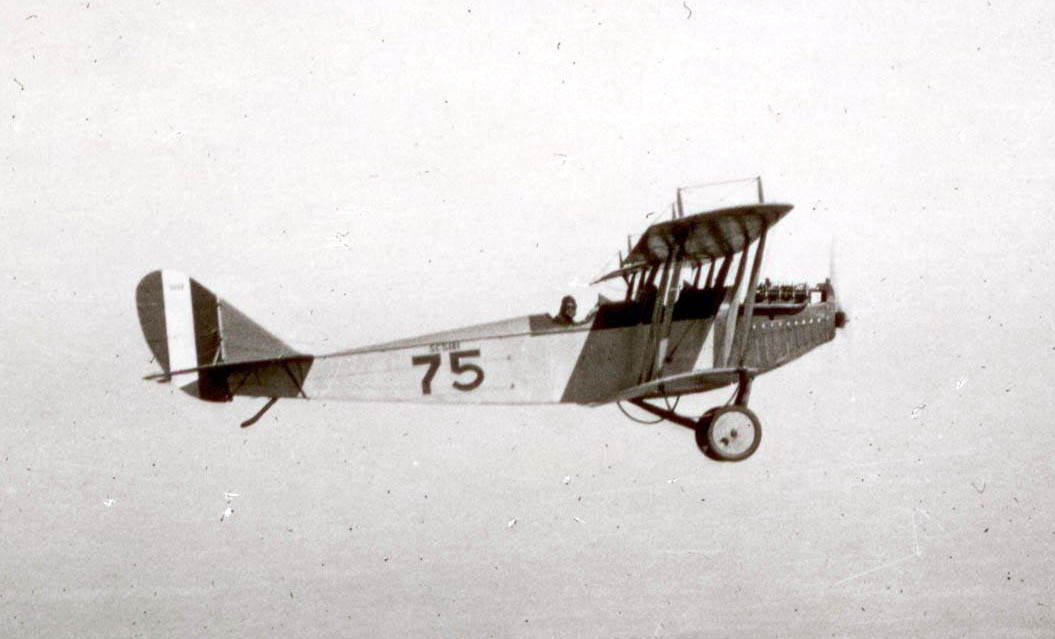
The Curtiss JN-4D Jenny was the definitive version of America's most famous World War I trainer, a twin-seat, dual-control biplane built by the Curtiss Aeroplane and Motor Company and, under wartime contract, five other manufacturers. Introduced in June 1917, it trained the vast majority of American and Allied pilots during the war and went on to become the backbone of civil aviation and barnstorming in the 1920s, making it a foundational type for any pilot interested in early aviation history.
The Curtiss JN-4D Jenny is a twin-seat, dual-control biplane trainer produced by the Glenn Curtiss Aeroplane Company, later the Curtiss Aeroplane and Motor Company, of Hammondsport and Buffalo, New York. It is the definitive and most numerous subtype of the wider Curtiss JN
9N was Djenny was performthe twin cockpit and horizontal tail sursurfaces, and the arrangement gaveit some ofanachronistic charm alongside its more genuine mechanical simplicity that appeals to sim pilots interested in the earliest era of powered training flight.
TheIven Jenny series began commissioned by Glenn Curtiss from the English engineer Benjamin Douglas Thomas,, formerly of Sopwith, working under contract to Curtiss. The design combined the best features of Curtiss's model J and model N trainers, though it was, in fact, a modified model J with only the upper wing span adjusted. Early JN-1 and JN-2 examples were built in limited numbers; the JN-2 was an equal-span biplane with ailerons controlled by a shoulder yoke in the aft cockpit, and it proved deficient in performance, particularly in climbing, because of excessive weight. Eight JN-2s were delivered to the 1st Aero Squadron at San Diego in July 1915 and moved to Fort Sill, Oklahoma the following month; pilots complained the JN-2 was unsafe owing to low power, shoddy construction, lack of stability and an overly sensitive rudder, and after a second crash the type was grounded until replaced by the improved JN-3. The JN-3 introduced unequal wing spans with ailerons only on the upper wings, controlled by a wheel, plus a foot bar for rudder control. Eight JN-3s were deployed to Mexico in March 1916 for aerial observation during the Pancho Villa Expedition. Following that success, Curtiss developed the JN-4, receiving orders from the US Army and, in December 1916, from the Royal Flying Corps for a Canadian-based training aircraft. The definitive JN-4D was introduced in June 1917, just a month after the United States entered the First World War, and wartime demand quickly outstripped Curtiss's own production capacity at its Buffalo, New York factory, then the largest aircraft plant in the world. Between November 1917 and January 1919, six other manufacturers built the JN-4D under contract, commonly cited as Fowler Airplane Corporation, Liberty Iron Works, Springfield Aircraft Corporation, St. Louis Aircraft Corporation and others alongside Curtiss itself. Production from spare and reconditioned parts continued sporadically until 1927, with most late-run aircraft destined for the civilian market in Canada and the United States.
The JN-4D was powered by a 90 hp (67 kW) Curtiss OX-5 V8 engine, giving a top speed of 75 mph (121 km/h) and a service ceiling of 6,500 ft (2,000 m). Some Navy floatplane Jennys used the 100 hp OXX-6 engine instead. The type's tractor propeller layout and forgiving maneuverability made it well suited to initial pilot instruction, and it was flown as a twin-seat, dual-control aircraft with the student seated forward of the instructor.
The JN series evolved through several marks before reaching the JN-4D. The JN-1 and JN-2 were early, limited-production types, with the JN-2 an equal-span biplane using shoulder-yoke aileron control that suffered from excess weight and poor climb performance. The JN-3 corrected these faults with unequal wing spans, wheel-controlled ailerons on the upper wings only, and a rudder foot bar. The JN-4 followed, spawning the Canadian-built JN-4 (Canadian), or "Canuck," which differed from the American version with a lighter airframe, ailerons on both wings, a larger, more rounded rudder, and differently shaped wings, stabilizer and elevators; 1,347 Jennys were produced under license in Canada. The JN-4B saw some civilian and US Air Service and Navy success, while only one experimental JN-4C, fitted with experimental wings, was built. The JN-4D became the definitive production version, with 2,812 built according to one museum source (other figures cite around 2,700 to 2,812). The JN-4H was an advanced-trainer variant re-engined with a 150 hp Wright-Martin-built Hispano-Suiza engine in place of the OX-5, enabling it to carry a machine gun, bomb racks and photographic equipment; it was used, among other roles, at the Langley School of Aerial Photography. The JN-6 was the final production version, also powered by a Wright Aeronautical licence-built 150 hp engine. Other related types included the Curtiss N-9 Navy floatplane trainer, of which over 500 served with the US Navy, the Curtiss JN-6H, and the Twin JN, an enlarged twin-engined observation development powered by two OXX-2 V-8 engines, originally built in 1916 as the JN-5, of which eight were built including two for US Navy service.
Total production across the JN series reached 6,813 by one count, or over 9,000 by another including all licence-built examples, of which the JN-4D was the definitive and most numerous subtype. An estimated 95 percent of American pilots trained during the First World War received their primary instruction on the Jenny, and Royal Flying Corps pilots also earned their wings on the type, both in Ontario and at winter facilities at Camp Taliaferro, Texas. The British used the JN-4 (Canadian) alongside the Avro 504 as their primary wartime trainer. Because deployment was limited to North American bases, no Jennys saw combat service in the First World War, and most were unarmed, though some carried machine guns and bomb racks for advanced training. The type's robust, easily modified structure allowed conversion for other roles: ski undercarriage let the Canadian Jenny fly year-round in harsh weather, and the removable turtle deck behind the cockpits permitted conversion to carry stretchers or supplies, making the JN-4 among the first aerial ambulances both in wartime and afterward. A JN-4D made the first landing at Langley Field in the summer of 1917, and in July-August of that year the first two-way radiotelephony communication was achieved from a JN-4, both to the ground and from plane to plane, at Langley Field. Britain, France, Spain and Australia all operated hundreds of the aircraft. After the war, hundreds of surplus JN-4Ds, some still in unopened packing crates, were sold cheaply to private owners, and the type became central to the barnstorming era of the 1920s, flying stunts, selling rides and appearing in films, a period sometimes called "The Jenny Era" during which it became the first airplane many Americans ever saw in person.