
Departure
98%
vs 95% ▲ 2
Track every flight, analyse your performance,
and master your flying skills with My FS Flights
Get 10 flights free every month!
Tracked and analysed flights over miles
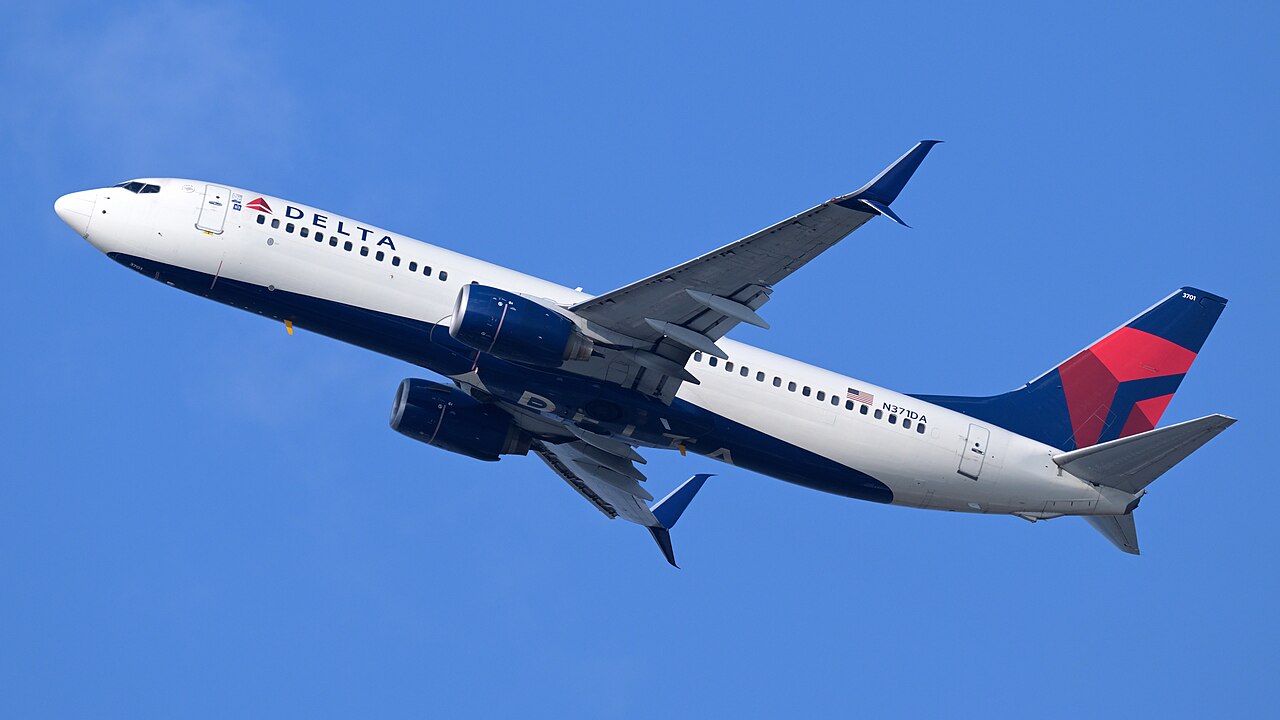
The Boeing 737-800 is a narrowbody, twin-engine jet airliner built by Boeing, forming part of the 737 Next Generation (NG) family alongside the shorter -700 and the longer -900. It is flown as a core short- to medium-haul type by major carriers including WestJet, Delta Air Lines, Alaska Airlines and KLM, and is of interest to anyone tracking the type for its aerodynamic refinements, cabin evolution and role as a mainstay of narrowbody fleets.
The Boeing 737-800 is a narrowbody, twin-engine jet airliner built by Boeing, forming part of the 737 Next Generation (NG) family that also includes the shorter -700 and the longer -900. It is flown by airlines such as WestJet, Delta Air Lines, Alaska Airlines and KLM, for whom it is one of three Boeing 737 types in the fleet alongside the -700 and -900. Configured for short- to medium-haul service, it is used on domestic and regional international routes, with KLM's 737-800s flying mostly to destinations within Europe.
Documented detail on the type's origins is limited, but its place within the wider 737 Next Generation family is clear: it sits between the -700 and -900 in Boeing's line-up, and operators such as KLM fly all three side by side within a single fleet. Across the NG family, aircraft already in service have subsequently received aerodynamic refinements, including the retrofit of Split Scimitar Winglets in place of the earlier Blended Winglet design, aimed at sharpening efficiency on longer-range missions.
The aircraft's aerodynamic efficiency is enhanced by Split Scimitar Winglet technology, an advance on the Blended Winglets fitted to earlier 737 NG aircraft. The retrofit package combines ventral strakes, scimitar-shaped wingtips and trailing-edge wedges, together reducing drag by 2 percent or more on longer-range missions. Paired with modernised engines, these aerodynamic improvements cut fuel consumption per seat by an average of 9 to 14 percent compared with earlier-generation 737s, while also reducing engine noise for improved cabin comfort. Later-build aircraft feature Boeing's Sky Interior, with sculpted sidewalls, larger window reveals and LED mood lighting. Cabin fit-out varies by operator: Alaska Airlines configures its 737-800s with 159 or 161 leather Recaro seats offering additional personal space and seatback power outlets, while WestJet's aircraft range from all-economy layouts of around 32 rows in a 3-3 configuration to premium cabins with adjustable headrests, personal device holders, and a mix of USB-C, USB-A and 120V AC power depending on cabin class. Accessibility provisions commonly include braille and raised row markers, wheelchair-accessible lavatories, onboard wheelchairs, assist handles, seat-belt extenders, baby-change tables and baby bassinets.
Detailed speed, range and ceiling figures are not covered in operator material reviewed, but the aerodynamic package fitted to later 737-800s is credited with a drag reduction of at least 2 percent on long-range sectors and an average cut in fuel burn per seat of 9 to 14 percent relative to earlier 737 variants. The modernised engines fitted alongside these aerodynamic changes also reduce noise, contributing to a quieter cabin environment.
The -800 sits within the 737 Next Generation family between the shorter -700 and the longer -900; KLM, for example, operates all three types within the same fleet, differentiated by size and range rather than by role. Some operators have progressively retrofitted their -800 aircraft with Split Scimitar Winglets in place of the original Blended Winglets to improve efficiency.
The 737-800 is flown as a core short- and medium-haul type by numerous airlines, including WestJet, Delta Air Lines, Alaska Airlines and KLM. At KLM the -800s fly mostly to destinations within Europe, operating as part of a mixed 737 fleet alongside the -700 and -900. Cabin configuration reflects each operator's market positioning: Alaska Airlines fits leather seating with inflight internet access, WestJet offers tiered cabin options with Wi-Fi and power provisions that vary by aircraft, and Delta markets the type as carrying its own signature onboard products and experiences.