Departure
83%
vs 95% ▼ 12
 MY FS FLIGHTS
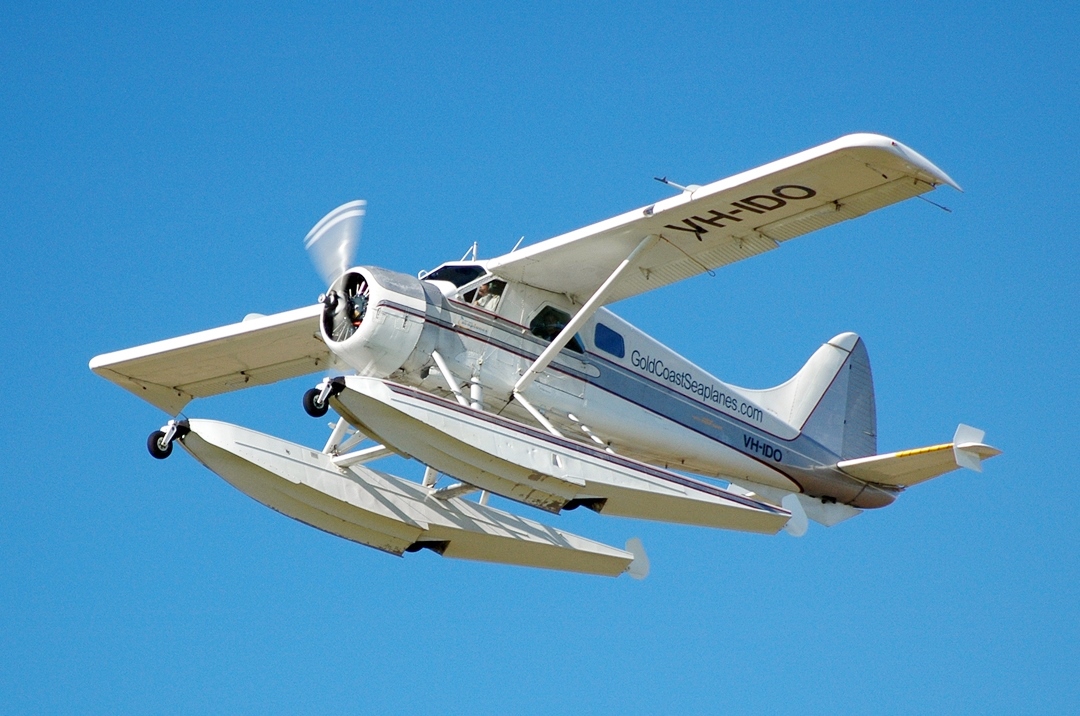
The de Havilland Canada DHC-2 Beaver is a rugged, single-engined, high-wing STOL utility aircraft designed and built by de Havilland Canada from 1947, and is regarded as one of the finest bush planes ever produced. Conceived directly from the feedback of Canadian bush pilots, it combined all-metal construction with a large wing and a powerful radial engine to deliver exceptional short-field performance on wheels, skis or floats, making it a lasting favourite of remote-area and floatplane pilots in the simulator as well as in real life.
The DHC-2 Beaver is a single-engined, high-wing, propeller-driven short takeoff and landing (STOL) utility transport developed and manufactured by de Havilland Canada. Conceived as a bush plane, it has been used across a wide range of civil roles including cargo and passenger hauling and aerial application such as crop dusting and topdressing, as well as military utility duties. It is considered a Canadian icon and one of the most famous bush planes in the world, and remains the most-produced all-Canadian aircraft.
Following the end of the Second World War, de Havilland Canada's management recognised that military orders would decline and decided to focus the company's efforts on the civilian sector. The company had recently hired Punch Dickins as Director of Sales, and he carried out extensive market research by requesting and collecting feedback directly from working pilots to understand what they needed from a new aircraft, rather than relying purely on aerodynamic research or fiscal data. Pilots almost universally asked for tremendous extra power and STOL performance in a design that could easily be fitted with wheels, skis or floats; when de Havilland engineers warned this would hurt cruise performance, one pilot replied, "You only have to be faster than a dog sled to be a winner." Other requests included full-sized doors on both sides of the aircraft so it could be loaded regardless of which side of a dock it was tied to, with the doors made wide enough to roll a 44 Imperial gallon drum inside. On 17 September 1946, de Havilland officially formed a design team consisting of Fred Buller, Dick Hiscocks, Jim Houston and Wsiewolod Jakimiuk, led by Phil Garratt. The aircraft was designed to be all-metal, using steel from the engine to the firewall, heavy aluminium truss frames with panels and doors throughout the front seat area, lighter trusses toward the rear, and monocoque construction aft. De Havilland Canada was still British-owned at the time and initially planned to fit the de Havilland Gipsy engine, which led to an enlarged wing area to compensate for limited power; when Pratt & Whitney Canada offered war-surplus 450 hp Wasp Junior radial engines at low cost, the aircraft retained its long wing while gaining extra power, giving it unbeatable STOL performance for its size. In keeping with de Havilland Canada's convention of naming aircraft after animals, the new type was named after the beaver for its hard-working nature. The prototype, registered CF-FHB, made its maiden flight on 16 August 1947 at Downsview, Ontario, flown by Second World War flying ace Russell Bannock. In April 1948 the first production aircraft was delivered to the Ontario Department of Lands and Forests. Production continued until 1967, by which time 1,657 Beavers had been built (a figure also cited elsewhere as 1,692 built between 1947 and 1968), making it by far the most numerous all-Canadian aircraft design. In 1987 the Canadian Engineering Centennial Board named the DHC-2 one of the top ten Canadian engineering achievements of the 20th century, and the Royal Canadian Mint honoured it on a special edition Canadian quarter in November 1999 and on a 50-cent commemorative gold coin in 2008. After the original line closed, the tooling and type certificate were acquired by Viking Air of Victoria, British Columbia, later reorganised as De Havilland Canada, which continues to manufacture replacement parts and refurbish existing airframes, and which markets a remanufactured DHC-2T Turbo Beaver.
The Beaver was built as an all-metal aircraft at a time when older bush types such as the Noorduyn Norseman still used fabric and wood, employing steel from the engine to the firewall, aluminium truss frames with panels and doors through the front seat area, lighter trusses toward the rear, and monocoque construction aft. Its high wing was given generous area to preserve STOL performance, and it was fitted with a flap configuration that, combined with the wing design, made it a robust aircraft with excellent short takeoff and landing capability even when heavily loaded. It was designed from the outset to be readily fitted with wheels, skis or floats, and featured full-size cargo doors on both sides of the fuselage, wide enough to roll a 44 Imperial gallon drum aboard, so it could be loaded regardless of which side of a dock or jetty it was moored against. The original production version was powered by a Pratt & Whitney R-985 Wasp Junior radial engine of 450 hp. The cockpit features a single pilot's control yoke that can be handed over to the co-pilot in flight. The later DHC-2T Turbo Beaver remanufactured by Viking Air is upgraded with a 680 shp Pratt & Whitney Canada PT6A-34 turboprop, enabling an increased maximum gross takeoff weight of 6,000 lb (2,700 kg) and carriage of up to 2,450 lb (1,110 kg) of freight, roughly a 25 per cent increase in usable payload over the piston original.
The Beaver was built around exceptional STOL performance, prioritising short-field capability and heavy-load handling over outright cruise speed, a trade-off its designers accepted deliberately at the request of bush pilots who valued utility above all else. On approach, the type displays a characteristic typical of de Havilland Canada aircraft: a distinctly nose-low pitch attitude is required to maintain airspeed, and pilots describe it as flying "behind the power curve," since it is a draggy airframe in which raising the nose increases drag exponentially rather than simply reducing speed gently. One published performance figure records a takeoff distance over a 50 ft obstacle of 1,015 feet and a landing distance over a 50 ft obstacle of 1,000 feet.
The original production model was the Mk.I Beaver, powered by the Pratt & Whitney R-985 Wasp Junior radial engine. During the 1960s de Havilland developed the Mk.III Turbo Beaver, fitted with a Pratt & Whitney Canada PT6 turboprop engine; the differing weight distribution required a 28 inch fuselage extension aft of the pilot's seat to keep the aircraft in balance, and sixty examples were built at the Downsview, Ontario factory in the late 1960s before the line closed. In more recent years Viking Air has remanufactured the type as the DHC-2T Turbo Beaver, upgraded with a 680 shp PT6A-34 engine giving increased gross weight and payload, and other modifiers have produced further conversions, including the Wipaire Boss Beaver conversion fitted with a PT6 turbine engine while retaining the original fin shape.
The Beaver became the preferred aircraft of bush pilots servicing remote locations across the Canadian north and has served for decades in cargo and passenger hauling and aerial application work such as crop dusting and aerial topdressing. A Royal New Zealand Air Force Beaver played a supporting role in Sir Edmund Hillary's 1958 Commonwealth Trans-Antarctic Expedition to the South Pole. The type was also widely adopted by armed forces as a utility aircraft; the United States Army purchased several hundred examples, and nine DHC-2s remain in service with the U.S. Air Force Auxiliary (Civil Air Patrol) for search and rescue duties. The British Army also operated the type. Large numbers of Beavers remain operational into the 21st century with regional and remote air carriers and other operators, supported by ongoing parts production and refurbishment work.
The Beaver's defining handling trait, a pronounced nose-low attitude on approach and its tendency to fly "behind the power curve" where raising the nose increases drag sharply rather than simply slowing gently, is a genuine flying characteristic that carries over into faithful simulations of the type and rewards pilots who fly it with proper power and attitude management on approach. Its combination of a single control yoke that can be passed between pilot and co-pilot, full-size cargo doors on both sides of the fuselage, and float, ski or wheel-equipped variants make it a natural fit for bush-flying and backcountry scenarios in flight simulation. The type has long been modelled in desktop simulation, including a floatplane version in FlightGear that debuted in 2005, reflecting its enduring popularity among simulator pilots drawn to remote-area, unimproved-strip and floatplane flying.