
Departure
94%
vs 95% ▼ 1
Track every flight, analyse your performance,
and master your flying skills with My FS Flights
Get 10 flights free every month!
Tracked and analysed flights over miles
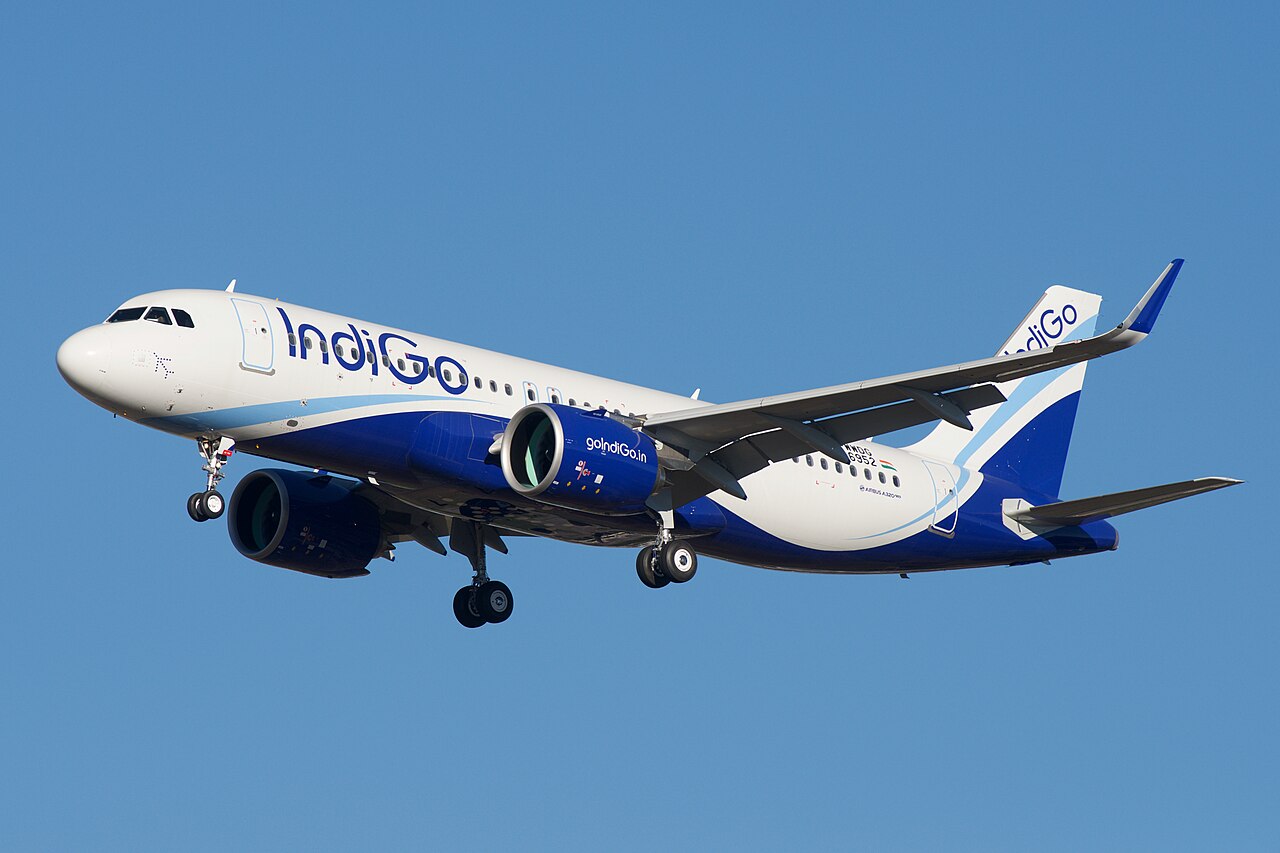
The Airbus A320neo is a re-engined, more fuel-efficient evolution of the best-selling A320 narrow-body airliner family, developed by Airbus and launched in 2010 as the New Engine Option. Fitted with either CFM International LEAP-1A or Pratt & Whitney PW1100G geared turbofan engines and Sharklet wingtip devices as standard, it is the aircraft that has come to dominate the modern short and medium-haul single-aisle market, making it of considerable interest to anyone flying or studying the current A320 family in the simulator.
The A320neo is a narrow-body jet airliner produced by Airbus, forming the re-engined successor to the original A320 family, which is now retroactively known as the A320ceo (current engine option). The neo designation stands for New Engine Option, and the aircraft retains over 95 percent airframe commonality with the earlier A320 while introducing new engines, aerodynamic Sharklet wingtips and cabin improvements. It sits alongside the A319neo and A321neo as part of the wider A320neo family, and remains in production and widespread airline service today.
Airbus began work on incremental efficiency improvements to the A320 as early as 2006 under the A320 Enhanced (A320E) programme, targeting a 4 to 5 percent efficiency gain through larger winglets, aerodynamic refinements, weight savings and cabin changes. Airbus launched the Sharklet blended wingtip device at the November 2009 Dubai Airshow, offering a 3.5 percent fuel burn reduction on flights over 2,800 km at the cost of 200 kilograms added weight. The re-engining decision was accelerated by competitive pressure: a 2010 order for 40 Bombardier CS300s (later the Airbus A220-300) plus 40 options from Republic Airways Holdings, then owner of exclusive A319/320 operator Frontier Airlines, pushed Airbus to respond aggressively to the CSeries rather than allow it to grow unchallenged, as Boeing had previously done with Airbus. On 1 December 2010 Airbus formally launched the A320neo New Engine Option, offering 500 nmi more range or 2 tonnes more payload than the ceo, with a plan to deliver 4,000 aircraft over 15 years. Development costs were predicted at slightly more than 1 billion euros. The first A320neo rolled out of the Toulouse factory on 1 July 2014, and the type made its first flight on 25 September 2014. Certification followed with the Pratt & Whitney PW1100G-JM geared turbofan. Lufthansa took delivery of the first production A320neo on 20 January 2016 and introduced it into commercial service on 25 January 2016, flying it first from Frankfurt to Munich. Production ramp-up proved difficult: Airbus targeted 200 deliveries in 2017 but had delivered only 90 by October that year, with Pratt & Whitney engine supply constraints forcing dozens of completed airframes to be parked awaiting engines. In February 2018, in-flight shutdowns of the PW1100G caused by compressor aft hub and seal issues led the European Union Aviation Safety Agency and Airbus to ground portions of the A320neo fleet until replacement parts were available. Monthly production targets rose steadily, from around 50 A320-family aircraft per month at the start of neo production in 2017 towards a stated goal of 63 per month in 2018 and studies of rates as high as 70 to 75 per month beyond 2019, though engine supplier capacity constrained near-term growth.
The A320neo retains the basic A320 airframe with more than 95 percent commonality with the ceo, but is powered by a choice of two new-generation engines: the CFM International LEAP-1A or the Pratt & Whitney PW1100G geared turbofan (GTF). These new engines burn around 16 percent less fuel than the engines they replace, though roughly 1 to 2 percent of that gain is typically lost once installed on the existing airframe. Sharklet wingtip devices are fitted as standard, adding about 200 kilograms of weight while improving fuel burn on longer sectors, raising available takeoff weights, increasing climb rate and reducing takeoff thrust requirements, which in turn cuts engine maintenance costs by around 2 percent. Overall length is 37.57 m (123 ft 3 in), cabin length 27.51 m (90 ft 3 in), fuselage width 3.95 m (13 ft 0 in), maximum cabin width 3.70 m (12 ft 1 in), wing span 35.80 m (117 ft 5 in), height 11.76 m (38 ft 7 in), track 7.59 m (24 ft 11 in) and wheelbase 12.64 m (41 ft 5 in). Maximum ramp weight is 79.40 tonnes (175,000 lb), maximum take-off weight 79.00 tonnes (174,200 lb), maximum landing weight 68.40 tonnes (149,910 lb) and maximum zero fuel weight 65.30 tonnes (143,300 lb). Maximum fuel capacity is 26,730 litres (7,060 US gallons). Underfloor cargo capacity is 7 LD3-45W containers or 7 pallets, and water volume is 44 cubic metres (1,556 cubic feet). The cabin uses the Airspace interior, shared with the A330neo and A350, featuring customisable lighting, slimmer sidewall panels, redesigned window bezels with integrated shades, full LED lighting and the largest overhead bins fitted to a single-aisle jetliner. A Space-Flex cabin option introduces a revised rear galley and a modular Smart-Lav lavatory arrangement that allows two lavatories to be reconfigured in flight into one accessible toilet, improving space efficiency and, together with cabin rearrangement, allowing up to nine more passengers to be carried and reducing fuel consumption per seat by over 20 percent.
The A320neo has a maximum operating Mach number of M0.82 and a published range of up to 3,400 nmi (6,300 km). Airbus states that the type delivers at least 20 percent lower fuel burn and CO2 emissions per seat compared with the previous-generation A320, and is certified to fly on a Sustainable Aviation Fuel blend of up to 50 percent today, with a target of 100 percent SAF capability by 2030. Against the A320ceo, the combination of new engines and Sharklets is credited with roughly a 15 percent overall fuel saving, and the new engines themselves are around 20 percent cheaper to maintain than the engines used on the ceo.
The A320neo is one of three members of the A320neo family alongside the A319neo and the A321neo, all developed from the earlier A320ceo, A319 and A321 aircraft respectively. The A320neo itself can be fitted with either CFM International LEAP-1A or Pratt & Whitney PW1100G engines, giving airlines an engine choice not offered on the outgoing ceo generation. The A321neo introduced the Cabin-Flex door layout, which allows the carriage of up to 20 more passengers by rearranging exit doors, while the A321XLR, certified with a redesigned rear centre fuel tank and enhanced landing gear and wing flaps, extends the family's range to 4,700 nautical miles (8,700 km) for long-haul single-aisle operations.
IndiGo is the largest A320neo family customer and operator, with 355 aircraft in its fleet. Other major operators of the family include Wizz Air, China Southern Airlines and Frontier Airlines. As of the most recent count, a total of 12,104 A320neo family aircraft have been ordered by more than 130 customers, with 4,643 units delivered and 4,621 in service; the global fleet had completed more than 20 million flights over 44 million block hours, with one hull loss recorded as an airport-safety related accident. By 2019 the A320neo family held a 60 percent market share against the competing Boeing 737 MAX, with the Comac C919 joining the competition in 2023. The wider A320 Family, of which the neo is now the core production variant, has logged more than 20,100 total orders, over 12,600 deliveries, more than 300 operators worldwide and over 380 million flight hours, and an A320 Family aircraft takes off or lands somewhere in the world every two seconds. The type is produced across ten Final Assembly Lines at more than 20 sites worldwide, with new lines inaugurated in Mobile, Alabama and Tianjin, China in 2025.
Because the A320neo shares over 95 percent airframe commonality with the earlier A320ceo and an essentially unchanged fly-by-wire cockpit, pilots moving between the two generations do so with minimal transition training, and Airbus's common cockpit design allows a single type rating to cover the A318, A319, A320 and A321 variants. In the simulator this means the neo flies much like its predecessor in terms of handling and systems logic, with the practical differences being the new LEAP or GTF engine performance modelling, the Sharklet-influenced climb and fuel-burn figures, and, where modelled, the refreshed Airspace cabin. Its status as the highest-selling and most widely flown current-generation narrow-body makes it a natural default choice for pilots wanting a modern, fully fly-by-wire Airbus type representative of contemporary short and medium-haul airline operations.