Departure
90%
vs 95% ▼ 5
 MY FS FLIGHTS
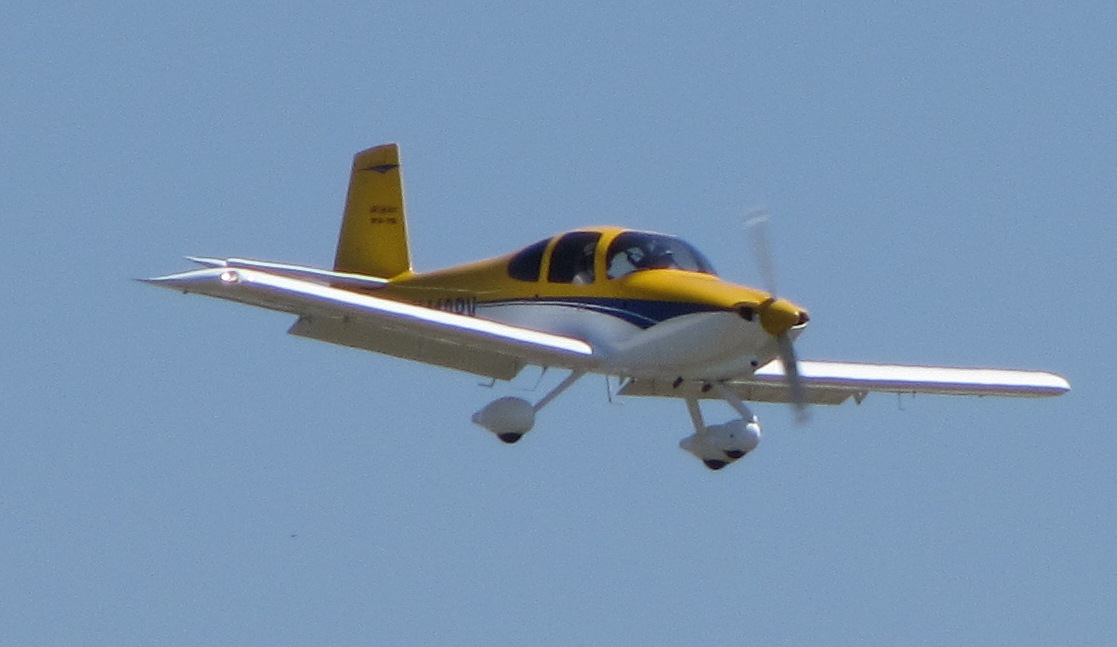
The Van's Aircraft RV-10 is a four-seat, single-engine, low-wing homebuilt aircraft sold in kit form, and the first four-seat design in Van's long-running RV series. Designed by Richard VanGrunsven as a touring machine rather than an aerobat, it combines genuine four-adult cabin space with the brisk cruise speeds and short-field manners the RV line is known for, making it a natural step up for RV pilots wanting to carry a family rather than just a passenger.
The RV-10 is a four-seat, single-engine, low-wing homebuilt airplane manufactured in kit form by Van's Aircraft of the United States. It holds the distinction of being the first four-seat model in the popular RV series, which until its introduction had been built around two-seat designs. Fitted with fixed tricycle landing gear and a six-cylinder Lycoming powerplant, it occupies the touring end of the RV range, aimed at pilots who want to carry a full family rather than fly aerobatics.
The RV-10 was conceived by Van's Aircraft designer Richard VanGrunsven to meet market demand for a four-seat version of the RV series, after the company had built its reputation entirely on two-seat aircraft. Van's Aircraft has described the decision to develop it as a significant business risk at the time, moving the company beyond its established two-seat footprint. The prototype first flew on 29 May 2003, taxiing out and lifting off after roughly 450 feet with company staff watching from the taxiway, and the first kit parts were delivered to a customer in September 2003. The design drew on production and engineering lessons learned from the RV-7, RV-8 and RV-9, including computer-assisted design with matched-hole, pre-drilled kit parts to speed construction, and a new thicker-chord, high-lift wing airfoil developed from experience with the RV-9/9A. As of November 2022, 1,010 RV-10s had been completed and flown. In February 2019 BRS Aerospace released a ballistic parachute kit for the RV-10, installable on a completed aircraft or one still under construction, occupying about a third of the baggage bay and weighing 82 lb (37 kg).
The RV-10 is of aluminium construction, with the cabin structure and its distinctive gull-wing doors made from composite materials; the composite cabin top also provides roll-over protection for the occupants. It is offered only with fixed tricycle landing gear, using tubular steel gear legs, with the nosewheel mounting tube welded directly to the engine mount; the nosewheel is free-castering and the aircraft is steered by differential toe braking, as on other nosewheel-equipped RVs. It is the first RV without a hinged or sliding canopy, instead using two gull-wing doors for cabin access from both sides. Van's originally planned three engine options: a lighter 210 hp Continental IO-360ES and two Lycoming IO-540 variants of 235 and 260 hp, but support for the Continental was later discontinued after a builder poll showed most preferred the Lycoming, though this created complications for builders in countries with engine displacement restrictions where the Continental's 360 cu in (5.9 L) capacity would otherwise have been advantageous. The production aircraft is designed around a Lycoming O-540 six-cylinder, air-cooled engine of up to 260 hp, with the prototype flown on a fuel-injected 260 hp Lycoming IO-540 driving a two-blade constant-speed Hartzell propeller. Dimensions are a wingspan of 31 ft 9 in (9.68 m), length of 24 ft 5 in (7.44 m), height of 8 ft 8 in (2.64 m) and wing area of 148 sq ft (13.7 sq m). Empty weight ranges from about 1,520 to 1,630 lb depending on engine and equipment, with a gross weight of 2,700 lb (1,225 kg) and wing loading of 18.6 lb/sq ft. Fuel capacity is 60 US gallons, and the baggage compartment, loaded through a door on the left side, accepts 100 lb; rear seatbacks can be removed in a couple of minutes to free up extra baggage space if fewer than four occupants are aboard. The cabin was designed to seat four full-sized adults up to 6 ft 4 in tall with genuine leg and headroom in both rows, and pilot seats can be adjusted while occupied.
With the 260 hp Lycoming, the RV-10 has a maximum speed of 208 mph (335 km/h, 181 kn) and a 75 percent power cruise at 8,000 ft of 197 mph (317 km/h, 171 kn), with Van's own figures giving a top speed of 211 mph and a 75 percent cruise of 201 mph at light weight. Stall speed at gross weight is 63 mph (101 km/h, 55 kn). Range at 75 percent power at 8,000 ft is 825 miles (1,328 km, 717 nmi), with Van's quoting up to 1,000 statute miles at 55 percent power. Service ceiling is 20,000 ft with the 260 hp engine, rising to 24,000 ft at light weight according to Van's performance tables, and rate of climb at gross weight is 1,450 ft/min, improving to 1,950 ft/min at light weight. Takeoff distance at gross weight with the 260 hp engine is quoted at 500 ft and landing distance at 650 ft. Van's Aircraft describes the RV-10 as deriving its cruise speed from a clean, light airframe rather than a large engine, allowing economical cruising at 50-55 percent power, and notes it retains RV-family short-field capability even at maximum gross weight, able to operate from grass, gravel or paved strips. It is generally characterised as responsive yet stable and easy to fly, without the aerobatic sensitivity of earlier two-seat RVs in the line.
The RV-10 has not spawned distinct factory sub-variants in the way some other RV models have, remaining a single fixed-gear, four-seat design available with either 235 hp or 260 hp Lycoming power. One notable derivative application saw an RV-10 airframe used as the testbed for the Diemech TP 100 turboprop engine of 241 hp, first flown on 8 June 2014; this testbed was fitted with 120-gallon fuel tanks for testing at altitudes up to 20,000 ft. The RV-10's four-seat concept and construction approach later fed into the design of the later RV-14, which is listed as a related development in the RV line.
As a homebuilt kit aircraft, the RV-10 is built and flown by private owner-pilots rather than operated by commercial or military fleets. Van's Aircraft states that the average first-time builder can complete the kit in around 2,000 hours, and the design includes quick-build kit options with pre-assembled wings and fuselage to reduce construction time. It is commonly used for personal touring and family transport, valued for carrying four adults, luggage and fuel while retaining RV-family short-field performance, and it is a regular sight at events such as EAA AirVenture Oshkosh, with builder aircraft flown there from across the country.