Departure
97%
vs 95% ▲ 2
 MY FS FLIGHTS
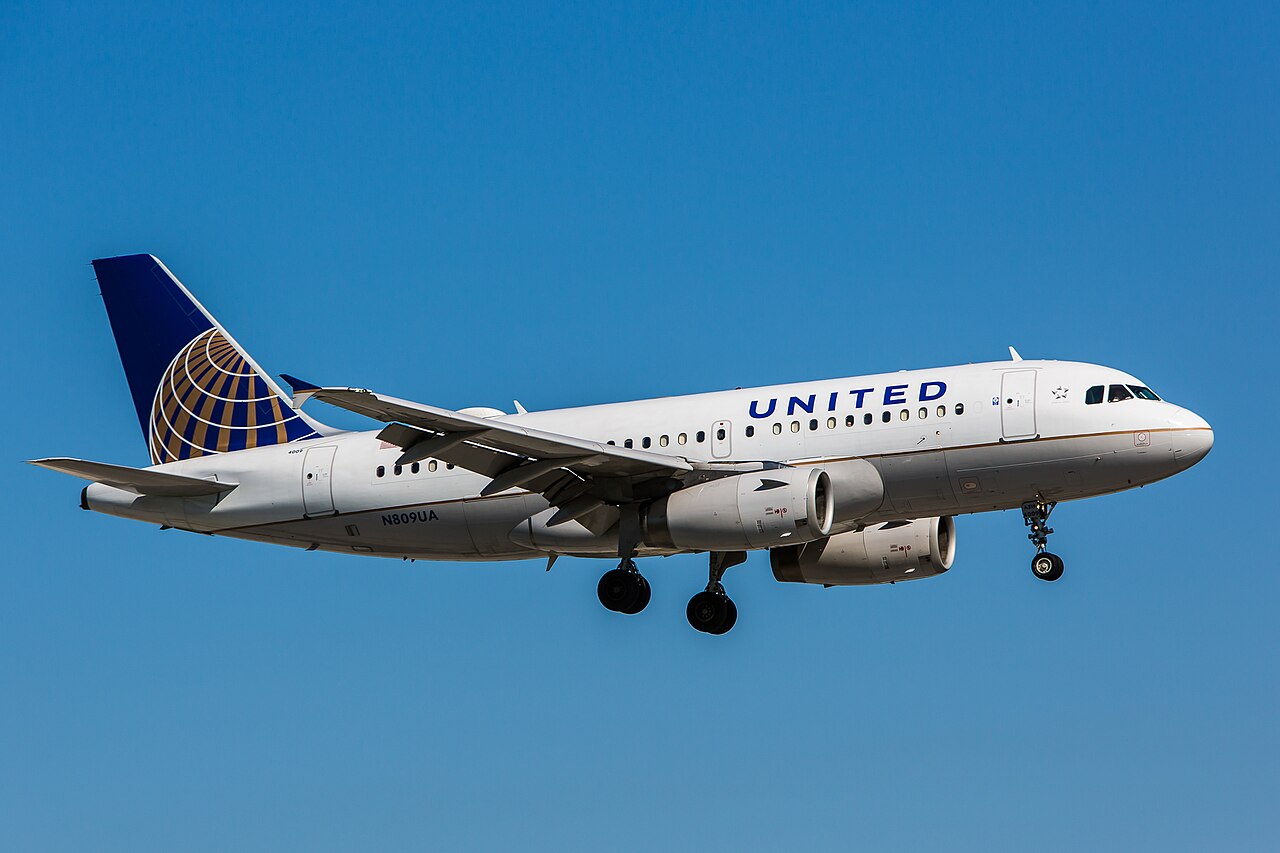
The Airbus A319 is a shortened-fuselage member of the Airbus A320 family, a short- to medium-range, narrow-body, twin-engine jet airliner built by Airbus for the 124 to 156-seat market. It entered service with Swissair in 1996 and has gone on to become a mainstay of low-cost and legacy carriers alike, prized for sharing a common type rating with the rest of the A320 family. For the simulator pilot it represents the compact end of the fly-by-wire A320 line, offering the same sidestick-controlled handling in a smaller, lighter airframe.
The A319 is a narrow-body, twin-engine jet airliner manufactured by Airbus as part of the A320 family of short- to medium-range commercial aircraft. It typically carries between 124 and 156 passengers and has a maximum range of 3,700 nautical miles (6,900 km). Final assembly of the aircraft took place in Hamburg, Germany, and in Tianjin, China. As the shortened derivative of the A320, it sits alongside the standard A320, the stretched A321 and the further-shortened A318 in one of the most widely flown airliner families in the world.
The A320 family began with the A320 itself, launched in March 1984 and first flown on 22 February 1987. The family was later extended with the stretched A321, delivered from 1994, the shortened A319 in 1996, and the further-shortened A318 in 2003. The A319 was developed at the request of Steven Udvar-Hazy, then president and CEO of ILFC. Its design traces back to the 130- to 140-seat SA1 study, part of Airbus's early Single-Aisle studies, which was shelved while the consortium concentrated on the larger A320 and A321. After strong sales of those types, Airbus revisited the concept as the A320M-7, denoting an A320 minus seven fuselage frames, intended to compete directly with the Boeing 737-300/-700. Airbus began offering the new model from 22 May 1992, with ILFC as the launch customer for six aircraft. Anticipating further orders from Swissair and Alitalia, Airbus formally launched the programme, valued at $275 million (250 million euro), on 10 June 1993. The first A319 underwent final assembly at Airbus's Hamburg plant from 23 March 1995, was rolled out on 24 August 1995, and made its maiden flight the following day. Certification for the CFM56-5B6/2-powered variant was granted in April 1996, with the V2524-A5 qualification following the next month, after a certification programme totalling 350 airborne hours across two aircraft. The first delivery, to Swissair, took place on 25 April 1996, and the aircraft entered service by the end of that month. In January 1997 an A319 set a record during a delivery flight, covering 3,588 nautical miles (6,645 km) on the great circle route from Hamburg to Winnipeg, Manitoba, in 9 hours 5 minutes. Production ran from 1994 to 2021, with 1,516 aircraft built as of May 2025 and 1,518 delivered by August 2025, of which 1,264 remained in service and a further 24 were on order. In December 2010 Airbus announced the re-engined A320neo family, which included a similarly shortened A319neo variant; the earlier generation was retroactively renamed the A319ceo.
The A319 is a minimum-change, shortened-fuselage derivative of the A320. The shrink was achieved by removing four fuselage frames forward of the wing and three aft of it, cutting overall length by 3.73 metres (12 ft 3 in) compared with the A320. As a result the number of overwing emergency exits was reduced from four to two, though high-density configurations, such as the 156-seat aircraft used by EasyJet, retain four overwing exits. The bulk-cargo door fitted to the A320 was replaced by an aft container door sized for reduced-height LD3-45 containers. Minor software changes were made to accommodate the aircraft's different handling characteristics, but otherwise it remains largely unchanged from the A320. Power is provided by either the CFM56-5A engine from CFM International or the V2500-A5 from International Aero Engines, both derated to 98 kN (22,000 lbf) thrust, with an option for 105 kN (24,000 lbf). Notably, the A319's wingspan is wider than its overall fuselage length. The corporate ACJ319 derivative can be fitted with up to six additional centre fuel tanks in the cargo compartment and has an increased service ceiling of 12,500 m (41,000 ft).
With virtually the same fuel capacity as the A320-200 but fewer passengers, the A319 achieves greater range: 6,650 km (3,590 nmi) carrying 124 passengers in a two-class layout, extending to 6,850 km (3,700 nmi) with Sharklet wingtip devices fitted. Overall the type is quoted with a maximum range of 3,700 nmi (6,900 km; 4,300 mi). The ACJ319 corporate variant, fitted with auxiliary centre tanks and carrying an eight-passenger payload, can reach up to 6,000 nautical miles (11,100 km).
The A319CJ, rebranded the ACJ319 'Elegance', is the corporate jet version of the A319. It incorporates removable extra fuel tanks, up to six additional centre tanks installed in the cargo compartment, and has an increased service ceiling of 12,500 m (41,000 ft) compared with the standard airliner; on resale it can be reconfigured back to a standard passenger layout. The A319neo is the re-engined member of the A320neo family sharing the A319's shortened fuselage, combining new, more efficient engines with airframe improvements including Sharklet winglets for fuel savings of up to 15 percent; however, A319neo sales have been much lower than for other A320neo family variants, accounting for around 1 percent of A320neo family orders by June 2020. The further-shortened A318 and the standard A320 are close relatives within the same family, sharing the same basic design philosophy as the A319.
The A319 entered commercial service on 25 April 1996 with launch customer Swissair. It proved particularly popular with low-cost carriers, with EasyJet alone taking delivery of 172 examples. Northwest Airlines concluded an agreement with Airbus in September 1997 for an initial order of 50 A319s, rapidly building a fleet of around 30 aircraft within two years before taking delivery of its 71st and final A319 in December 2003. As of the most recent figures, American Airlines is the largest operator of the type with 133 A319ceo aircraft in its fleet, with United Airlines, EasyJet and Delta Air Lines also listed among the primary users of the type.
Because the A319 shares a common type rating with every other member of the A320 family, pilots already qualified on the A320 or A321 can fly it without further type-specific training, a feature that carries over naturally into simulated operations across the family. It inherits the A320 family's pioneering digital fly-by-wire flight control system and sidestick controls, so handling characteristics in the simulator closely mirror those of its larger siblings, with only minor software differences accounting for the shortened airframe's slightly different handling behaviour. Its shorter fuselage and unchanged wing, fuel capacity and engine options make it a slightly lighter, longer-legged variant within the family for a given passenger load, which is worth bearing in mind when planning simulated sectors on the type.