Departure
71%
vs 95% ▼ 24
 MY FS FLIGHTS
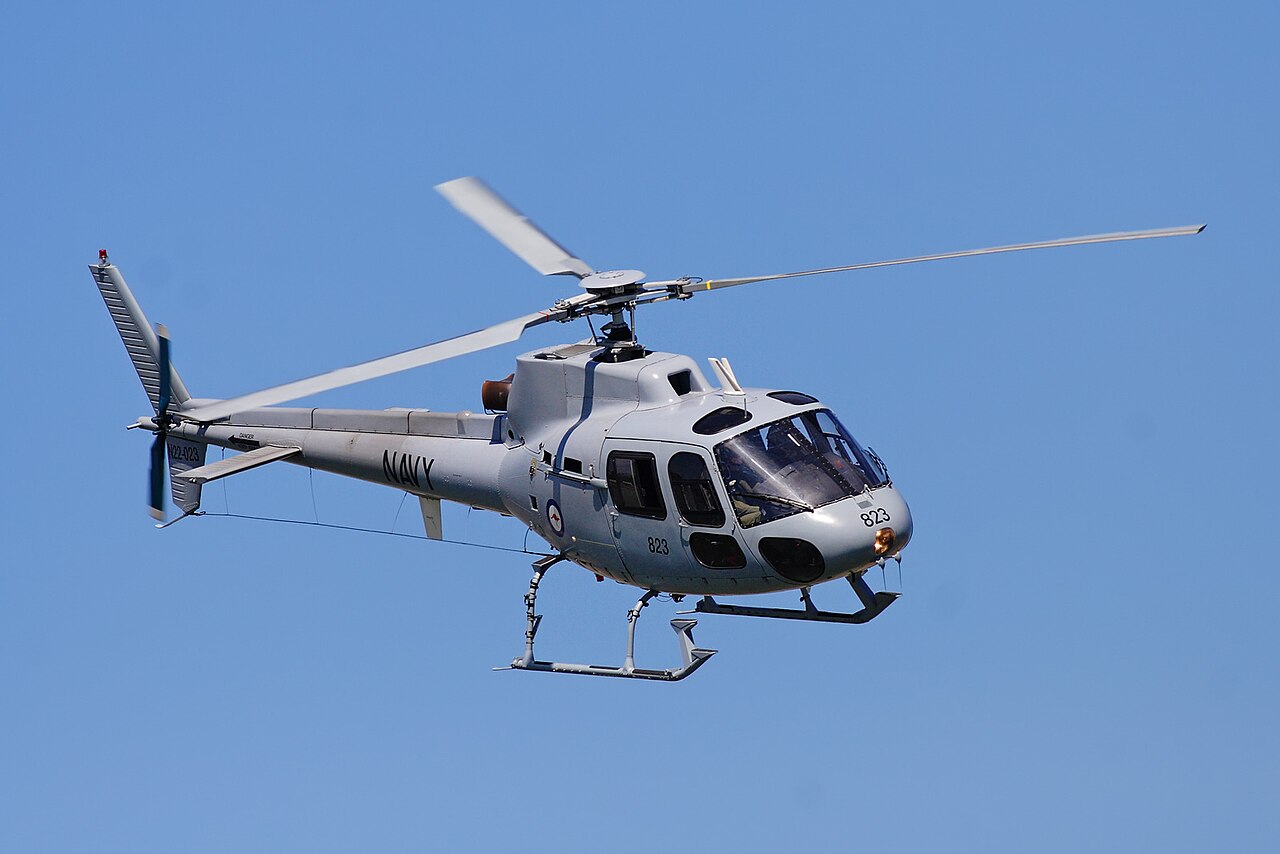
The Airbus H125 is a light single-engine helicopter built by Airbus Helicopters, descended from the Eurocopter AS350 Ecureuil family and long marketed in North America as the AStar. Renowned for its power-to-weight ratio and high-altitude performance, it dominates the light utility and multi-mission helicopter market, making it a familiar sight in everything from law enforcement patrols to Everest rescue operations, which gives simulator pilots a genuinely representative and versatile type to fly.
The H125 is Airbus Helicopters' light single-engine helicopter, built around the Ecureuil (Squirrel) airframe first known as the AS350 and long sold in North America under the AStar name. It is a single main and tail rotor design seating one or two pilots and up to six passengers, and it is pitched by Airbus as the leading aircraft in the intermediate single-engine helicopter category across civil, para-public and light military-adjacent roles.
The type traces its lineage to the Eurocopter AS350 Ecureuil, an aircraft with a long and storied history in the light single-engine segment, later rebranded H125 under Airbus Helicopters. In 2024 the wider Ecureuil family marked 50 years since its maiden flight and passed 40 million flight hours, underlining the type's longevity. The H125 has continued to evolve, with Airbus Helicopters and Moog's Genesys Aerosystems developing a single-pilot instrument flight rules (IFR) capability, featuring an upgraded cockpit, a new autopilot and redundant hydraulic and electrical systems, certified by the US Federal Aviation Administration in March 2025, with first IFR-capable deliveries planned for 2025 from the Airbus Helicopters assembly line in Columbus, Mississippi. By that point more than 4,300 H125 family helicopters were in service worldwide, and the type held around an 80 percent market share in its category in 2024. Across the single-engine AS350/AS550 lineage, total accumulated flight hours exceed 31.9 million, with the fleet-leading in-service AS350 B2 having logged 39,000 flight hours and the longest-serving example, an AS350B1, having been in service for 46 years.
The H125 is powered by a single Safran Helicopter Engines Arriel 2D turboshaft rated at 710 kW (952 shp) for takeoff, controlled through a dual-channel full authority digital engine control (FADEC) system with an engine data recorder, and it is fitted with a dual hydraulic flight control system as standard. Rotor diameter is 10.69 m (35.07 ft) and the overall D-value is 12.94 m (42.45 ft). Cabin internal volume, excluding the pilot's area, is 3.00 cubic metres (105.94 cu ft). Maximum takeoff weight with the dual-hydraulics configuration is 2,370 kg (5,225 lb), rising to 2,800 kg (6,173 lb) with an external load; useful load is 1,075 kg (2,373 lb) and the standard fuel tank holds 425 kg (937 lb). The cabin can be configured for one pilot plus six passengers or two pilots plus four passengers, with Airbus offering four-, five- and six-passenger layouts tailored to VIP and business use, commercial transport, and tourism and sightseeing operations respectively. The IFR-capable variant adds redundant hydraulic and electrical systems alongside the upgraded avionics and autopilot.
At maximum takeoff weight in ISA conditions the H125 has an EASA-certified hover ceiling out of ground effect of 3,871 m (12,700 ft) and in ground effect of 4,420 m (14,500 ft). Fast cruise speed at MTOW is 252 km/h (136 kt), giving a maximum range at that speed of 630 km (340 NM) and maximum endurance of 4 hours 27 minutes. The aircraft is flight-envelope rated from -40°C to ISA +35°C, limited to 50°C, and its maximum altitude in flight is 7,010 m (23,000 ft). The type holds the world helicopter altitude record at 29,029 ft, and Airbus describes it as offering unrivalled power, safety, versatility and manoeuvrability among light single-engine helicopters, qualities borne out by its regular use in demanding high-altitude operations such as rescue work in the Andes at over 6,000 metres.
The H125 is the current Airbus Helicopters designation for the aircraft long known as the Eurocopter AS350 Ecureuil, and marketed in North America as the AStar. Passenger configurations include a four-seat layout aimed at VIP, private and business aviation, a five-seat commercial transport standard, and a six-seat configuration favoured by tourism and sightseeing operators. A single-pilot IFR variant has been developed with Moog's Genesys Aerosystems, incorporating an upgraded cockpit, new autopilot and redundant hydraulic and electrical systems, with deliveries beginning in 2025 from the Columbus, Mississippi production line.
The H125 serves across a very wide mission set, including law enforcement and border security, emergency medical services, firefighting, search and rescue, powerline work, aerial survey, VIP and private transport, and tourism and sightseeing flights. Airbus markets dedicated mission packages for police, search and rescue, firefighting, HEMS and powerline operations. Recent orders illustrate this breadth: the Nova Scotia Department of Natural Resources completed a fleet renewal with four H125s, and US Customs and Border Protection Air and Marine Operations ordered 10 H125s to support law enforcement, border security and public safety missions across the United States, aircraft that will be manufactured at Airbus' Columbus, Mississippi facility. The type is also used in aerial cinematography, including work on major film productions, and has featured in high-altitude extraction operations, including on Mount Everest.
Pilots flying the H125 benefit from the aircraft's reputation for power, manoeuvrability and forgiving handling in demanding conditions, qualities that stem from its Arriel 2D engine, dual-channel FADEC and dual hydraulic flight control system, all of which are designed to reduce pilot workload during complex or tactical flying. The newer single-pilot IFR variant, with its upgraded cockpit and autopilot, extends the type's usable envelope into low-visibility and poor-weather operations, adding an instrument-flying dimension to a helicopter otherwise associated with visual, high-altitude and multi-mission utility work such as law enforcement patrol, aerial firefighting and mountain rescue.