Departure
98%
vs 95% ▲ 3
 MY FS FLIGHTS
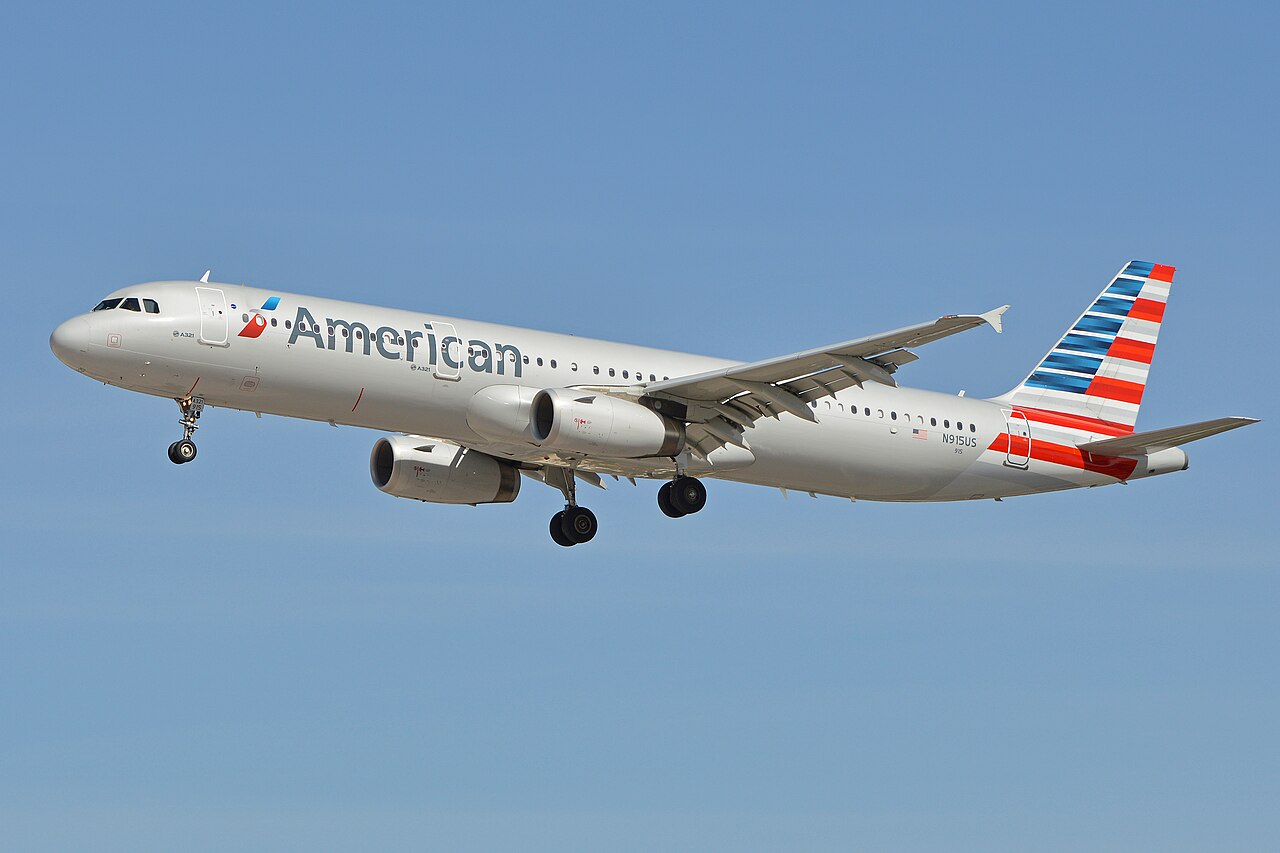
The Airbus A321 is a stretched, single-aisle derivative of the A320, built by Airbus as the largest member of its narrow-body family and seating between 185 and 239 passengers in its original form. It entered airline service with Lufthansa in January 1994 and was later re-engined as the A321neo, which today forms the backbone of many major carriers' short and medium-haul narrow-body fleets. For a simulator pilot it is of particular interest because it shares a common type rating with the rest of the A320 family, meaning the same systems and cockpit philosophy apply across a jet that has grown considerably in size, weight and range since launch.
The Airbus A321 is a narrow-body, twin-engine jet airliner and the first and largest derivative of the Airbus A320, built for the short to medium range market and carrying between 185 and 239 passengers in its original configuration. It is a low-wing cantilever monoplane with a conventional tail unit, a single vertical stabiliser and rudder, and retractable tricycle landing gear, powered by two wing pylon-mounted turbofan engines. The type shares a common type rating with every other A320-family variant, so pilots qualified on the A320 can fly the A321 without further training. A re-engined generation, the A321neo, was launched in December 2010 and now carries up to 244 passengers with improved fuel efficiency and range, and it has the longest fuselage of any Airbus narrow-body in commercial use.
The A321 programme was launched on 24 November 1988, around the time the original A320 entered service, after Airbus secured commitments for 183 aircraft from ten customers. Known during development as the Stretched A320, A320-500 and A325, the first prototype, registration F-WWIA, made its maiden flight on 11 March 1993 fitted with IAE V2500 engines, followed in May 1993 by a second prototype powered by CFM56-5B turbofans. Lufthansa and Alitalia were the launch customers, ordering 20 and 40 aircraft respectively; Lufthansa took delivery of its first V2500-A5-powered A321 on 27 January 1994, with Alitalia receiving its first CFM56-5B-powered aircraft on 22 March 1994. The A321-100 entered service with Lufthansa in January 1994. Final assembly was carried out in Hamburg, the first time an Airbus type had been assembled outside Toulouse, a decision that followed a dispute between the French, who argued the new line would incur $150 million in unnecessary expenditure, and the Germans, who believed it would prove more productive in the long run. To fund development, Airbus entered the bond market for the first time, raising $480 million, and borrowed a further $180 million from the European Investment Bank and private investors. As of 30 June 2025, 3,536 A321 airliners had been delivered. The re-engined A321neo was announced in December 2010 as a replacement for the A321ceo, offering new engines and sharklets as standard. Its prototype, registered D-AVXB and fitted with CFM International LEAP-1A engines, first flew in Hamburg on 9 February 2016, a 29-minute flight flown by test pilots Martin Scheuermann and Bernardo Saez Benito Hernandez. AerCap placed the first order on 27 April 2011, while IndiGo became the first airline customer on 22 June 2011 with an order for 304 aircraft. The type gained certification with Pratt & Whitney engines on 15 December 2016, followed by simultaneous EASA and FAA certification of the CFM LEAP-powered variant on 1 March 2017, nine days before Boeing introduced its competing 737 MAX. The first A321neo, leased by GECAS and configured with 185 seats and LEAP engines, was delivered to Virgin America and entered commercial service on 31 May 2017; Virgin America later merged with Alaska Airlines, which absorbed the fleet. Early Pratt & Whitney PW1100G reliability issues caused retrofit-related delivery delays, affecting operators including Cebu Pacific, Air New Zealand and Hawaiian Airlines. By 2019 some 4,200 A321s had been ordered, a quarter of all Airbus single-aisle orders, including 2,400 neos, a third of all A320neo orders.
The A321 is a low-wing cantilever monoplane with a conventional single-fin tail and retractable tricycle undercarriage, powered by two wing pylon-mounted turbofans supplied either by CFM International (CFM56) or International Aero Engines (V2500), both in the 133-147 kN thrust range. The fuselage stretch that distinguishes it from the A320 comprises a 4.27 m plug ahead of the wing and a 2.67 m plug behind it, making the A321 6.94 m longer overall. This length increase required the A320's overwing window exits to be converted into door exits repositioned ahead of and behind the wing. To preserve performance with the added length and weight, Airbus fitted double-slotted flaps and minor trailing-edge modifications, increasing wing area from 124 m2 to 128 m2, while the centre fuselage and undercarriage were reinforced to absorb a 9,600 kg increase in maximum take-off weight, bringing the A321-100 to 83,000 kg. The later A321-200 exceeded 44.5 m in length with MTOW raised to 93,000 kg, wingspan remaining unchanged aside from the addition of various wingtip devices. Over more than 30 years the type's MTOW grew by 20 percent, from 83 tonnes on the -100 to 101 tonnes on the A321XLR, while seating density rose by around 10 percent to 244 seats. The A321neo retains the same overall length as the ceo but introduces CFM International LEAP-1A or Pratt & Whitney PW1100G-JM engines rated between 109 and 156 kN, along with sharklets and extended fuselage fuel tanks as standard; Airbus advertises a 20 percent improvement in fuel efficiency per passenger. Its maximum take-off weight is 97 tonnes. An Aircraft Cabin Flex (ACF) door layout became available from 2015, replacing the second pair of doors ahead of the wing with Type III+ overwing exits featuring dual-lane slides to accommodate higher-density cabins; the ACF configuration adds about 100 kg to aircraft weight and first flew on 31 January 2018.
The original A321-100 had a range of around 2,300 nmi at its 83,000 kg MTOW. As the family developed, range roughly doubled: the A321neo offers a range of 3,995 nmi at an MTOW of 97 tonnes, while the further-developed A321XLR extends MTOW to 101 tonnes and range to around 4,700 nmi. Airbus states the neo's new engines and airframe changes deliver up to 15-20 percent fuel savings compared with the ceo, along with either 500 nmi of extra range or two tonnes of additional payload capability. In service, Hawaiian Airlines found its 189-seat A321neos well suited to 2,100-2,300 nmi routes between Hawaii and the US West Coast, reporting slightly lower per-seat costs than its 294-seat Airbus A330-200s on comparable missions. Because the A321 shares a common type rating with the rest of the A320 family, handling and cockpit procedures are consistent across the range despite the significant differences in weight and length between variants.
The principal early production models are the A321-100, the initial version introduced with Lufthansa in January 1994, and the higher-weight A321-200, which stretched length beyond 44.5 m and raised MTOW to 93,000 kg. The re-engined A321neo followed, offered with either CFM International LEAP-1A or Pratt & Whitney PW1100G-JM engines and sharklets as standard, and available with the Aircraft Cabin Flex door and exit arrangement from 2018. Continued development pushed maximum take-off weight to 101 tonnes and range to around 4,700 nmi in the further-developed A321XLR, reflecting a 20 percent overall growth in MTOW and a doubling of range since the original -100.
Lufthansa and Alitalia were the launch operators of the A321, taking delivery of V2500-powered and CFM56-powered aircraft respectively in early 1994. The type went on to become the best-selling member of the A320 family, with American Airlines emerging as its largest operator, holding 302 examples, alongside significant fleets at China Southern Airlines. On the neo side, IndiGo placed the largest single order at launch, for 304 aircraft, while Wizz Air became the largest operator of the A321neo. Virgin America introduced the A321neo into commercial service in May 2017, and following its merger with Alaska Airlines in 2018, Alaska absorbed the Virgin fleet. Hawaiian Airlines has used the A321neo to open thinner mainland US routes not viable with its widebody aircraft, such as Portland to Maui, and to expand seasonal routes to daily service while bypassing its Honolulu hub. Cebu Pacific and Air New Zealand also introduced the type to upgauge short-haul and regional international routes, redeploying larger widebody aircraft elsewhere in their networks.
Because the A321 shares a common type rating with the rest of the Airbus A320 family, pilots and simulator users familiar with the A319 or A320 will find the cockpit philosophy, systems architecture and flight deck layout identical, with the principal differences lying in the aircraft's greater length, weight and the handling implications of its stretched fuselage and double-slotted flaps. The A321neo variant, with its larger engines, sharklets and heavier maximum take-off weight, represents the most capable and long-legged version of the family for simulator pilots wanting to fly longer sectors typical of the type's real-world route network.