Departure
90%
vs 95% ▼ 5
 MY FS FLIGHTS
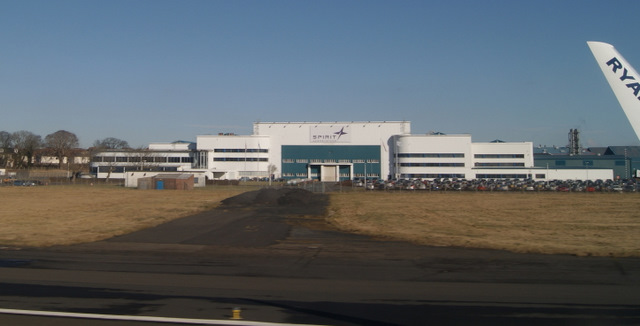
The Scottish Aviation Bulldog T1 is a British two-seat, side-by-side basic trainer with full aerobatic capability, developed from the Beagle Pup and built at Prestwick after Beagle Aircraft's collapse. It served as the Royal Air Force's standard primary trainer for three decades, equipping the University Air Squadrons and Air Experience Flights, and today survives in large numbers in private civilian hands, making it a popular and accessible warbird-trainer for sim pilots interested in classic RAF flying training.
The Scottish Aviation Bulldog is a British two-seat side-by-side training aircraft with an optional third seat, designed originally by Beagle Aircraft as the B.125 Bulldog and developed from the earlier Beagle Pup with a more powerful engine and larger canopy. Following Beagle's collapse, production passed to Scottish Aviation and later British Aerospace, both based at Prestwick Airport. In Royal Air Force service it was designated the Bulldog T.1 and served as the standard basic trainer, superseding the de Havilland Chipmunk, before being retired in favour of the Grob Tutor.
The prototype Bulldog, registered G-AXEH, first flew on 19 May 1969 at Shoreham Airport. The first order for the type came from the Swedish Air Board for 78 aircraft, but before any production examples were completed Beagle Aircraft ceased trading following the withdrawal of government financial support, despite having a full order book. Design authority and the Swedish order were taken over by Scottish Aviation (Bulldog) Limited, whose first example, G-AXIG, flew on 14 February 1971 from Prestwick. Both early aircraft, G-AXEH and G-AXIG, were used as company demonstrators, with G-AXIG at one point painted in Swedish Air Force colours as '005' before later civilian sale. The Royal Air Force placed its order for 130 Bulldogs in 1972, with the type entering RAF service in April 1973 (some sources give 1975 for wider introduction) as the Bulldog T.1. In all the RAF received 132 Bulldogs. Total production across all variants reached 328 aircraft, all built at Prestwick apart from the original Beagle prototype.
The Bulldog is a low-wing monoplane of conventional metal construction seating two crew side by side, with an optional third seat fitted on the Model 101 variant for Sweden. It is powered by a single Lycoming IO-360-A1B6 four-cylinder, air-cooled, horizontally-opposed piston engine rated at 200 hp (150 kW), driving a two-bladed Hartzell constant-speed propeller. The aircraft has a length of 23 ft 3.06 in (7.0881 m), a wingspan of 33 ft 1.85 in (10.1054 m) and a height of 8 ft 11.5 in (2.731 m), with a wing area of 129.4 sq ft (12.02 sq m) and an aspect ratio of 8.4, using a NACA 632615 airfoil. Empty weight is 1,475 lb (669 kg) and maximum take-off weight is 2,350 lb (1,066 kg). The airframe is stressed for full aerobatics, rated to +9g and -3g. Underwing hardpoints were fitted on some export models for light attack use, capable of carrying up to a 290 kg (640 lb) bomb load or Matra pods with SNEB 68mm rockets, though these weapons systems were tested rather than adopted for RAF service; the aircraft has no provision for production weapons launch control systems.
Maximum speed is 130 kn (150 mph, 240 km/h), with a stall speed of 54 kn (62 mph, 100 km/h) and a never-exceed speed of 185 kn (213 mph, 343 km/h). Range is quoted at 540 nmi (620 mi, 1,000 km), and the type has a service ceiling around 16,000 ft. Fuel consumption is around 9 gph, with oil consumption of less than 0.2 quarts per hour, reflecting the simplicity and easy maintainability of the Lycoming IO-360 engine.
The initial Bulldog Series 1 comprised one prototype built by Beagle Aircraft (G-AXEH) and one built by Scottish Aviation, the latter now preserved at the National Museum of Flight. The Series 100 family covered most production: Model 101 was the export version for Sweden (Swedish military designation SK 61 for the Air Force or FPL 61 for the Army), with 78 built; Model 102 for Malaysia, 15 built; Model 103 for Kenya, five built; Model 104 a refurbished second prototype; Model 121 the primary RAF trainer designated Bulldog T.1, with 130 built, five of which were later transferred to the Armed Forces of Malta in 2000; Model 122 and 122A for Ghana, six and seven built respectively; Model 123 for Nigeria, 37 built; Model 124 a company demonstrator used for weapons trials; Model 125 and 125A for Jordan and the Royal Jordanian Air Force, 13 and nine built; Model 126 for Lebanon, six built; Model 127 for Kenya, nine built; Model 128 for the Royal Hong Kong Auxiliary Air Force, two built; Model 129 a single civil aircraft for a Venezuelan customer; and Model 1210, a light attack variant with underwing hardpoints for Botswana, six built. A separate Bulldog Series 200, a four-seat variant with retractable undercarriage and known in civilian guise as the Bullfinch, existed only as a single prototype, G-BDOG.
The first 58 Bulldogs, known as the SK 61A and SK 61B, were delivered to the Swedish Air Force in 1971, with 20 more delivered to the Swedish Army as FPL 61C in 1972; these army aircraft were transferred to the Air Force in 1989 as SK 61C, and all Swedish aircraft had been withdrawn from military service by 2001, with 26 later bought by the Hungarian company AVIA-Rent in 2004. The Royal Air Force was the largest customer, ordering 130 aircraft in 1972 and taking the type into service from April 1973 as the Bulldog T.1, using it as the standard basic trainer for the Central Flying School, University Air Squadrons and later Air Experience Flights. The Royal Navy also used the Bulldog for Elementary Flying Training at RAF Topcliffe. The RAF sold off its remaining Bulldogs in 2001 as the Grob Tutor took over the training role, and many of these aircraft remain in civilian service today, some still flying in original RAF colours. Export military operators over the type's history included Botswana, Ghana, Jordan, Kenya, Hong Kong, Malaysia, Malta, Nigeria, Sweden and Lebanon, with the Lebanese Air Force remaining a current military operator.
The Bulldog is valued for its robust construction and exceptional handling characteristics, qualities that made it an ideal primary trainer and instilled confidence in generations of RAF pilots. It is fully aerobatic, cleared to +9g and -3g, giving it genuine capability for spin, loop and roll training rather than being a docile straight-and-level trainer only. Its side-by-side seating, simple fixed undercarriage and easily maintained 200 hp Lycoming engine make it an approachable type, and its long association with the University Air Squadrons and Air Experience Flights means it is closely tied to the classic RAF elementary flying training syllabus, a heritage that continues to make it popular with private owners and airshow operators flying the type in its original military colours.