
Departure
97%
vs 95% ▲ 1
Track every flight, analyse your performance,
and master your flying skills with My FS Flights
Get 10 flights free every month!
Tracked and analysed flights over miles
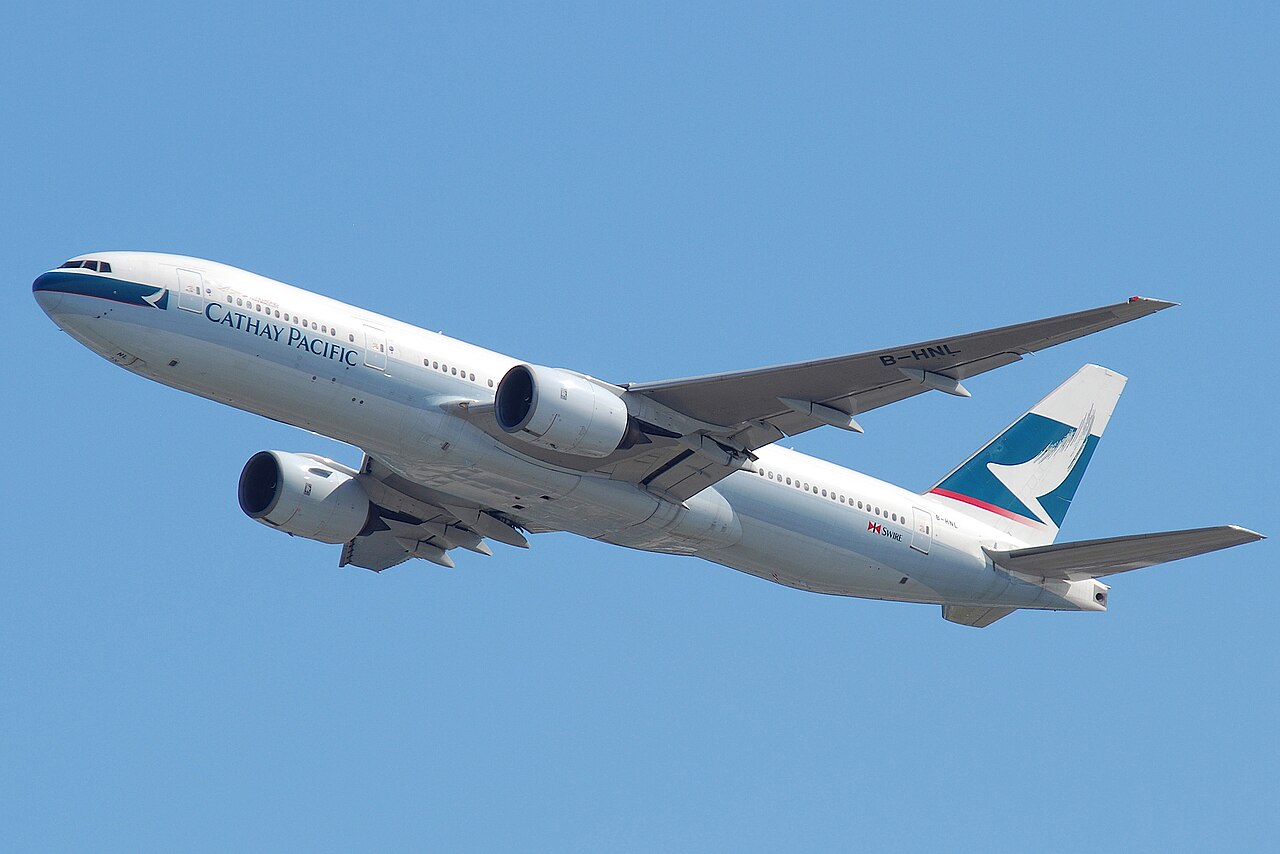
The Boeing 777-300 is a high-capacity, stretched derivative of Boeing's original 777-200 twin-engine wide-body airliner, built to carry significantly more passengers over long-haul routes. Manufactured by Boeing, it forms part of the pioneering 777 family, the first commercial airliner designed almost entirely by computer and the first twin-jet certified for extended overwater operations from entry into service. For the simulator pilot, it represents the long-fuselage end of the original 777 line, offering a distinct flying and operational profile from the shorter -200 variant.
The Boeing 777-300 is a high-capacity, stretched version of Boeing's 777-200 wide-body twin-engine airliner. It is a long-range, twin-aisle jet intended for high-density trunk routes, and it carries around 20 percent more passengers than the -200 model on which it is based, seating between 368 and 550 people depending on cabin configuration.
The 777-300 was developed as a stretched derivative of the original 777-200, lengthening the fuselage by 33 feet (10 metres) over the initial model. This extension brought the aircraft's overall length to 242 feet 4 inches (73.9 metres), making it, at the time, one of the longest commercial airliners in service. The stretch was aimed at substantially increasing passenger capacity while retaining the twin-engine efficiency and long-range capability of the 777 family.
The defining design feature of the 777-300 is its lengthened fuselage, stretched by 33 feet (10 metres) relative to the 777-200, giving a total airframe length of 242 feet 4 inches (73.9 metres). This additional length allows the aircraft to accommodate substantially more seating than the baseline -200, with total passenger capacity ranging from 368 up to 550 depending on the operator's chosen cabin layout.
The 777-300 sits within the original 777 family as the stretched-fuselage counterpart to the 777-200, offering roughly 20 percent greater passenger capacity than that model. Airlines have configured the type in a number of internal cabin layouts; Cathay Pacific, for example, has operated 777-300 aircraft under configuration codes including 77K, 77A, 77P and 77J, each reflecting different arrangements of business, premium economy and economy seating within the same airframe.
The 777-300 has been operated on long-haul, high-density routes by major international carriers. Cathay Pacific, for instance, has flown the type with a three-class layout comprising 40 flat-bed business class seats, 32 premium economy seats and 296 economy seats, for a total of 368 passengers, alongside cabin features such as baby bassinets and extra-legroom emergency exit rows.