Departure
95%
vs 95%
 MY FS FLIGHTS
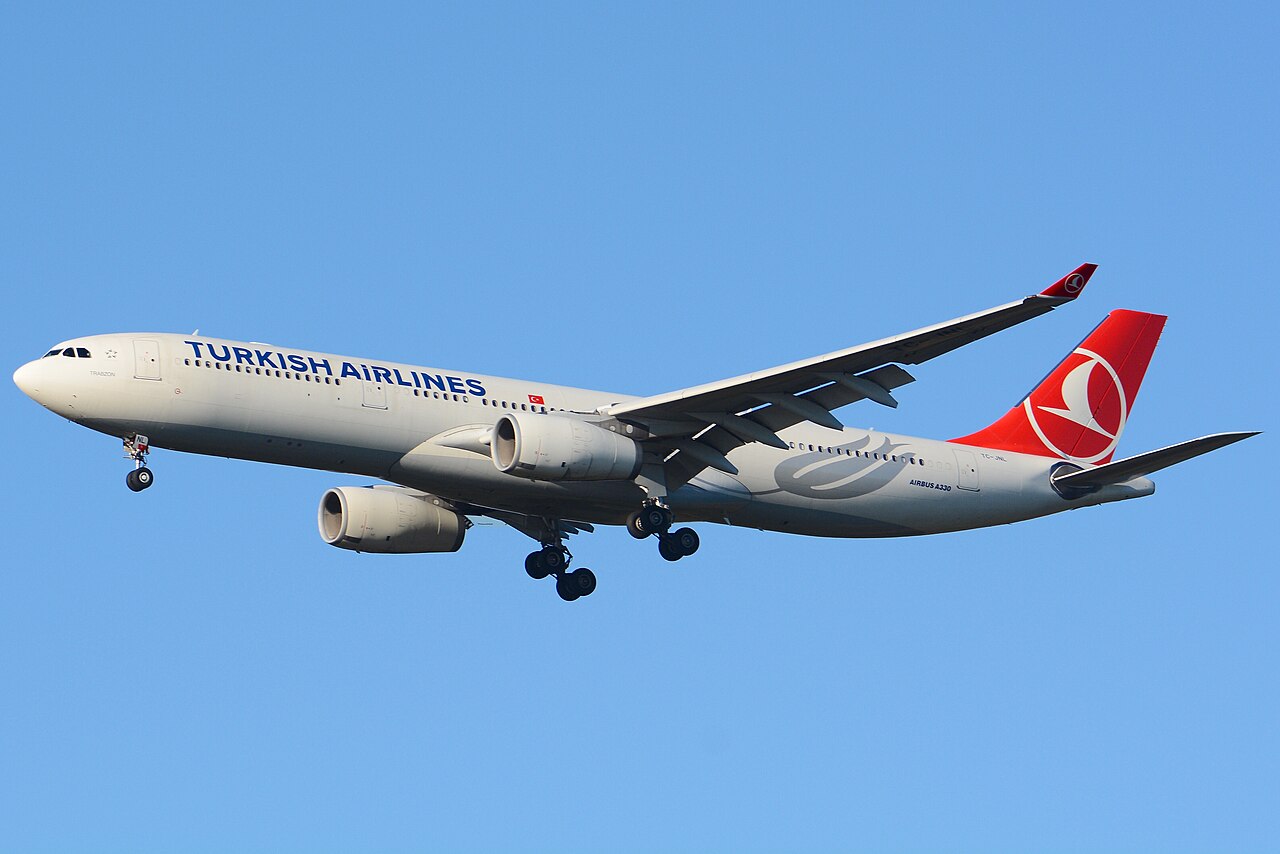
The Airbus A330-300 is a wide-body, twin-engine airliner built by Airbus, developed from the earlier A300 series to serve as the longer-fuselage, higher-capacity member of the A330 family. Launched alongside the A340 in June 1987, it combines twin-aisle capacity with twinjet economics and remains a mainstay of medium- to long-haul fleets worldwide. For a simulator pilot it offers a classic Airbus fly-by-wire experience in a genuine wide-body package, sharing cockpit philosophy with the smaller A320 family.
The A330-300 is a wide-body, twin-engine, twin-aisle airliner from Airbus, developed from the A300 series and forming the larger-fuselage counterpart to the A330-200 within the A330 family. It is a low-wing cantilever monoplane fitted with a fly-by-wire digital control system and a six-screen glass cockpit that is compatible with other Airbus types, easing crew transition between models. Turkish Airlines describes it as the largest member of the Airbus family in its fleet, reflecting its role as a high-capacity medium-to-long-haul workhorse.
The A330 programme had its origins in Airbus's strategic expansion plans dating back to the mid-1970s, with the A330-300 officially launched in June 1987 alongside the related A340 programme. The aircraft made its maiden flight in 1992 and entered scheduled passenger service in 1994. Airlines such as KLM added the A330-300 to their fleets some years after the shorter A330-200, in KLM's case the type's first flight for the airline coming in 2012. Airbus continued to develop the design through its production life, notably raising maximum takeoff weight, before production of the original A330-300 ended in 2020 as Airbus shifted output to the re-engined A330neo family.
The A330-300 is a low-wing cantilever monoplane with a two-wheel nose undercarriage and four-wheel bogie main landing gear legs for stability on the ground. Its fuselage measures 5.64 metres in diameter, with an overall length of 63.69 metres, a wingspan of 60.30 metres and a height of 16.99 metres. The type is longer than the A330-200, giving it ten extra cabin windows despite sharing a common wing and systems architecture. Power comes from two high-bypass turbofans, offered as General Electric CF6, Pratt & Whitney PW4000 or Rolls-Royce Trent 700 series engines, each capable of producing up to 72,000 lb of thrust. Maximum takeoff weight rose over the production run from 212 tonnes to 242 tonnes. The flight deck uses a six-screen glass cockpit and fly-by-wire digital flight control system that is common in layout to the smaller A320 family, simplifying pilot type-rating and mixed-fleet operations.
The A330-300 cruises at around 875 km/h with a maximum operating speed of Mach 0.86 and a maximum operating altitude of 12,600 metres. Maximum range is given as 11,750 km, equivalent to roughly 6,350 nautical miles. It is frequently cited as one of the quietest wide-body airliners in service, a characteristic attributed to its engine technology and airframe refinement, and it combines this with satellite-based connectivity options for cabin systems.
The A330-300 is the longer-fuselage member of the A330 family, distinguished from the A330-200 primarily by its greater length and correspondingly higher passenger capacity, at some cost to maximum range compared with the shorter variant. Within the wider Airbus range it sits alongside the A330-200 as the classic-generation A330, with the later re-engined A330neo family succeeding it in production from 2020 onward.
The A330-300 serves as a medium- to long-haul widebody across a broad range of carriers, including Delta Air Lines, KLM, Turkish Airlines, Lufthansa and Aer Lingus, among many others. Typical three-class cabin layouts seat around 277 to 293 passengers, with two-class configurations accommodating up to around 300 and high-density arrangements certified for as many as 440. KLM operates its A330-300s on intercontinental routes and names its aircraft after well-known city squares, while Turkish Airlines highlights the type's improved engines and reduced emissions relative to earlier Airbus widebodies. The aircraft's fly-by-wire commonality with other Airbus types has supported its widespread adoption by operators running mixed fleets.
For simulator pilots, the A330-300 offers a genuine wide-body, long-haul flying experience built on Airbus's fly-by-wire philosophy, with a six-screen glass cockpit laid out in the same family style as the smaller A320, which makes cross-type familiarity straightforward for those who have flown other Airbus simulators. Its role in long medium- and long-haul route flying, combined with its reputation as a quiet and comfortable airliner in real-world service, makes it a natural choice for pilots wanting to fly extended intercontinental sectors in a twin-engine widebody.