Departure
88%
vs 95% ▼ 8
 MY FS FLIGHTS
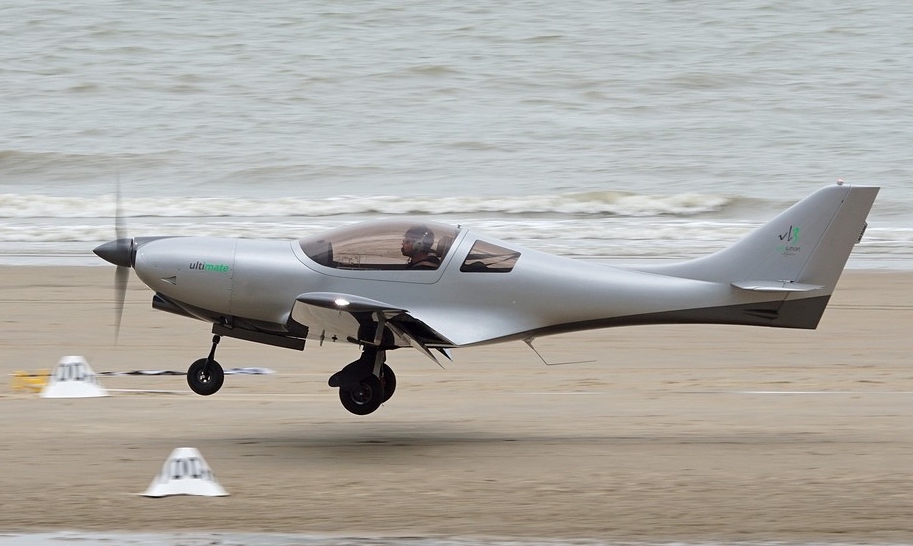
The JMB VL-3 Sprint is a Czech-designed ultralight and light-sport aircraft, a composite, low-wing two-seater renowned for its exceptional speed relative to its class. Originally created by Aveko of Brno and first flown on 6 June 2004, the design passed to JMB Aircraft of Choceň, which redeveloped it into one of the fastest and most refined aircraft in the modern ultralight and LSA market. For a sim pilot it offers a taste of a genuinely high-performance, retractable-gear composite single that punches well above its weight class.
The VL-3 Sprint is a Czech ultralight aircraft of cantilever low-wing configuration with a two-seat side-by-side enclosed cockpit, fixed or retractable tricycle landing gear, and a single tractor engine. It was designed to comply with Fédération Aéronautique Internationale microlight rules and is built from composite materials throughout. Originally produced by Aveko of Brno, the design is now manufactured by JMB Aircraft of Choceň, which markets it alongside its EVO, Phoenix NG and SV4-RS models as part of a range of high-performance light sport aircraft.
The VL-3 first flew on 6 June 2004, designed and initially produced by Aveko of Brno as the Aveko VL-3 Sprint, sold complete and ready-to-fly. The design was also referred to as the VL-3 Evolution as it developed over time. JMB Aircraft, run by two Belgian brothers who had previously been the exclusive resellers of Aveko aircraft in France and Belgium, purchased Aveko in 2018 and carried out a substantial redesign and performance upgrade of the original aircraft, continuing to market it as the Sprint. Production today is organised as an owner-completed aircraft built through a factory assistance program rather than supplied fully finished as in the Aveko era. JMB Aircraft has since celebrated the delivery of VL3 serial number 700, marking a significant production milestone for the type. A fixed-gear version with a larger wingspan, greater wing area and a higher gross weight was also developed specifically for the US light-sport aircraft category and was marketed by Gobosh Aviation as the Gobosh 800XP from about 2009 to 2016, after which Gobosh Aviation appears to have ceased trading.
The VL-3 Sprint is built almost entirely from composites, with a cantilever low wing spanning 8.44 m (27 ft 8 in) and enclosing a modest wing area of 9.77 m2 (105.2 sq ft). Overall length is 6.24 m (20 ft 6 in) and height 2.05 m (6 ft 9 in). Empty weight is quoted at 290 kg (639 lb), with fuel capacity ranging from 90 to 120 litres (20 to 26 imp gal; 24 to 32 US gal) depending on configuration. The standard powerplant is the four-cylinder, liquid-and-air-cooled, four-stroke Rotax 912ULS producing 75 kW (100 hp), driving a tractor propeller. The aircraft is offered with either fixed landing gear or a retractable tricycle undercarriage, and the two occupants sit side by side beneath an enclosed canopy.
With the standard Rotax 912ULS engine, the VL-3 Sprint is capable of a maximum speed of 280 km/h (170 mph, 150 kn) and a cruise speed of 250 km/h (160 mph, 130 kn), with a never-exceed speed of 305 km/h (190 mph, 165 kn). Stall speed is a low 53 km/h (33 mph, 29 kn), and rate of climb is 6 m/s (1,200 ft/min). Range is quoted at a substantial 3,333 km (2,071 mi, 1,800 nmi). A VL-3 set a world two-seat ultralight class speed record of 274.78 km/h (170.74 mph) in 2005, underlining the type's reputation for exceptional pace in its category. More powerful derivatives of the VL-3 line fitted with the Rotax 915iS engine have been reported reaching climb rates as high as 2,000 fpm and cruise speeds up to around 199 KTAS at 18,000 feet, reflecting the aerodynamic efficiency and light composite structure that JMB has continued to develop from the original Sprint design.
The Aveko/JMB VL-3 family includes the VL-3 FG, with fixed landing gear, and the VL-3 RG, with retractable gear. The VL-3C-1 is a fixed-gear model fitted with a slower wing and a reduced 600 kg (1,323 lb) take-off weight, tailored to the light-sport aircraft category. A dedicated fixed-gear variant with a larger wingspan, greater wing area and a higher gross weight was developed for the US LSA market and sold by Gobosh Aviation as the Gobosh 800XP between roughly 2009 and 2016. The design has continued to evolve under JMB Aircraft, which has also referred to the type as the VL-3 Evolution, and has since introduced further higher-powered VL3 versions using the Rotax 915iS and 916iS engines alongside the original Sprint specification.
The VL-3 Sprint occupies the ultralight and light-sport aircraft categories and is used chiefly for sport flying, pilot training and cross-country touring, its speed and range giving performance comparable to larger general aviation types at lower operating cost. JMB Aircraft aircraft, including the VL3 line, are flown across the USA, South America, Europe, South Africa, Australia and New Zealand, and the manufacturer regularly demonstrates the type to prospective owners through demo-day events worldwide. The type's suitability for long-distance flying has been demonstrated by group expeditions such as Raid Iceland, in which multiple VL3 aircraft completed demanding North Atlantic crossing legs together.
Pilot reports on the VL-3 describe an aircraft that feels notably brisk off the runway, climbing rapidly to altitude with little apparent effort, and that stands out among light piston singles for its combination of speed and visual presence, with hand-finished, individually styled liveries. The type's composite airframe, retractable gear and constant-speed propeller options give it handling qualities closer to a capable touring aircraft than a typical ultralight, which is part of its appeal to pilots seeking genuine cross-country performance in a light-sport category airframe. For a simulator pilot this translates into a fast, slippery aeroplane that rewards attention to speed management, particularly given its comparatively high cruise and never-exceed speeds relative to its small size and low stall speed.