
Departure
94%
vs 95% ▼ 1
Track every flight, analyse your performance,
and master your flying skills with My FS Flights
Get 10 flights free every month!
Tracked and analysed flights over miles
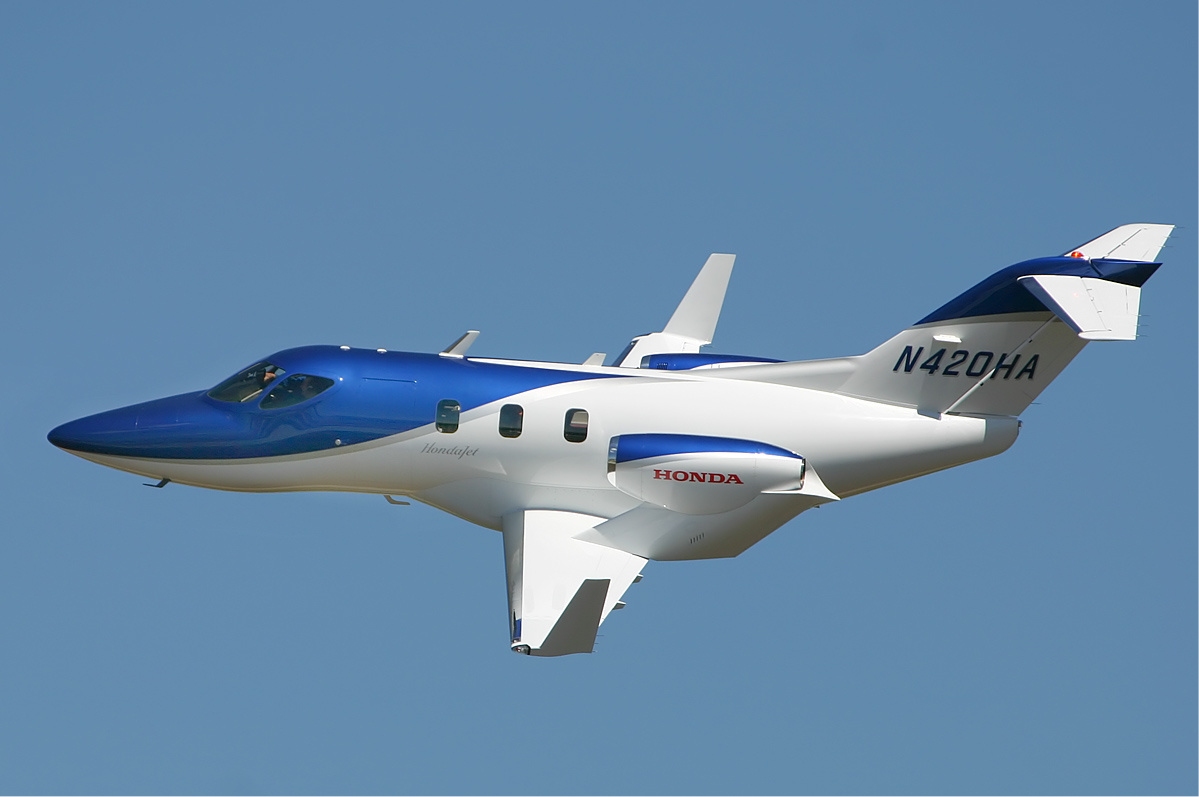
The HondaJet, formally the HA-420, is a very light business jet built by Honda Aircraft Company at Greensboro, North Carolina, and marketed simply as the HondaJet. It is best known for its distinctive over-the-wing engine mount configuration, composite fuselage and aluminium wing, and for being certified for single-pilot operation, making it a natural type for owner-pilots stepping up from high-performance piston or turboprop aircraft. For a simulator pilot it offers an unusual and technically interesting light-jet profile built around an engine layout found on almost no other business aircraft.
The HondaJet is a twin-turbine very light jet produced by Honda Aircraft Company, a subsidiary of Honda Motor Company, at its Greensboro, North Carolina facility. Designated the HA-420, it is a light business jet built around a composite fuselage and aluminium wing, powered by two GE Honda HF120 turbofans mounted above the wing on pylons rather than on the rear fuselage. It sits in the very light jet class alongside types such as the Embraer Phenom 100 and Cessna Citation Mustang, and it is certified for single-pilot operation, putting it within reach of owner-pilots as well as small corporate flight departments.
Honda Aircraft Company developed the HA-420 as its first production aircraft, and the type received its FAA type certificate before deliveries began in the mid-2010s, the aircraft joining the very light jet category in 2015. This established Honda Aircraft as a serious entrant into business jet manufacturing rather than simply a maker of engines or automobiles. Since entering service in 2015, roughly 100 examples have been produced. Honda's programme of continuous improvement led to the introduction of the HondaJet Elite in 2018, which brought a range increase along with better fuel efficiency and passenger amenities, followed by further refinement through the Elite S and, subsequently, the Elite II with additional fuel capacity and updated avionics.
The airframe combines a composite fuselage with an aluminium wing, and its most distinctive feature is the over-the-wing engine mount, or OTWEM, arrangement, in which the two GE Honda HF120 turbofans are carried on pylons above the wing rather than on the rear fuselage. Honda states this configuration reduces aerodynamic interference drag by approximately 15 to 20 percent, which both improves performance and frees up fuselage volume for cabin and baggage space that would otherwise be occupied by rear-mounted engines and their associated structure. Each HF120 engine produces around 1,880 lb of thrust. The cabin measures 17 feet 8 inches by 5 feet by 4 feet 9 inches, giving a cabin volume of about 420 cubic feet, with an entry door roughly 5 feet wide and just under 5 feet high, and an external baggage compartment offering more than 65 cubic feet of stowage. Typical accommodation is four to five passengers plus a single pilot. Maximum takeoff weight is around 10,600 lb, basic operating weight approximately 7,279 lb, and maximum payload just over 1,521 lb. The flight deck is built around Garmin G3000 avionics, and the aircraft is certified for single-pilot operation.
The HondaJet cruises at a maximum speed of more than 420 knots, with fuel burn of around 120 gallons per hour. Published NBAA IFR range figures are 1,223 nm for the original HondaJet carrying four passengers, rising to 1,437 nm for the HondaJet Elite following its range-boosting revisions; under a typical passenger load the aircraft is credited with a range of around 1,200 nm. Takeoff distance is quoted at 3,934 feet and landing distance at 3,047 feet, figures consistent with operation from moderately short runways for a jet of this class.
The line began with the original HondaJet, sometimes referred to as the Classic. This was followed by aircraft upgraded through the Advanced Performance Modification Group, known as the APMG upgrade. The HondaJet Elite, introduced in 2018, brought a 17 percent increase in range along with improved fuel efficiency and cabin amenities over the original aircraft. The Elite S followed with further refinement of systems and performance, and the range currently culminates in the HondaJet Elite II, which adds increased fuel capacity, extended range and updated avionics over earlier Elite models.
The HondaJet is aimed principally at owner-pilots and executives making shorter trips with small groups, its single-pilot certification and compact size suiting individuals flying themselves to and from business meetings as well as small corporate operators. Its market position places it in direct competition with light jets such as the Embraer Phenom 100 and, for buyers considering alternatives, aircraft like the Cessna Citation Mustang and the single-engine Cirrus Vision Jet. Since deliveries began in 2015 around 100 aircraft have been produced, reflecting Honda Aircraft's establishment as a going concern in the business jet market from a standing start.
For a simulator pilot, the HondaJet's appeal lies in reproducing a very light jet with genuinely unusual engineering rather than a conventional rear-fuselage-engine layout: the over-the-wing mounts, composite structure and Garmin G3000 flight deck give it a distinct character among light jets. Its single-pilot certification and modest, VLJ-class speeds and ranges make it a manageable type for a solo cockpit workflow, echoing the same owner-pilot mission profile it serves in real life, of short business hops flown single crew rather than long-haul corporate transport.