Departure
88%
vs 95% ▼ 8
 MY FS FLIGHTS
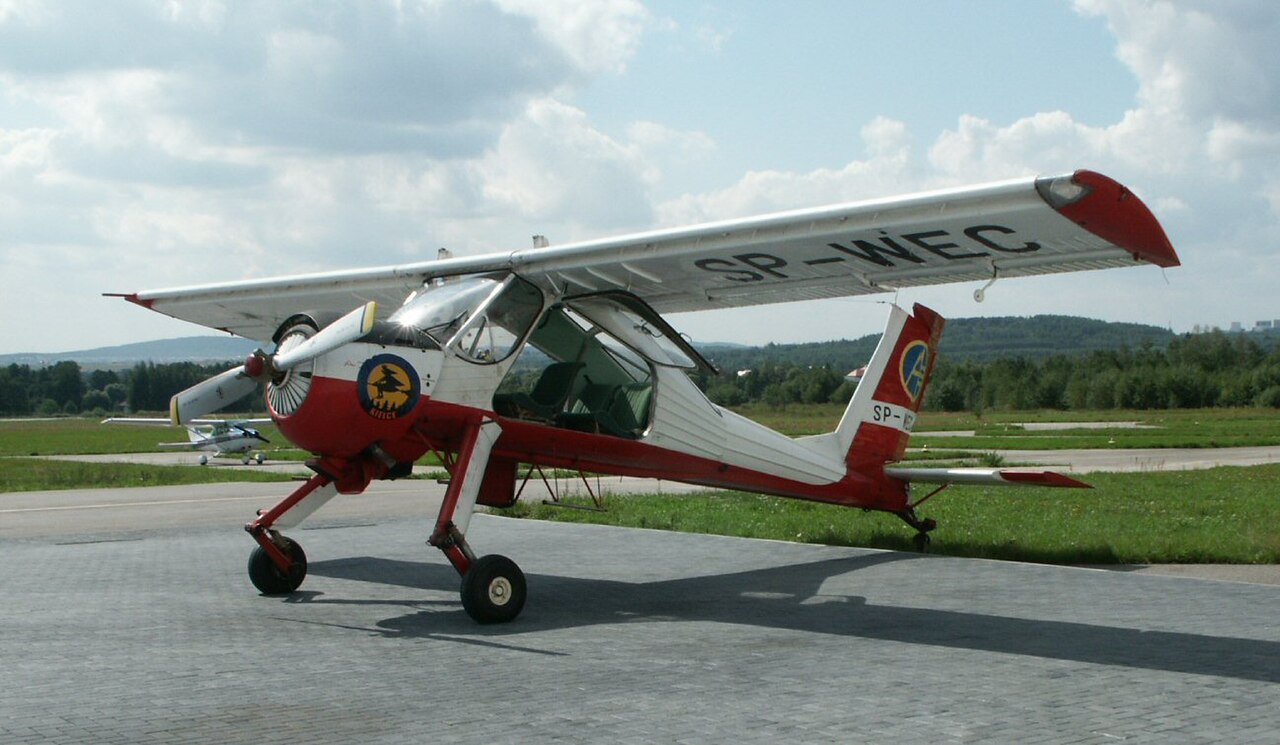
The PZL-104 Wilga 35 is a Polish four-seat STOL utility aircraft designed and built by PZL Warszawa-Okecie, the definitive mass-produced version of a family that traces back to 1962. Powered by a 260 hp Ivchenko AI-14RA radial engine, it combines rugged utility construction with exceptional short-field performance, making it a favourite for glider towing, parachute operations and backcountry flying, and a popular choice among simulator pilots seeking a characterful STOL type.
The PZL-104 Wilga 35 is a Polish short-takeoff-and-landing (STOL) utility monoplane, part of the Wilga family designed and manufactured by PZL Warszawa-Okecie and, from 2001, by the European Aeronautic Defence and Space Company (EADS) after it acquired the original manufacturer. A single-engine, four-seat aircraft, the Wilga 35 was intended to replace the general-purpose Yak-12, whose production had ended in 1960, and it became the most numerous and long-lived member of the Wilga line, remaining in production from 1962 to 2006.
The Wilga programme began with the prototype Wilga 1, which first flew on 24 April 1962 powered by a 220 hp (160 kW) Polish PZL WN-6RB horizontally-opposed engine. Flight testing revealed serious faults, chiefly excessive airframe weight and poor rearward visibility for glider-towing, prompting a thorough redesign led by engineers Bronislaw Zurakowski and Andrzej Frydrychewicz. The wing structure was retained but the fuselage was made slimmer and stronger, with upward-opening side doors improving both visibility and utility for aerial observation and parachute work; the aircraft could be flown with the doors open, and an air ambulance cabin conversion was also possible. This revised aircraft, the Wilga 2, flew on 1 August 1963, but its WN-6RB engine remained underdeveloped and the type did not reach series production. An export variant for Indonesia, the Wilga C, powered by an imported Continental O-470 of 225 hp (168 kW), first flew on 30 December 1963. To resolve the engine problem, PZL adopted the in-production 260 hp (190 kW) Ivchenko AI-14R radial, creating the Wilga 3, which first flew on 31 December 1965; although this spoiled the originally clean, aerodynamic lines designed for a flat engine, the combination of radial power and STOL wing gave the aircraft an exceptional climb rate. After an initial batch of 13 Wilga 3s, the landing gear base was widened from 2.12 to 2.83 m (7.0 to 9.3 ft) to improve takeoff stability. The improved Wilga 35, fitted with the more powerful Ivchenko AI-14RA nine-cylinder radial in place of the original flat-six, first flew (according to differing accounts) on 29 June 1967 or with the new powerplant on 28 July, and entered mass production; at the same time the cabin and undercarriage were further refined, and full-width slats, slotted flaps and drooping ailerons were incorporated to sharpen STOL performance. The Wilga 35A utility version became by far the most numerous derivative, while most other 35-series sub-types were built only in small numbers or remained prototypes. Production of all Wilga variants exceeded 1,000 airframes, of which around 935 were built to Wilga 35 and Wilga 80 standards, making the PZL-104 the highest-volume Polish aircraft design. EADS announced on its website that Wilga production would end in 2006; the closure reportedly surprised many of the type's international dealers, who had been reporting strong demand for the four-seater.
The Wilga 35 is a four-seat, high-wing monoplane of all-metal construction, built for rugged utility use rather than refinement. Its airframe retains the wing structure developed for the earliest Wilga prototypes but sits beneath a slimmer, strengthened fuselage designed to give excellent rearward visibility for glider-towing. The side doors open upward, allowing the aircraft to be flown with them open for aerial observation or parachute-jump operations, and the cabin can be configured for air ambulance use. Power comes from the 260 hp Ivchenko AI-14RA nine-cylinder radial engine, replacing the original 180 hp Narkiewicz WN-6 flat-six of the earliest prototypes. The wing is fitted with full-width slats, slotted flaps and drooping ailerons to maximise STOL capability. Landing gear track was widened from 2.12 to 2.83 m (7.0 to 9.3 ft) over the preceding Wilga 3 to improve stability during takeoff runs. The type can be fitted with floats or skis (as the 35H variant) and with a tow hook, parachute step and ski-operating gear as standard equipment on the six-seat derivatives.
With the 260 hp AI-14RA radial and STOL wing, the Wilga family is capable of a very high rate of climb, quoted at up to 11 m/s (2,165 fpm) under minimal load for the AI-14R-powered Wilga 3. For the Wilga 35A specifically, a climb rate of 1,240 feet per minute, a service ceiling of 14,750 feet, a cruise speed of 129 mph, a maximum speed of 145 mph and a range of 420 miles have been recorded. Pilots who have flown the type describe it as flying low and slow, with a character reminiscent of a helicopter when operated with the doors removed, though the radial engine is noted as relatively fuel-thirsty.
The basic Wilga 35 used the AI-14 engine, while the mass-produced Wilga 35A added a glider-towing hook and became the definitive sports-aviation version from 1968. Agricultural versions were designated 35R and 80R, parachute and air-ambulance versions 35P and 80P, and float or ski-equipped variants 35H and 80H. The Wilga 32 was a small-series export variant powered by a 230 hp Continental O-470-K flat engine, first flown on 12 September 1967, and was also licence-built in Indonesia as the Gelatik (rice bird). The Wilga 80, first flown 30 May 1989, was a version of the Wilga 35 modified to meet US FAR certification standards and entered serial production for the American market from 1979 onward under PZL AI-14RA power. A redesigned six-seat variant, the Wilga 88, appeared the same year as the 80's US-standard flight. A more powerful derivative fitted with the 360 hp M-14P radial appeared in 1990. In the late 1990s, California dealer Terra-San developed a special-mission variant of the Wilga 80 fitted with a Wescam gimbal-mounted camera and infrared imaging system for law-enforcement use as a helicopter alternative. In January 1996, PZL announced plans for an armed border-patrol and counter-insurgency version with underwing hardpoints for gun pods and unguided or guided rockets.
The Wilga was used predominantly by civil operators, particularly for glider towing, parachute training and banner towing, roles that shaped much of its airframe design. Military air services that operated the type, including the Polish air force, typically used it for reconnaissance, liaison and utility duties. Agricultural, air ambulance and observation roles were also served by dedicated variants, and float- and ski-equipped versions extended its use into remote and seasonal operating environments. The type has found continued favour in private ownership worldwide, including bush-flying and backcountry use in North America, where owners have valued its STOL performance and rugged simplicity, with some aircraft later modified with alternative powerplants such as the Lycoming IO-540.
In the simulator the Wilga 35 is valued for its STOL character: full-width slats, slotted flaps and drooping ailerons give it forgiving low-speed handling that suits short-strip, backcountry and float operations. Simulated variants typically span the range of the type family, from the classic 35A with vintage instrumentation and glider-towing hook to more modern 80-series derivatives with updated avionics, and are commonly used for glider towing, floatplane flying and bush-strip work in scenery built around remote airfields. The radial-engine soundtrack and open-door flying character, likened by real-world owners to flying a helicopter at low level, are notable elements of the type's appeal to virtual pilots seeking something distinct from typical general-aviation types.