Departure
93%
vs 95% ▼ 2
 MY FS FLIGHTS
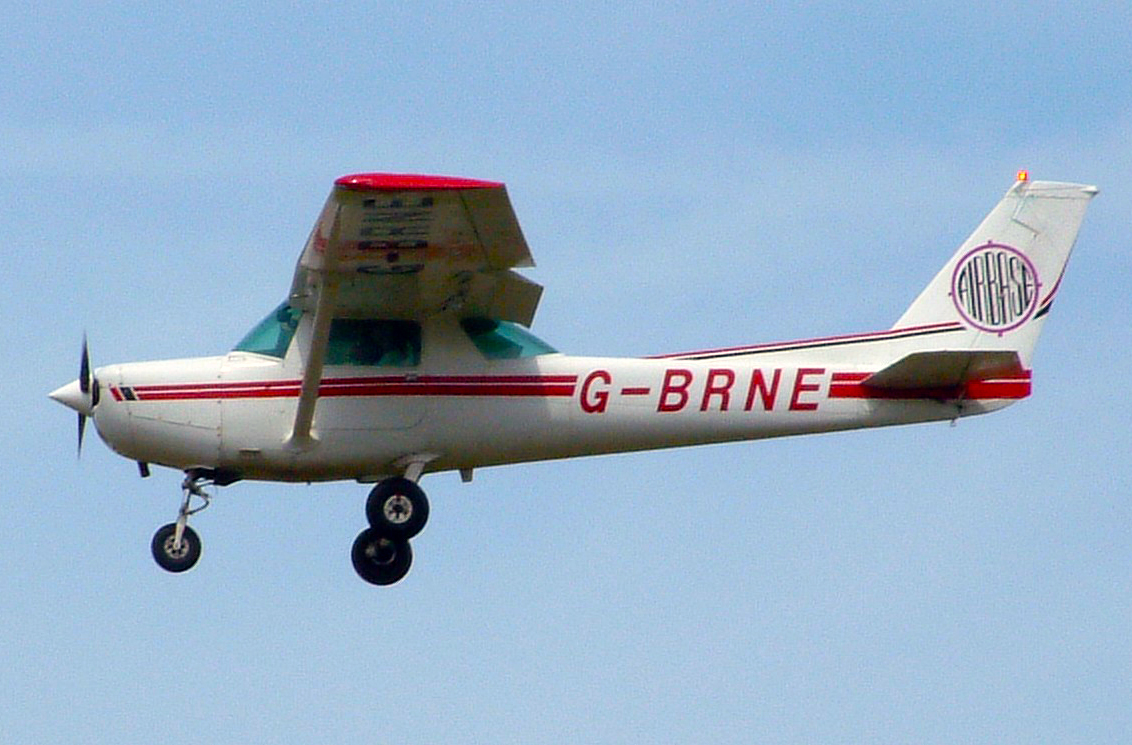
The Cessna 152 is an American two-seat, fixed-tricycle-gear light aircraft built by Cessna as a modernised successor to the Cessna 150, and it remains one of the most widely used basic trainers in the world. Simple, forgiving and cheap to operate, it has introduced generations of pilots to flying and is still a common sight at flight schools decades after production ended.
The Cessna 152 is a two-seat, fixed tricycle-gear general aviation aircraft manufactured in the United States by Cessna, developed primarily for flight training and personal use. It is a direct evolution of the earlier Cessna 150, sharing the same basic airframe but fitted with a more powerful engine and a range of minor design refinements. Alongside the 150, it forms part of the most numerous trainer series of the post-World War II era, and the 150/152 lineage introduced the majority of contemporary private pilots to flying.
The Cessna 152 was first delivered in 1977 as a 1978 model year aircraft, conceived as a modernisation of the proven Cessna 150 design. It was brought to market to compete with two new rivals introduced the same year, the Beechcraft Skipper and the Piper Tomahawk. Design goals for the update included improving useful load through a gross weight increase to 1,670 lb (760 kg), reducing internal and external noise levels, and ensuring better compatibility with the newly introduced 100LL avgas. The great majority of 152s were built at Cessna's factory in Wichita, Kansas, though a number were also produced by Reims Aviation of France under the designations F152 and FA152. Production continued until 1985, when Cessna ended manufacture of all its light aircraft; by that point a total of 7,584 examples had been built worldwide, including the A152 and FA152 Aerobat aerobatic variants (a Smithsonian source gives a closely related total of 7,593, for a combined 150/152 series total of 31,533 aircraft). In 1996 the Cessna 152 was certified to operate on 100% ethanol fuel as an alternative to 100LL, demonstrating the type's adaptability to alternative fuels. In 2007 Cessna announced a light-sport successor, the Model 162 Skycatcher, though production of that aircraft ended in 2013.
The airframe is of mainly metal construction, built primarily from 2024-T3 aluminium alloy with riveted skin, while components such as wingtips and fairings are made from glass-reinforced plastic. The fuselage is a semi-monocoque structure with vertical bulkheads and frames joined by longerons running its length. The wings are strut-braced with a 1 degree dihedral angle, and the tapered outboard portion of each wing has one degree of washout, which allows greater aileron effectiveness during a stall. The 1978 model featured a one-piece cowling nose bowl that required propeller removal to take off, while the 1979 model introduced a split-nose cowling that could be removed without removing the propeller. All Cessna 152s were fitted with a Lycoming O-235 engine, a design in production since 1942. Aircraft built between 1977 and 1982 used the Lycoming O-235-L2C producing 110 hp (82 kW) at 2,550 rpm, though this engine suffered some lead-fouling problems in service. In 1983 it was succeeded by the 108 hp (81 kW) O-235-N2C, which featured a different piston design and a redesigned combustion chamber to reduce fouling, and this engine remained in use until production ended in 1985. Flight controls include differential ailerons moving 20 degrees upward and 15 degrees downward, single-slotted electrically operated Fowler flaps deploying to a maximum of 30 degrees, and a rudder capable of 23 degrees of travel to either side with a ground-adjustable trim tab. The elevators move up through 25 degrees and down through 18 degrees, with an adjustable trim tab on the right elevator moving 10 degrees up and 20 degrees down relative to the elevator chordline, controlled by a small wheel on the centre console. The aircraft has fixed tricycle landing gear, with main gear legs of tubular steel surrounded by a full-length fairing incorporating a cabin access step, and a main gear wheelbase of 7 ft 7 in (2.31 m). The nosewheel is connected to the engine mount with an oleo strut, is steerable through 30 degrees either side of neutral, can castor under differential braking up to a further 30 degrees, and is linked to the rudder pedals through a spring linkage. Braking is via single-disc assemblies on the main gear operated hydraulically through the top portion of the rudder pedals, with differential braking allowing very tight turns on the ground; a parking brake lever engages both toe brakes and holds pressure in the system. Standard tyres are 600 X 6 on the main gear and 500 X 5 on the nosewheel. Dual controls were optional but were fitted to almost all production aircraft.
Once trimmed in flight, the Cessna 152 requires little effort to maintain the desired altitude, and both takeoffs and landings are generally uncomplicated, which is part of why it has proved such an effective and enduring trainer. Its handling is docile in normal conditions, though the aircraft demands vigilance in tricky or gusty crosswinds, a trait that has itself contributed to its value as a training platform. Weight and balance can be comparatively touchy given the aircraft's small size and low gross weight of 1,670 lb (760 kg).
The main production run comprised the standard two-seat 152, alongside the A152 Aerobat, a variant strengthened for aerobatic training. Aircraft built under licence by Reims Aviation in France were designated F152 and FA152, the latter being the Aerobat equivalent. Combined production of all these variants totalled 7,584 aircraft (with a closely related Smithsonian figure of 7,593) before manufacture ceased in 1985.
The Cessna 152 was designed primarily for flight training and personal flying, and it went on to become, alongside the 150, the most popular civilian trainer aircraft of the post-World War II era, with the vast majority of contemporary private pilots having begun their flying careers on the type. Despite having been out of production for around forty years, many examples remain airworthy and continue to be used regularly for flight training and for building flight time, as well as for instrument-currency flying and simple recreational use. As of 2006, over 75 percent of the combined Cessna 150/152 fleet remained registered in the United States, and the type remains a common sight at general aviation airports worldwide.
The Cessna 152 in the simulator reflects the same straightforward, forgiving character that has made it a mainstay of real-world flight training: it trims easily, holds altitude with minimal input once settled, and offers uncomplicated takeoffs and landings for pilots working on the basics. Its docile low-speed handling makes it well suited to circuit practice and general handling exercises, though as in the real aircraft, crosswind landings call for more careful attention, making it a useful platform for practising and refining crosswind technique. Its simplicity, light control feel and lack of complex systems make it a natural choice for pilots wanting an accessible, no-frills trainer for building basic flying skills or simply enjoying unhurried local flying.