Departure
89%
vs 95% ▼ 6
 MY FS FLIGHTS
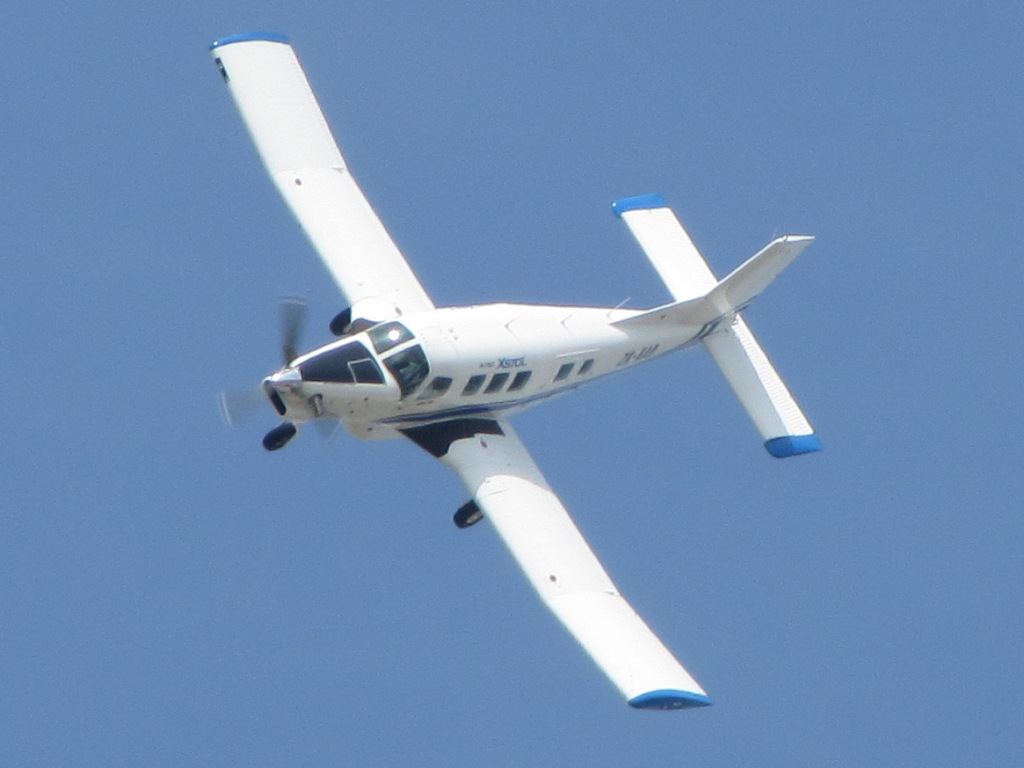
The PAC P-750 XSTOL is a rugged, single-engine turboprop utility aircraft built by Pacific Aerospace of Hamilton, New Zealand, combining the wings and engine of the agricultural PAC Cresco with a new, larger fuselage. Designed from the outset for extremely short field performance, it has become a genuine multi-role workhorse used for skydiving, freight, passenger transport, agricultural work and aerial survey, and its combination of payload and rough-strip capability makes it an appealing subject for sim pilots interested in bush and utility flying.
The PAC P-750 XSTOL, originally known as the PAC 750XL, is a utility aircraft of conventional all-metal low-wing monoplane construction with fixed tricycle undercarriage, manufactured by Pacific Aerospace in Hamilton, New Zealand. It was developed by marrying the wings and Pratt & Whitney Canada PT6 turboprop of the agricultural PAC Cresco to a new, larger fuselage and a modified tail, producing an aircraft with genuine Extremely Short Take-Off and Landing capability, a class Pacific Aerospace markets as unmatched among production utility aircraft of its size.
The 750XL made its maiden flight in 2001. As with the Cresco from which it drew its wings and powerplant, the horizontal tail surfaces gave trouble during development and were redesigned before the aircraft entered production. Full US FAA certification followed in March 2004, at which point the type was renamed the P-750 XSTOL. Production expanded steadily: in 2008 the manufacturer reported increasing output from 12 to 24 aircraft a year, and by February 2016 some 100 aircraft had been built, rising to more than 120 by January 2019. In 2008 there was some New Zealand media criticism of government support for the manufacturer following the cancellation of a large order. In 2012 Pacific Aerospace achieved certification against ICAO Annex 6 for Single Engine IFR Commercial Passenger Transport Operations. Licence production has since been permitted in China, where a civil cargo UAV derivative with minimal changes for remote piloting has also flown, though this drone variant is not endorsed by the New Zealand manufacturer. In March 2018 Pacific Aerospace launched the SuperPac 750XL-II, fitted with a 670 kW (900 shp) PT6A-140A and a four-blade 108 in (270 cm) Hartzell propeller, positioned to compete with the Supervan 900 conversion of the Cessna 208 Caravan. A 2020 weight-reduction programme replaced aluminium flight-control surfaces with composite items and introduced lighter seating and a stripped-down cabin to increase payload. Passenger and utility roles now account for around 70 percent of sales. A dedicated firefighting variant, the F-25, has been financed by the UK start-up Arcus Fire; priced at around 2.2 million dollars, it was scheduled to secure its supplemental type certificate in 2021 and was aimed at the market served by types such as the Polish PZL Dromader, targeting sales of 100 units within five years. The conversion adds a new hydraulics pack, a fire gate, and increases payload by 300 kg (600 lb).
The P-750 XSTOL is an all-metal low-wing monoplane with fixed tricycle undercarriage, inheriting its high-lift wing, including characteristic dihedral wingtips, and its Pratt & Whitney Canada PT6 turboprop from the PAC Cresco, allied to a new and considerably larger fuselage and a modified tail. All production versions to date have been powered by a 560 kW (750 shp) PT6 turboprop, commonly quoted as the PT6A-34, driving a three-blade fully reversible Hartzell propeller, with the later SuperPac 750XL-II upgrading to a 670 kW (900 shp) PT6A-140A and a four-blade 108 in (270 cm) Hartzell unit. The aircraft seats up to nine passengers plus the pilot in its passenger configuration, and all variants are fitted with double cargo doors at the rear of the cabin. An optional 450 kg (1,000 lb) capacity cargo pod can be attached beneath the belly, and the cabin can be configured as all-passenger, all-cargo or a combination of both. A wide-tyre modification is available for rough, unpaved airstrip operations. Rugged construction is a stated design goal, with a 150-hour airframe and engine inspection interval and 39,000 hours before any scheduled airframe maintenance requirement, and the type draws on components from established aerospace suppliers including Pratt & Whitney, Hartzell, Garmin and Honeywell.
The P-750 XSTOL is capable of take-off and landing in less than 800 ft (244 m), even in hot-and-high conditions, and can carry a load of more than 4,000 lb (1,800 kg) under the same demanding conditions. In the skydiving role, its high-lift wing and favourable power-to-weight ratio allow it to take a load of parachutists to 12,000 ft (3,700 m) and return to land within 10 minutes. Due to its wing design, the manufacturer states the type is capable of carrying a higher payload than the larger Cessna 208 Caravan, though it offers less usable cabin volume than twin-engined types such as the DHC-6 Twin Otter, a shortfall partially addressed by the optional belly cargo pannier.
The baseline aircraft, originally the PAC 750XL, was renamed the P-750 XSTOL following FAA certification in 2004. Pacific Aerospace offers the type in passenger, freight/cargo, skydive, agricultural, aerial survey and surveillance configurations, all sharing the same double rear cargo doors and configurable cabin. Twelve aircraft have been extensively modified for geo-survey work by fitting a magnetic anomaly detector sting tail. The SuperPac 750XL-II, launched in March 2018, is distinguished by its more powerful 670 kW (900 shp) PT6A-140A engine and four-blade 108 in Hartzell propeller. The F-25 is a dedicated aerial firefighting conversion financed by Arcus Fire, adding a new hydraulics pack, fire gate and increased payload. Proposed ski and float conversions have been announced but had not flown at the time of reporting, and a modified version for counter-insurgency and light attack roles has also been under development. Licensed production has additionally been established in China, alongside an unendorsed remotely-piloted cargo UAV derivative flown there.
Initially aimed at the narrow skydiving market, the P-750 XSTOL has since found a much broader customer base spanning freight, agricultural applications, passenger operations, aerial photography and geo-survey work. In South Africa, the type is operated by NatureLink on contracts for the United Nations Humanitarian Air Services and World Food Programme. The Papua New Guinea Defence Force signed an agreement in February 2016 to purchase four aircraft, taking delivery of one P-750 for its Air Transport Wing in 2018; in 2023 the Australian government gifted two further new P-750s to the PNGDF. The type attracted unwelcome attention in 2016 when an aircraft bearing North Korean state airline markings was photographed at the Wonsan Air Festival; the aircraft had been sold to China in September 2015 and subsequently illegally exported to North Korea. New Zealand Customs later found that Pacific Aerospace staff had, even after learning of the aircraft's presence in North Korea, planned to sell replacement parts to a Chinese company, and in October 2017 the company pleaded guilty to three charges of planning to export aircraft parts indirectly to North Korea.
The P-750 XSTOL has been modelled for both Microsoft Flight Simulator and X-Plane, reflecting its appeal as a rugged, go-anywhere single-engine turboprop in the same utility-exploration class as the Daher Kodiak and Pilatus Porter. Simulated versions typically offer the four principal real-world roles of skydiving, agricultural work, cargo and passenger carrying, with a configurable cabin allowing mixed loads of passengers and freight, echoing its real operations flying into short strips such as Lukla in Nepal or rough airstrips in Papua New Guinea, dropping fertiliser loads, or lifting groups of skydivers to altitude. Its large, thick, high-lift wing with dihedral tips, powerful PT6A turboprop and fully reversible three-blade Hartzell propeller are its defining handling characteristics, and its short-field capability makes it well suited to sim scenarios centred on bush flying and unpaved-strip operations.