Departure
92%
vs 95% ▼ 3
 MY FS FLIGHTS
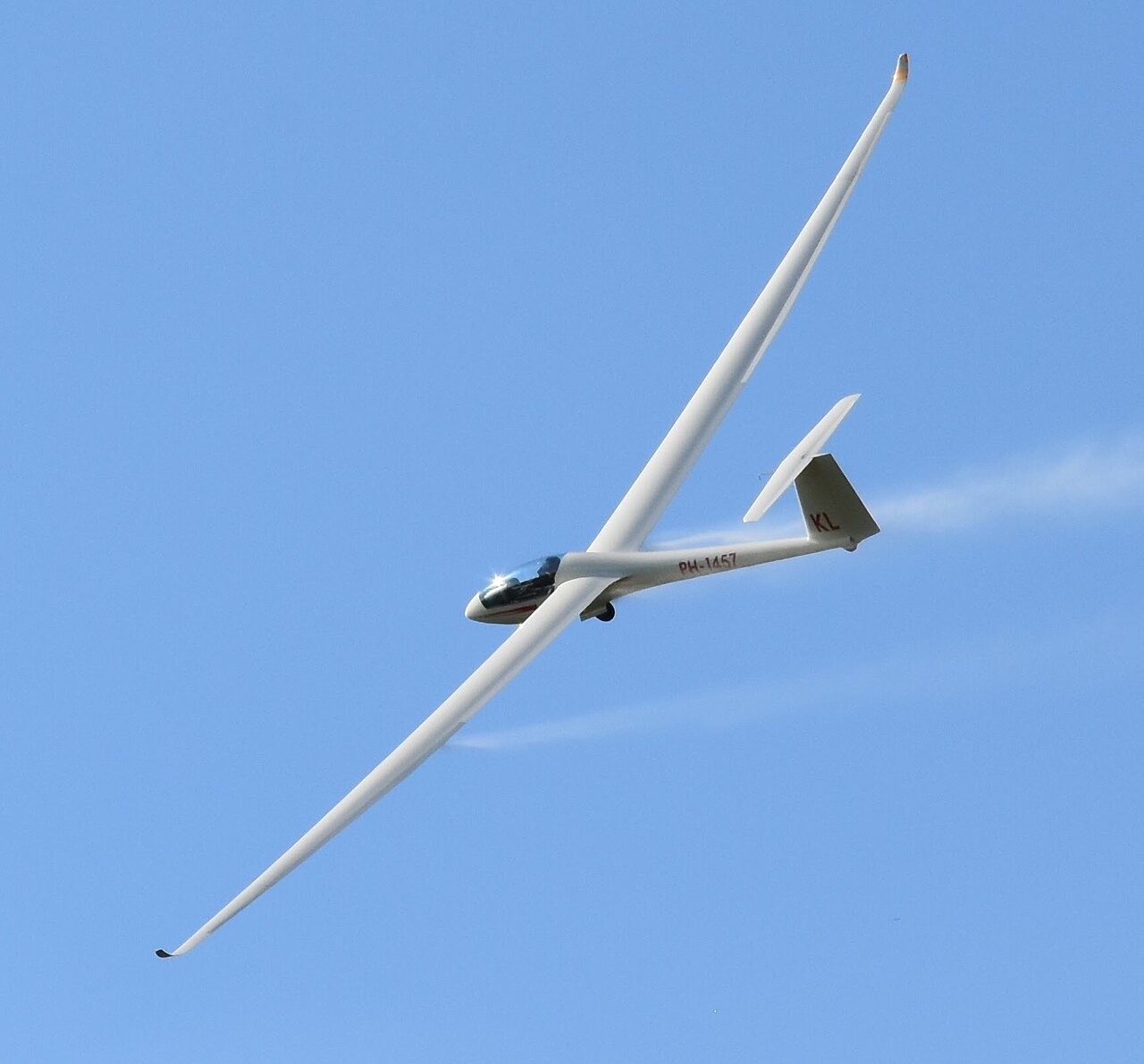
The Rolladen-Schneider LS8 is a German single-seat glider built for the Standard and 18 metre classes, first flown in 1994 and produced in series since 1995 by Rolladen-Schneider and later by DG Flugzeugbau. It combined a clean, flap-less wing with gentle handling, making it both a formidable competition machine and a popular club and cross-country sailplane.
The LS8 is a single-seat composite sailplane built for the FAI Standard Class and, with wing extensions, the 18 metre class. It was designed and originally manufactured by Rolladen-Schneider in Germany, with production later continuing under DG Flugzeugbau. First flown in 1994 and in series production from 1995, it became one of the most widely built and successful standard class gliders of its era, with around 544 examples constructed.
By the mid to late 1980s the earlier LS4 had lost its leading position in the Standard Class to newer designs such as the Schempp-Hirth Discus, and the follow-on LS7 failed to recapture that lead despite its advanced design. Designer Wolf Lemke was wary of investing heavily in a new airfoil, since the tools of the time could not reliably predict how newer laminar-flow profiles would perform in everyday conditions, as the LS7, ASW 24 and DG-600 had already demonstrated. Instead, Rolladen-Schneider took note of the 15 metre LS6, first flown in 1983, which had shown surprisingly good results flying with its flap handle removed in the non-FAI Sports Class in the United States. Following this lead, the company modified an LS6-c by deleting the flap system, resetting the wing at a slightly higher angle of incidence and adding winglets. This experimental aircraft outperformed contemporary standard class sailplanes in side-by-side tests and in contests including the German Championships at Neustadt-Glewe. The production LS8 that emerged in 1994 refined this concept further, most notably with redesigned ailerons and a lighter, aerodynamically cleaner wing made possible by the absence of flaps. The type proved highly successful in competition: examples took second, fourth and fifth at the 1995 World Gliding Championships in Omarama, New Zealand; first, second and third at the 1997 World Gliding Championships in St Auban, France; six of the top ten places at the 1999 World Gliding Championships in Bayreuth, Germany; the top three places at the 2001 Women's World Gliding Championships in Lithuania; and first place plus nine of the top ten positions at the 2005 Women's World Gliding Championships in Klix, Germany. At the 2006 World Gliding Championships in Eskilstuna, Sweden, the LS8 took first and third places, and it won the European Gliding Championship in 2002, 2004, 2005 and 2007, leading many to regard it as the best all-round standard class glider. By December 2005, 491 examples of all subtypes had been built. Despite this commercial success, Rolladen-Schneider itself did not prosper, and following a court battle the LS8 design and the company's other types passed to DG Flugzeugbau, which continues series production with some alterations to the mainwheel, the Turbo version and model designations. A parallel development thread concerned a self-sustaining Turbo version: an original prototype built for Peter Wright used an unusual belt-driven propeller arrangement with the engine remaining in its bay and carbon-fibre aerofoil pylons housing the drive belt, allowing the engine to be started before the propeller was deployed. This design, though admired, was judged too complex and costly for production, and a more conventional Turbo installation was adopted instead, later updated by DG with its own DEI NT engine control system. The Peter Wright prototype was eventually converted back to a near-standard LS8-b and remains on the British BGA register as the LS8-PW, notable as the only LS8 on the CAA EASA Annex II list because of its prototype status and its use of unidirectional carbon fibre wing skins, a feature abandoned in production aircraft in favour of woven carbon fibre.
The LS8 does away with flaps entirely, relying instead on a wing of lighter, aerodynamically cleaner design and on winglets to achieve its performance within the fixed-geometry rules of the Standard Class. Wing extensions can be fitted to convert the aircraft, in effect, into the 18 metre class LS8-s, and this variant's increased span allows it to carry the added weight of a self-sustaining engine installation more readily than a pure 15 metre sailplane. The 18 metre version also received an increase in maximum take-off weight, from 525 kg to 575 kg, along with a shock-absorbing retractable main wheel. Turbo and self-launching versions feature an engine bay in the fuselage; later jet retrofits using the M&D Flugzeugbau MD-TJ42 turbine have been fitted to LS8 models other than the LS8-b, which already carries an engine bay, with the retrofit's fuel tanks located in the outer wing water-ballast tanks to keep weight out of the fuselage.
The LS8 is noted above all for the combination of strong cross-country and competition performance with gentle, easy and forgiving flight characteristics, qualities that have made it suitable for both serious competition flying and everyday club and leisure soaring. Its competition record, including repeated top placings at World and European Gliding Championships through the 1990s and 2000s, underlines its effectiveness even against purpose-built rivals, and it is widely regarded as the best all-round standard class glider of its generation.
The baseline LS8 was followed by the LS8-a, incorporating refinements through the production run, and the 18 metre LS8-s, created by fitting wing tip extensions to the standard airframe and benefiting from an increased maximum take-off weight and a retractable main wheel. A self-sustaining Turbo version was developed, initially as a complex belt-driven prototype built for Peter Wright before production settled on a more conventional engine installation; this version carries an engine bay in the fuselage and is designated LS8-b. The original Peter Wright prototype survives, redesignated LS8-PW, as a one-off retaining unidirectional carbon fibre wing skins not used on series aircraft. More recently, jet retrofits using the MD-TJ42 turbine have been made available for LS8 models other than the LS8-b.
The LS8 has been used extensively both as a club and leisure sailplane, prized for its docile handling, and as a front-line competition type, flown to numerous podium finishes at World and European Gliding Championships, including Women's World Championship successes. Its dual suitability for club training and cross-country flying alongside serious competition use was a significant factor in its commercial success, with several hundred examples built and in active service, including aircraft on national registers such as the British BGA list.
The qualities that have made the LS8 popular in real-world club and competition flying, gentle handling, forgiving behaviour and a clean, flap-less wing that rewards accurate thermal centring, are the same characteristics that define its character for a pilot at the controls, whether in the air or in a simulated cockpit. Its reputation as the best all-round standard class glider stems from this balance of approachable handling and genuine competitive performance, making it a natural type for pilots wanting to practise cross-country and racing tasks without the sharper edges of some rival designs.