Departure
94%
vs 95% ▼ 1
 MY FS FLIGHTS
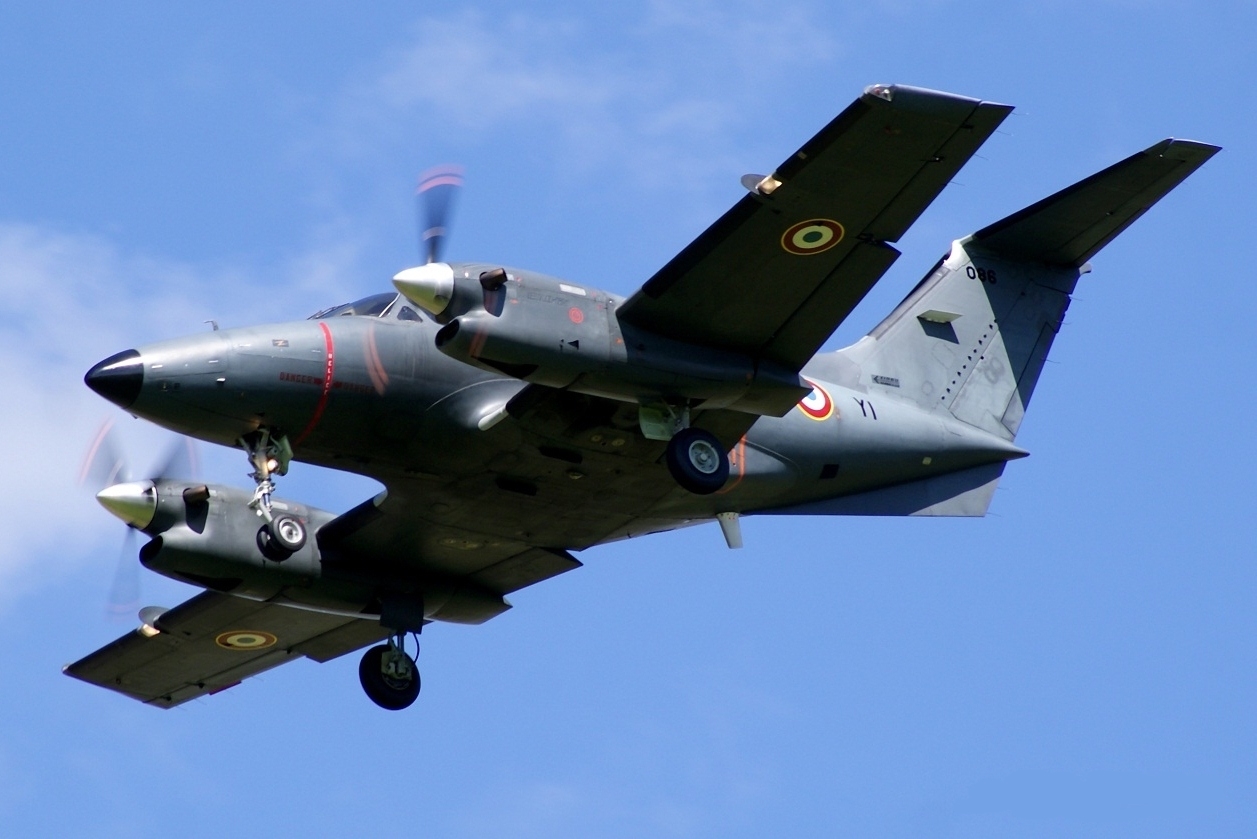
The Embraer EMB121 Xingu is a twin-turboprop business and air taxi aircraft developed in Brazil during the mid-1970s, combining the wings and engine nacelles of the EMB110 Bandeirante with a new pressurised fuselage and distinctive T-tail. It found favour with both civilian operators and military air arms, most notably the French Air and Space Force, and remains a recognisable and somewhat unusual-looking type among light twin turboprops. For simulator pilots it offers an accessible but characterful IFR-capable twin, now available as a detailed payware add-on.
The EMB121 Xingu is a twin-turboprop business and air taxi aircraft built by the Brazilian manufacturer Embraer. It was designed using knowledge gained from the earlier EMB110 Bandeirante, reusing that aircraft's wings and engine nacelles but mating them to an entirely new fuselage and a T-tail configuration. The result is a somewhat squat-looking aircraft, with single wheels on all landing gear legs, squared-off rectangular cabin windows and a ventral fin. It was the first pressurised aircraft manufactured by Embraer.
The EMB121 Xingu first flew on 10 October 1976. Production ran between 1977 and 1987, before ceasing in August of that year, with a total of 106 aircraft built. Of these, 51 were exported to countries outside Brazil. The Brazilian air force was among the earliest customers, giving the type the military designation VU-9. The French air force and navy became major operators, ordering versions customised for the Armee de l'Air and Aeronavale.
The Xingu combines the wings and engine nacelles of the EMB110 Bandeirante with a purpose-built fuselage and a T-tail, giving it a distinctive profile among light twin turboprops. Recognisable features include single-wheel main and nose landing gear legs, squared-off rectangular cabin windows and a ventral fin beneath the tail. The aircraft was pressurised, a first for Embraer, and was fitted with twin turboprop engines driving either three-blade or four-blade propellers depending on variant.
The EMB121A was the first production version, fitted with three-blade propellers. French military variants based on the EMB121A were designated EMB121AA for the air force and EMB121AN for the navy, each custom-built for their respective service. The EMB121A1 followed as an uprated version with more powerful engines driving four-blade propellers, this being the distinguishing feature between the two generations. Brazilian air force Xingus were originally delivered as EMB121A but were later updated to EMB121A1 standard, retaining the VU-9 designation throughout.
The majority of surviving EMB121 Xingus fly in Brazil, reflecting the type's origins and its adoption by the Brazilian air force under the VU-9 designation. The largest single operator, however, is the French Air and Space Force, which took delivery of dedicated air force and navy variants for liaison and training duties.
The EMB121A1 Xingu II has been recreated for Microsoft Flight Simulator by BRSimDesigns as a payware add-on, offering a detailed external model, a cockpit with 3D analogue instruments, and a modelled passenger cabin. The package includes a KAP140 autopilot, GNS530-style GPS, custom NAV/COM/DME/ADF and transponder panels, a weather radar, a stick shaker anti-stall system and an AOA control system, along with custom air conditioning and pressurisation logic with automatic and manual modes. Eight liveries are included, among them Brazilian and French air force schemes reflecting the type's real-world service. It is not modelled to full study-level depth and does not simulate circuit breakers, but users have found the analogue gauges a refreshing change from more digital modern twins and enjoyed touches such as opening window shades and cabin baggage that appears according to loaded weight. Early releases saw community-reported quirks, including excessive engine thrust at idle, a strong reverse-thrust effect, and sound-pack compatibility issues, most of which were addressed through subsequent updates alongside refinements to flap drag, weight and balance, and control binding for the parking brake and condition levers.