Departure
92%
vs 95% ▼ 3
 MY FS FLIGHTS
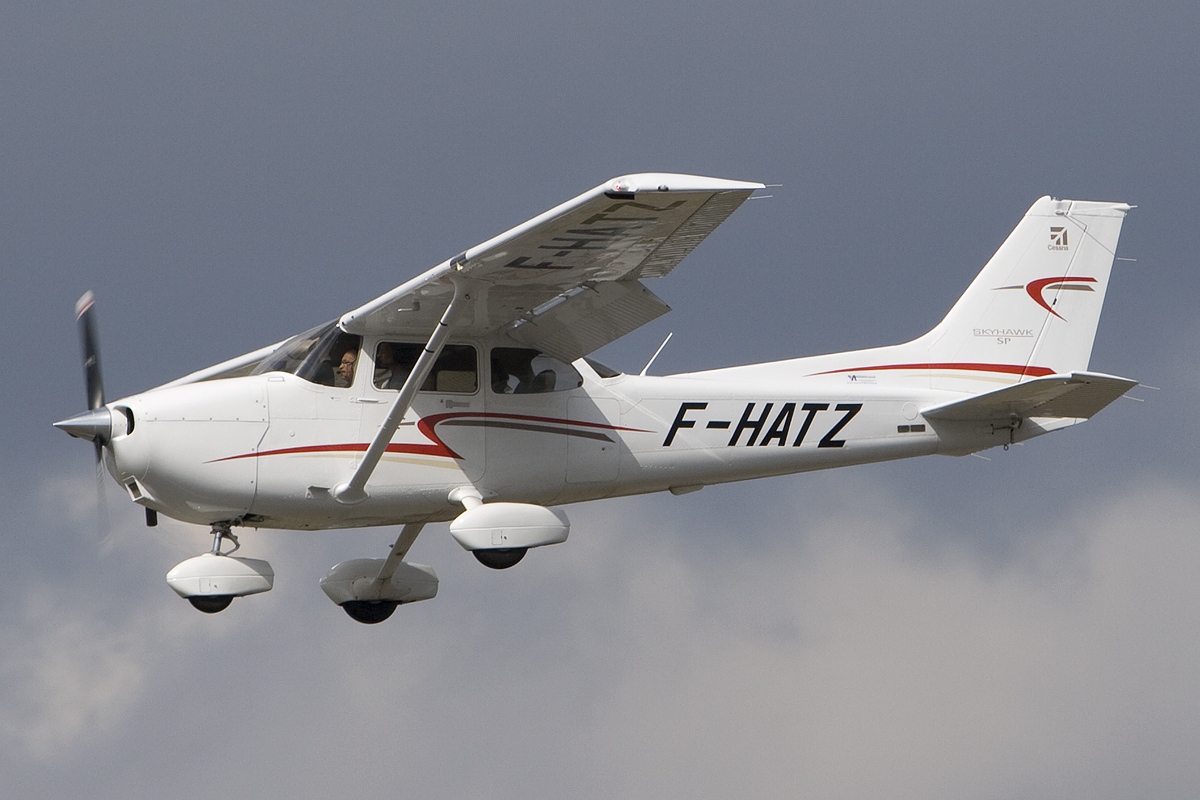
The Cessna 172 Skyhawk is a high-wing, single-engine, four-seat light aircraft built by Cessna (now part of Textron Aviation) and is widely regarded as the most popular single-engine aircraft ever produced. Since its first flight in June 1955 it has become the default primary trainer for generations of pilots, prized for its docile handling, simple systems and huge parts and support network. For the simulator pilot it offers an accessible, forgiving platform ideal for learning circuits, navigation and instrument flying.
The Cessna 172 Skyhawk is a high-wing, fixed-tricycle-gear, single-engine piston aircraft seating four, built by Cessna. It is described by Textron Aviation as the most popular single-engine aircraft ever built and the ultimate flight training aircraft for student pilots. Since its debut it has become the benchmark light training and touring aircraft worldwide, with more than 45,000 delivered to customers across the globe.
The high-wing Cessna 172, now marketed as the Skyhawk, first took flight in June 1955, evolving from the earlier tailwheel Cessna 170. The original 172 model was produced from 1956-1958 with a Continental O-300 engine. Cessna itself was established in 1911 and was acquired by Textron in 1992. Production of the 172 ceased in 1986 after almost twenty years of continuous manufacture, largely due to product liability concerns affecting general aviation manufacturers at the time. Following the passage of the General Aviation Revitalization Act of 1994, production resumed in 1996 with the 172R Skyhawk, the first 172 fitted with a fuel-injected engine and featuring a redesigned interior and ventilation system. The higher-powered 172S Skyhawk SP followed in 1998. By its 70th anniversary in June 2025, more than 45,000 172s had been delivered to customers worldwide, and Textron Aviation continued to describe it as leading the industry as the most popular aircraft in the world.
The Skyhawk is an all-metal, high-wing monoplane with fixed tricycle landing gear and a strut-braced wing. A current Garmin G1000-equipped 172S has a length of 27 ft 2 in (8.28 m), height of 8 ft 11 in (2.72 m), wingspan of 36 ft 1 in (11.00 m), wing area of 174 sq ft (16.17 sq m) and cabin width of 3.3 ft (1.01 m). Empty weight is 1,640 lb (744 kg), useful load 918 lb (416 kg) and maximum take-off weight 2,550 lb (1,157 kg), with seating for up to four occupants. The 172S is powered by a Textron Lycoming IO-360-L2A engine producing 180 hp at 2,750 RPM, driving a McCauley two-blade fixed-pitch metal propeller. The original 1956 172 used a Continental O-300, a six-cylinder, air-cooled unit producing 145 horsepower, and the 1968 172I model introduced the four-cylinder Lycoming O-320-E2D of 150 horsepower, beginning a long association with Lycoming powerplants. Modern Skyhawks feature the Garmin G1000 NXi integrated avionics suite, with high-resolution displays, wireless technology and, on many aircraft, a GFC700 dual-axis autopilot capable of maintaining altitude, heading and rates of climb or descent automatically, including automated recovery from unusual attitudes.
A Garmin G1000-equipped Cessna 172S has a maximum cruise speed of 124 KTAS (230 km/h) and a maximum speed of 163 KIAS (302 km/h), with a stall speed of 48 KCAS (89 km/h). Rate of climb is 730 ft/min (223 m/min) and service ceiling is 14,000 ft (4,267 m). Take-off distance is 1,630 ft (497 m) and landing distance 1,335 ft (407 m). Maximum range on standard fuel is around 640 nm (1,185 km) at a cruising speed of roughly 120 knots, with aircraft fitted with extra fuel tanks able to reach nearly 800 nautical miles depending on the specific model.
The 172 line ran through a long series of lettered variants, each introducing incremental changes: the original 1956-1958 172 used the Continental O-300 engine; the 172A of 1959 introduced a swept-back tailfin and rudder; the 172B of 1960-1961 had redesigned landing gear and a new interior; the 172C of 1962 offered an optional autopilot and redesigned instrument panel; the 172D of 1963 introduced the Omni-Vision rear window; the 172E of 1964 had improved landing gear and updated avionics; the 172F of 1965 was the first with electric flaps; the 172G of 1966 brought minor interior and exterior updates; the 172H of 1967 had a redesigned cowling and improved engine cooling; the 172I of 1968 introduced the Lycoming O-320 engine; the 172J of 1969 saw limited production with minor updates; the 172K of 1969-1970 had improved avionics and interior; the 172L of 1971-1972 introduced a new nosewheel strut and updated interior; the 172M of 1973-1976 featured a cambered wing for improved performance; the 172N of 1977-1980 introduced the Lycoming O-320-H2AD engine; the 172P of 1981-1986 had improved soundproofing and avionics; and the 172Q Cutlass of 1983-1985 was a higher-performance variant with a 180 hp engine. Production resumed in 1996 with the fuel-injected 172R Skyhawk, followed in 1998 by the 180-horsepower 172S Skyhawk SP, which remains in production with modern avionics. Special variants have included the 172 Hawk XP seaplane and a proof-of-concept electric-powered Cessna 172.
The Skyhawk is used overwhelmingly as a primary flight trainer, and Textron Aviation describes it as the aircraft of choice for pilot training. In 2015 Textron Aviation introduced the Top Hawk program to connect flight schools and universities with factory-new Skyhawks, and nearly 50 aircraft have been placed through the program with operators in the United States and the United Kingdom. Beyond training, the type is widely used for personal touring and recreational flying thanks to its low operating and maintenance costs, ready availability of parts, and a maintenance workforce in which nearly every aviation mechanic has experience with the type.
The Skyhawk's straightforward tricycle gear, docile stall characteristics and simple fixed-pitch propeller make it a natural first aircraft for simulator pilots learning circuits, navigation and basic instrument procedures. Modern G1000 NXi-equipped variants bring glass-cockpit displays and, on many airframes, a GFC700 digital autopilot capable of holding altitude and heading and recovering from unusual attitudes, giving simulator pilots a realistic platform for practising both hand-flying and automated flight management in a benign, forgiving airframe.