Departure
97%
vs 95% ▲ 2
 MY FS FLIGHTS
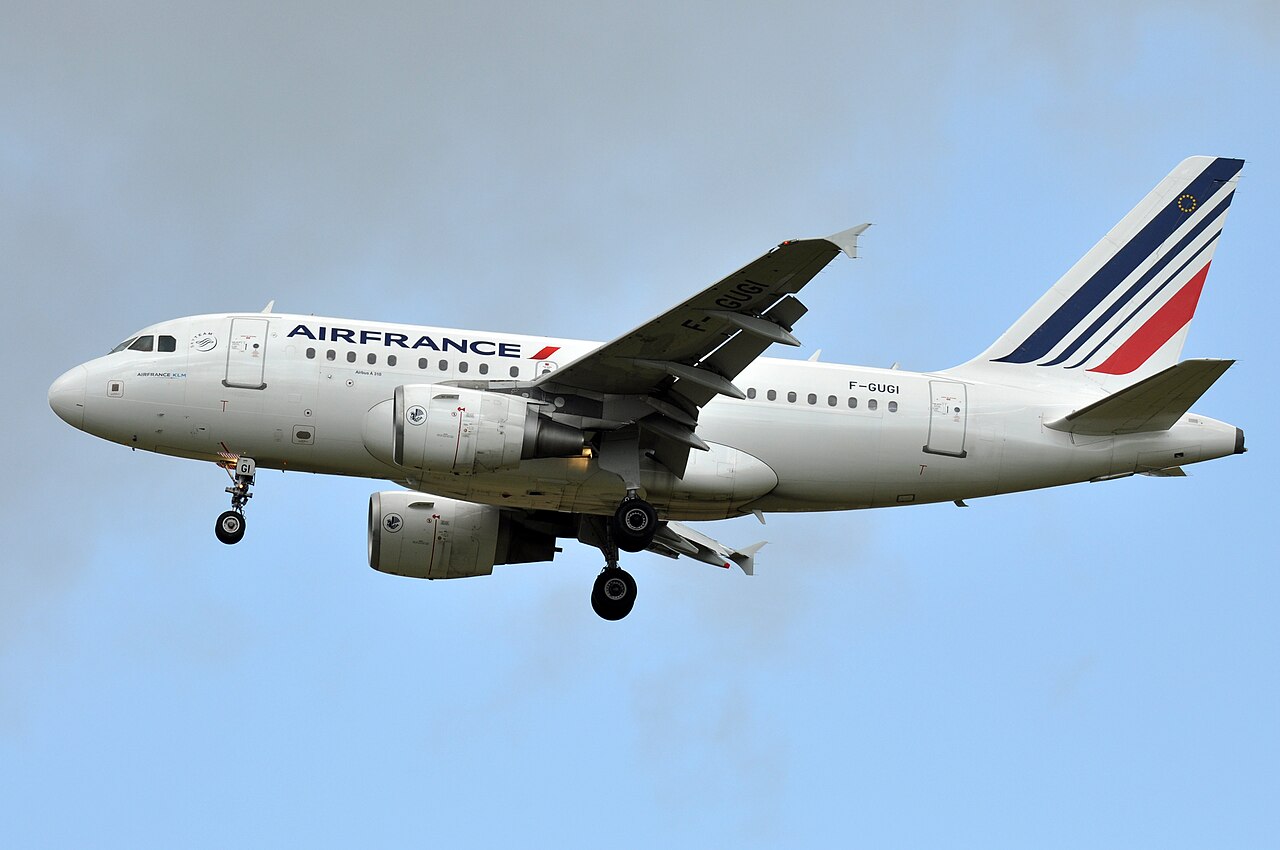
The Airbus A318 is the smallest and least numerous member of the Airbus A320 family, a short-to-medium-haul narrow-body twin-jet nicknamed the "Baby Bus". Developed from the A319 and built in Hamburg, it shares the fly-by-wire cockpit and single type rating of its larger siblings while offering unique steep-approach certification that opened up airports such as London City, making it a niche but distinctive type for the sim pilot to explore.
The Airbus A318 is a narrow-body airliner and the smallest variant of the Airbus A320 family, seating between 107 and 132 passengers depending on configuration. Built by Airbus with final assembly in Hamburg, Germany, it was intended primarily for short-range service but retains enough range for select long-haul sectors. It shares a common type rating with all other A320 family variants, meaning pilots can move between the A318, A319, A320 and A321 without additional training, and it holds EASA certification for steep approach operations, second only to the Airbus A220 among commercial types, which allows it to operate into constrained airports such as London City.
The A318 traces its roots to a mid-1990s collaboration between Chinese, Singaporean and European manufacturers. In May 1997, during a visit by French President Jacques Chirac to China, Aviation Industries of China (AVIC), Singapore Technologies Aerospace (STAe), Airbus and Alenia signed a framework agreement to develop an aircraft in the 100-seat range, tentatively named the AE31X and comprising two clean-sheet designs, the AE316 and AE317. Disagreements between the Chinese side and Airbus over aircraft size, technology transfer and workshare led STAe to withdraw in 1998, and Airbus and AVIC cancelled the project that July. The A318 is believed to have emerged from this AE31X work, though an Airbus-only project internally designated the A319M5 had already begun in March 1998 as a shortened derivative of the A319, with the fuselage reduced by 0.79 metres ahead of the wing and 1.6 metres behind it. The final proposal settled on an aircraft seating 107 passengers in a two-class layout with a range of around 3,350 kilometres. Development was affected by the fall in demand for new aircraft following the September 11 attacks and by early Pratt & Whitney engines burning more fuel than expected; by the time CFM International brought a more efficient engine to market, customers including Air China and British Airways had already withdrawn their orders. The A318 first flew on 15 January 2002, with a CFM56-5B9/P-powered version following around seven months later. The type entered airline service in July 2003 with launch customer Frontier Airlines. Production ran from 2001 to 2013, with 80 aircraft built in total, and the A318 is no longer offered for sale, having been effectively replaced in Airbus's line-up by the A220.
The A318 is roughly six metres shorter and about three tonnes lighter than the standard A320, making it the smallest single-aisle aircraft Airbus has built. Fuselage length is 31.4 metres, wingspan 34.1 metres, and tail height 12.6 metres. Maximum take-off weight is quoted at around 68,000 kilograms (149,900 to 150,000 lb). The aircraft is powered by two high-bypass turbofans, either the CFM International CFM56-5B or the Pratt & Whitney PW6000 series. It inherits the digital fly-by-wire flight control system and sidestick controls pioneered on the A320, along with a common cockpit and type rating across the family. A notable production feature was the use of laser welding in fuselage assembly, reducing the need for heavy rivets and bolts. Typical two-class seating is for 107 passengers, with a maximum single-class configuration of up to 132.
Maximum range is 5,750 kilometres (3,100 nautical miles, 3,570 miles), giving the A318 enough legs for select long-haul city pairs despite its short-haul design brief, most notably the London City to New York JFK service. Maximum operating speed is Mach 0.82, with a typical cruising speed of Mach 0.78 at a cruising altitude of 11,900 metres (39,000 feet). Its steep approach certification, second only to the A220 among commercial airliners, allows it to fly into airports with restrictive approach gradients such as London City.
The core production version is the A318-100. A corporate/VIP variant was launched in 2005 as the A318 Elite, which was subsequently renamed the ACJ318 at the EBACE show in May 2011. Two engine options were offered on the airline variant, the CFM International CFM56-5B and the Pratt & Whitney PW6000, the latter having originally been selected at the type's 1998 Farnborough Air Show launch before CFM-powered aircraft came to dominate later orders.
The A318 entered commercial service in July 2003 with launch customer Frontier Airlines. Air France became its largest operator and, following the retirement of the type by other carriers, remains the last commercial airline still flying it. Other historical operators included LATAM Airlines, Mexicana de Aviación, Avianca Brasil, and Romania's TAROM. Its most distinctive operational role was with British Airways, which used the type for a premium, all-business-class service between London City Airport and New York JFK, exploiting its steep-approach capability. There have been no reported accidents involving the A318.
For the simulator pilot, the A318 offers the familiar A320-family fly-by-wire handling and sidestick control, and because it shares a common type rating with the A319, A320 and A321, transitioning between them requires no extra training in the real world, and little adjustment in the sim. Its main point of interest is the steep-approach certification that permits operations into London City, a procedure that gives A320-family sim pilots a distinctive short-field, high-angle approach to practise that the larger family members cannot perform. Its rarity and niche history, including the London City to JFK business-class service, make it an appealing, less common alternative to the more ubiquitous A320 and A321 for pilots wanting to fly the smallest and least numerous member of the family.