Departure
95%
vs 95%
 MY FS FLIGHTS
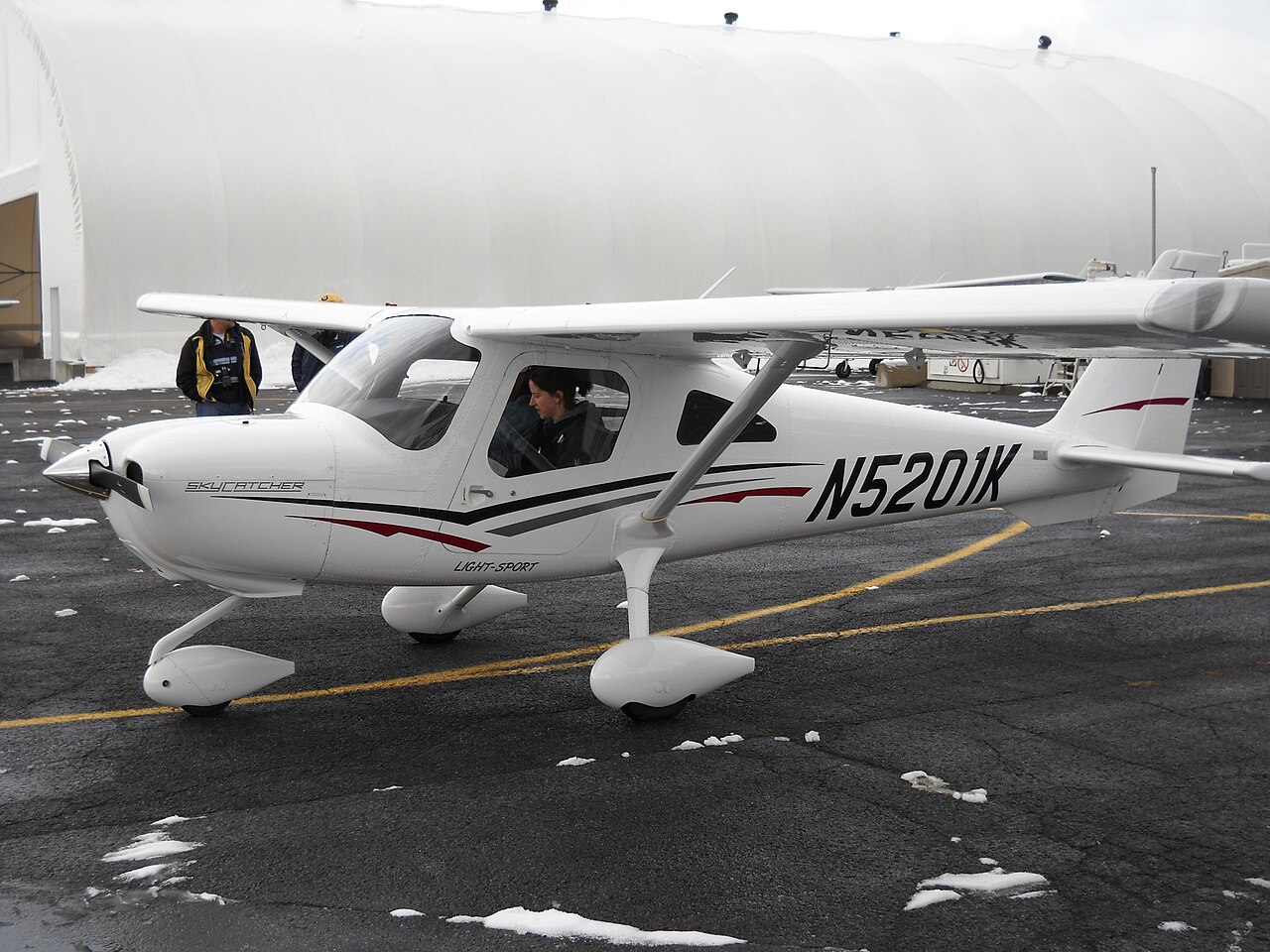
The Cessna 162 Skycatcher was a side-by-side two-seat, high-wing light-sport aircraft built by Cessna between December 2009 and December 2013, aimed squarely at the flight-training and personal-aircraft market created by the FAA's new Light-Sport Aircraft category. Powered by a 100 hp Continental O-200D and fitted with Garmin G300 avionics, it was conceived as a modern successor to the Cessna 150/152 line, but high pricing, disappointing useful load and lacklustre performance against its LSA rivals meant it never achieved the sales Cessna had hoped for. It remains of interest to sim pilots and real-world owners alike as a relatively young, glass-cockpit trainer that is now available cheaply on the used market.
The Cessna 162 Skycatcher is an American side-by-side two-seat, high-wing, strut-braced, tricycle-gear light-sport aircraft (LSA) designed and produced by Cessna. It was intended for flight training and personal use and received its ASTM LSA approval in July 2009. Outwardly it resembles Cessna's earlier 150 and 152 trainers, and was conceived as a modern, entry-level evolution of that lineage adapted to the LSA category.
Cessna announced it was studying an LSA design on 6 June 2006 and unveiled the concept, known as the Cessna LSA or Cessna Sport, at EAA AirVenture Oshkosh on 24 July 2006. The proof-of-concept prototype, registered N158CS, first flew on 13 October 2006, reaching 110 knots (200 km/h) on a flight from McConnell Air Force Base to Wichita's Mid-Continent Airport. Cessna formally launched the Skycatcher programme on 10 July 2007 and unveiled a full-scale mockup at Oshkosh on 22 July 2007, quoting a price of $109,500 and securing 720 orders by the end of the event, a figure that reportedly grew to around 1,000 orders within a year. The conforming prototype flew on 8 March 2008, and the first production-configuration aircraft flew on 5 May 2008. Cessna conducted testing beyond ASTM Light Sport requirements, including ground vibration testing and a full airframe fatigue programme, and announced completion of ASTM flight testing in July 2009; two prototypes were lost in unrecoverable spins during flight testing, though the pilots survived. In November 2007 Cessna announced that production would be carried out in China by Shenyang Aircraft Corporation, a subsidiary of the state-owned Aviation Industry Corporation of China, a move that saved Cessna a reported $71,000 per aircraft but drew considerable negative reaction from customers. The first production aircraft flew at Shenyang on 17 September 2009, and airframes were shipped disassembled to Wichita for reassembly by Yingling Aircraft, which became the first FAA-certified repair station for the type. The first production delivery, to Cessna CEO Jack Pelton's wife Rose Pelton, took place in December 2009. Planned production of 300 to 400 aircraft a year never materialised; only 30 were delivered in 2010, and by late 2013 many position holders had cancelled orders following price rises and disappointment with the design. In October 2013 Cessna CEO Scott Ernest stated the 162 had "no future," and sales were halted in February 2014. The remaining 80 unsold aircraft, which had been used for spares, were scrapped in December 2016. Commentators pointed to high price, poor useful load and underwhelming performance relative to LSA competitors, along with an empty weight considered too high and fragile construction, as reasons for the programme's failure.
The Skycatcher is a side-by-side two-seat, strut-braced high-wing monoplane with fixed tricycle landing gear, of all-metal construction, built to ASTM Light Sport Aircraft standards. It is powered by a 100 hp Continental O-200D piston engine driving a fixed-pitch propeller, with a time between overhauls of 2,000 hours. Avionics comprised the Garmin G300 suite, and the aircraft was equipped and approved for day and night VFR operation. The cockpit used a single hand-held yoke rather than the twin control wheels of earlier Cessna two-seaters. Dimensions include a wingspan of 30 feet and an overall length of 22 feet. Base price at introduction was quoted at $112,250, having risen from an original $109,500 and reaching as high as $149,000 later in production. Empty weight (standard) was 830 lb, maximum gross weight 1,320 lb, giving a useful load of 490 lb; usable fuel was 24 gallons (144 lb), leaving a payload of 346 lb.
On its first flight, the proof-of-concept prototype reached a speed of 110 knots (200 km/h) flying from McConnell Air Force Base to Wichita's Mid-Continent Airport. In service, the production Skycatcher's modest useful load of 490 lb and payload of 346 lb, against a 1,320 lb maximum gross weight, limited its practical carrying capacity, and industry commentary characterised its overall flight performance as lacklustre when compared with rival LSA trainers, a factor cited in the type's commercial failure.
The Skycatcher progressed through a proof-of-concept prototype (N158CS, first flown October 2006), a conforming prototype (first flown March 2008) and an initial production-configuration aircraft (first flown May 2008) before entering series production. Production airframes were built by Shenyang Aircraft Corporation in China from September 2009, then shipped disassembled to Wichita for reassembly by Yingling Aircraft; no distinct model variants beyond these development and production stages are recorded.
The 162 was marketed for flight training and personal flying under the FAA's Light Sport Aircraft category. Despite reported orders once totalling around 1,000 to 1,200 aircraft, only 192 had been sold by the time production ended, with total production reaching just over 275 airframes by December 2013. Cessna's plan for annual production of 300 to 400 units was never realised, with only 30 delivered in 2010, and cancellations mounted through 2013 as customers reacted to price increases and unmet expectations. Sales were officially halted in February 2014, and the 80 remaining unsold aircraft, retained for spare parts, were scrapped in December 2016. The type nonetheless survives in a modest used-aircraft fleet, valued for its comparatively young airframes, mostly from 2011, and its Garmin G300 glass avionics, with average resale prices around $54,000.