Departure
96%
vs 95% ▲ 1
 MY FS FLIGHTS
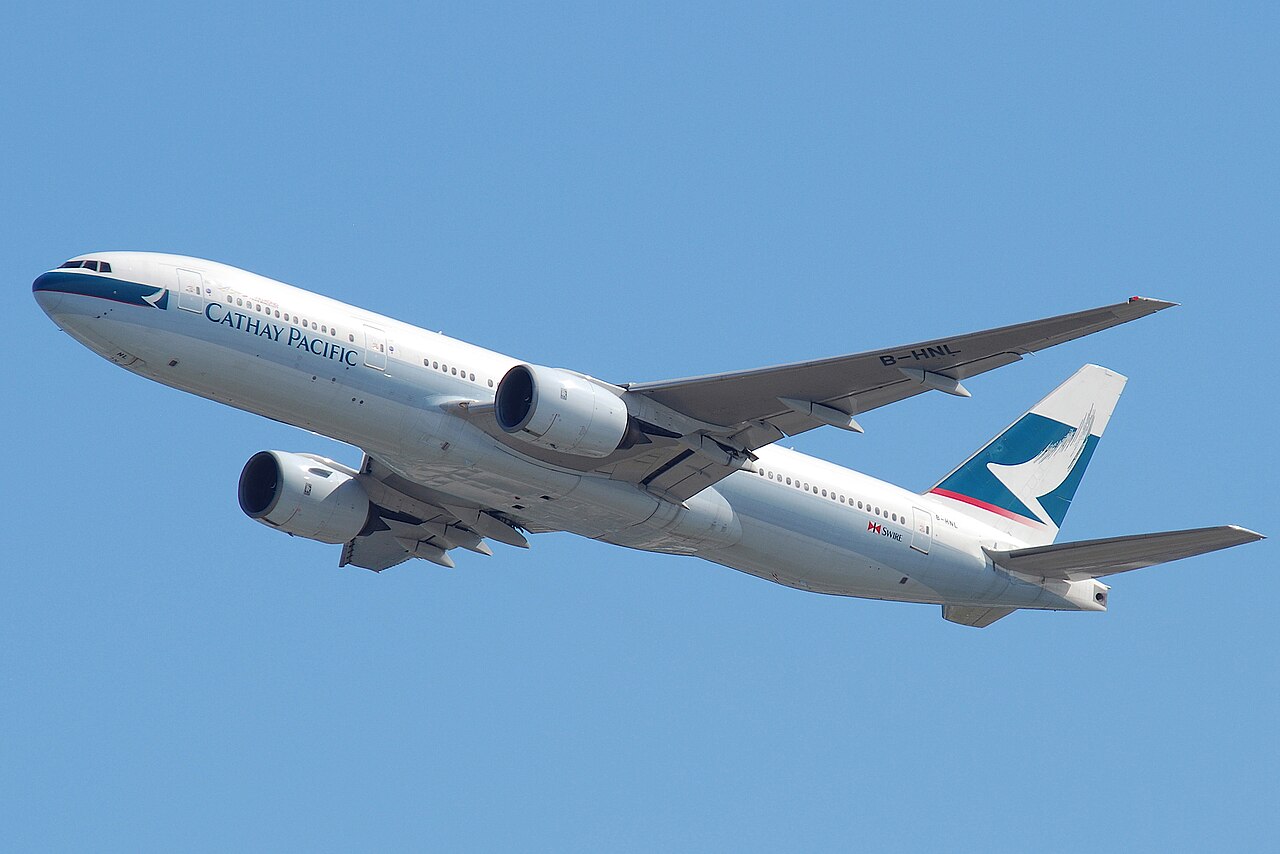
The Boeing 777F is the all-freight derivative of the Boeing 777 family, built by Boeing Commercial Airplanes as a pure cargo counterpart to the long-range 777-200LR passenger aircraft. Entering service in 2009, it became the world's largest twin-engine freighter and a favoured replacement for older four-engine types such as the 747-200F and MD-11F. For a simulator pilot it represents the heavy long-haul cargo end of the 777 family, combining widebody freight capacity with twinjet economics.
The 777F is Boeing's dedicated freighter version of the 777, sharing its fuselage and wing design most closely with the 777-200LR passenger model but built without cabin windows or passenger systems and fitted out entirely for cargo. It is a twin-engine, twin-aisle widebody operated purely in the all-freight role, and since its introduction it has been marketed by Boeing as the most fuel-efficient large freighter available, offering lower operating costs than four-engine predecessors while retaining intercontinental range.
The 777F made its maiden flight in 2008 and entered airline service in early 2009. It was developed to give operators a modern, twin-engine replacement for ageing quad-engine freighters such as the 747-200F and MD-11F, offering similar payload and range capability with the operating economics of a twinjet. By the time production figures were last reported, 120 examples had been delivered to airlines with a further 40 unfulfilled orders on the books. More recently, Boeing has sought regulatory approval to continue building the 777F beyond 2027, petitioning the FAA to allow up to 35 additional aircraft even though its current GE90 engines do not meet international carbon emissions standards due to take effect from January 2028 for newly certified designs. Boeing has argued the case partly on economic grounds, noting that more than $260 billion of the roughly $600 billion in goods exported by air cargo in 2024 moved on large widebody freighters, and that each 777F sold to a foreign carrier represents around $440 million in export value at catalogue prices.
The 777F has a fuselage length of 63.7 metres, a wingspan of 64.8 metres and a tail height of 18.6 metres. Maximum take-off weight is 766,800 lb (approximately 347.8 tonnes). It is powered by two General Electric GE90 engines, offered as the GE90-110B1 or the higher-thrust GE90-115B1, with the GE90-110B rated at up to 493 kN of maximum take-off thrust. Lufthansa Cargo notes that the GE90-110's performance, combined with the aircraft's advanced wing design, allows the freighter to fly at greater cruising speeds and altitudes while burning less fuel than earlier designs, and that the type meets the strictest noise-protection standard currently in force in international civil aviation.
At its maximum payload of 103,000 kg the 777F has a range of approximately 5,000 nautical miles (4,970 nm), and its maximum operating speed is Mach 0.89. This combination of payload and range lets it fly long intercontinental cargo routes without intermediate stops, a capability Lufthansa Cargo highlights as one of the type's principal operational advantages over older freighters.
The 777F is offered with a choice of two General Electric powerplants, the GE90-110B1 and the more powerful GE90-115B1, allowing operators to tailor thrust to their route and payload requirements. In configuration and dimensions it is most closely related to the 777-200LR passenger variant, from which its fuselage and wing are derived.
Primary operators of the 777F include FedEx Express, which operates the type in large numbers, along with Emirates SkyCargo and China Southern Cargo. Lufthansa Cargo flies 18 Boeing 777Fs, six of which are operated through its AeroLogic joint venture. The aircraft has been used across the industry to modernise long-haul freight fleets, replacing older types such as the 747-200F and MD-11F on intercontinental cargo routes while meeting current international noise regulations.
The 777F has been modelled as a pure cargo variant of the 777-200LR in at least one dedicated flight simulator platform, reproducing its twin GE90-110B engines rated at up to 493 kN of take-off thrust and its maximum take-off weight of around 347.8 tonnes. For simulator pilots this makes it a way to fly the heavy-freight side of the 777 family, handling the same airframe and wing as the long-range passenger variant but loaded and operated purely as a cargo hauler on long intercontinental sectors.