Departure
93%
vs 95% ▼ 2
 MY FS FLIGHTS
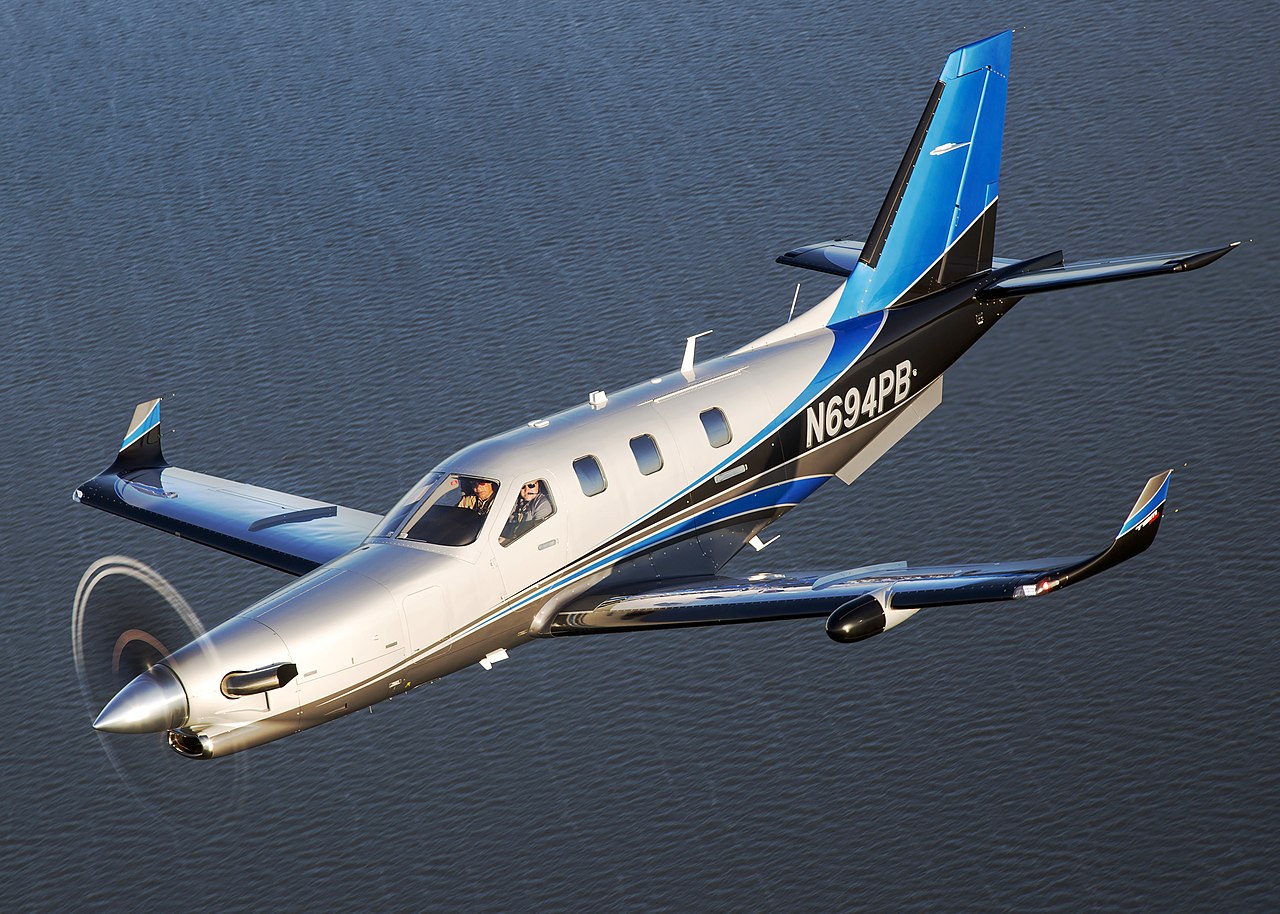
The Daher (formerly EADS SOCATA) TBM 850 is a high-performance, pressurised single-engine turboprop business aircraft, produced as an uprated derivative of the original TBM 700 and marketed under the internal designation TBM 700N. Fitted with a flat-rated Pratt & Whitney Canada PT6A-66D engine, it was for a time the world's fastest single-engine turboprop, offering near-jet cruise speeds with the operating economy of a turboprop, which has made it a favourite among owner-pilots and a popular subject for high-fidelity simulator add-ons.
The TBM 850 is a single-engine, pressurised turboprop designed for fast business and personal transport, built by SOCATA (later EADS SOCATA, now Daher) at Tarbes in France. It belongs to the TBM family of aircraft, whose lineage traces back to the piston-engined Mooney 301 prototype, and it sits between the original TBM 700 and the later, aerodynamically refined TBM 900 in the model line. Configured as a low-wing monoplane with a pressurised cabin typically seating up to six, it was conceived to combine turboprop economics with speed and altitude performance that outstripped its single-engine peers.
The TBM family originated with the Mooney 301, a six-seat pressurized light aircraft powered by a single 360 hp piston engine that first flew on 7 April 1983. Following the 1985 acquisition of the Mooney Airplane Company by French owners, talks between Mooney and the French manufacturer SOCATA led to the development of a turboprop-powered derivative, considerably heavier and with more than twice the available power, designated the TBM 700. A joint venture named TBM International was formed in June 1987 between Mooney and SOCATA's parent company Aerospatiale, and the first TBM 700 prototype flew on 14 July 1988. French type certification followed on 31 January 1990, with FAA certification awarded on 28 August 1990; the first production batch of 50 aircraft sold out almost immediately. Mooney withdrew from the joint venture in May 1991, leaving SOCATA as the sole manufacturer. The TBM 850 was introduced in the mid-2000s, entering service in 2006, as a more powerful evolution of the TBM 700, designated internally as the TBM 700N. It was fitted with the Pratt & Whitney Canada PT6A-66D engine to increase cruise speed and operating altitude, strengthening the type's position in the high-performance single-engine turboprop market. A total of 255 TBM 850s were produced between 2006 and 2014, after which the model was succeeded by the aerodynamically refined TBM 900, introduced in March 2014.
The TBM 850 retains the pressurised fuselage and low-wing layout of the earlier TBM 700, powered by a single Pratt & Whitney Canada PT6A-66D turboprop. The engine is limited to 700 shp (522 kW) for takeoff and landing, but during cruise flight power can be increased to 850 shp (634 kW) thanks to flat-rating, giving the aircraft a higher cruising speed than the TBM 700, particularly at high altitude. Airframe dimensions include a tail height of 14 ft 3 in (4.4 m), a wingspan of 42 ft 1 in (12.8 m), and an overall length of 35 ft 2 in (10.7 m), with a maximum takeoff weight of 7,025 lb (3,186 kg). The pressurised cabin measures 4 ft 1 in (1.2 m) high, 4 ft 0 in (1.2 m) wide and 10 ft 0 in (3.0 m) long, and is typically finished with high-quality leathers and wood veneers, with seats certified for crashworthiness up to 20 G. From the TBM 850 onward, a combined air conditioner and environmental control system was integrated into the cabin, simplifying operation compared with the arrangement on earlier models. The airframe employs fail-safe structural design techniques, including multiple load paths and a crack-stopper band, intended to maximise structural durability and service life. Avionics were offered with a Bendix King two-tube suite or the Garmin G1000 integrated flight deck, with a later TBM 850 variant combining the G1000 with a fuel tank extension modification.
The TBM 850 was, for a period, the world's fastest single-engine turboprop, with a maximum cruise speed of around 320 KTAS (368 mph, 593 km/h) at 26,000 ft, and cruise performance commonly described as an honest 300-knot airplane. It is capable of climbing to 31,000 ft in as little as 20 minutes and has a maximum operating altitude of 31,000 ft. When suitably equipped, it meets Reduced Vertical Separation Minima standards, permitting operation in RVSM airspace. Quoted range figures vary with payload and reserves, spanning from around 967 nm to as much as 1,585 nm, with a more typical operational range cited at around 1,200 miles for practical missions. Pilots and reviewers have described the aircraft as offering sophisticated automation alongside manageable, honest handling, with flexible cabin loading options allowing large or heavy cargo to be carried alongside passengers.
The baseline model in the family is the TBM 700, the original production version developed jointly by Mooney and SOCATA. The TBM 850 is the production name for the TBM 700N, distinguished by its Pratt & Whitney PT6A-66D engine rated at up to 850 hp in flight against 700 hp at takeoff. A later TBM 850 variant combined the Garmin G1000 Integrated Flight Deck with a fuel tank extension modification. The TBM 850 was itself succeeded in March 2014 by the TBM 900, an aerodynamically refined model that is around 14 kn faster in cruise, burns less fuel, needs less runway, climbs faster and is noticeably quieter both inside and outside the cabin, partly because it removes the 700 shp takeoff limitation and makes the full 850 shp of the PT6A-66D available at all times.
The TBM 850 was aimed principally at corporate and private owner-pilots seeking near-jet performance with the operating economics of a single-engine turboprop, and most of its sales were concentrated in the United States, with Daher-SOCATA positioned to sell around 30 to 50 aircraft a year. It gained a loyal following among owner-flown operators valuing its speed, efficient long-range cruise, and cabin flexibility for mixed passenger and cargo loads. The wider TBM family, encompassing military-oriented variants beyond the 850, has also served with the French Army and the French Air and Space Force.
The TBM 850 is available as a dedicated add-on for Microsoft Flight Simulator 2020/2024 through Black Square's TBM 850, reflecting the type's enduring appeal to simmers as a fast, glass-cockpit single-engine turboprop. Its combination of high cruise speeds, a pressurised cabin, and Garmin G1000-style avionics on later production aircraft makes it a popular choice for pilots wanting to fly demanding cross-country legs at altitude with jet-like speed but turboprop systems management, echoing its real-world reputation as an honest, high-performance personal transport aircraft.