Departure
93%
vs 95% ▼ 3
 MY FS FLIGHTS
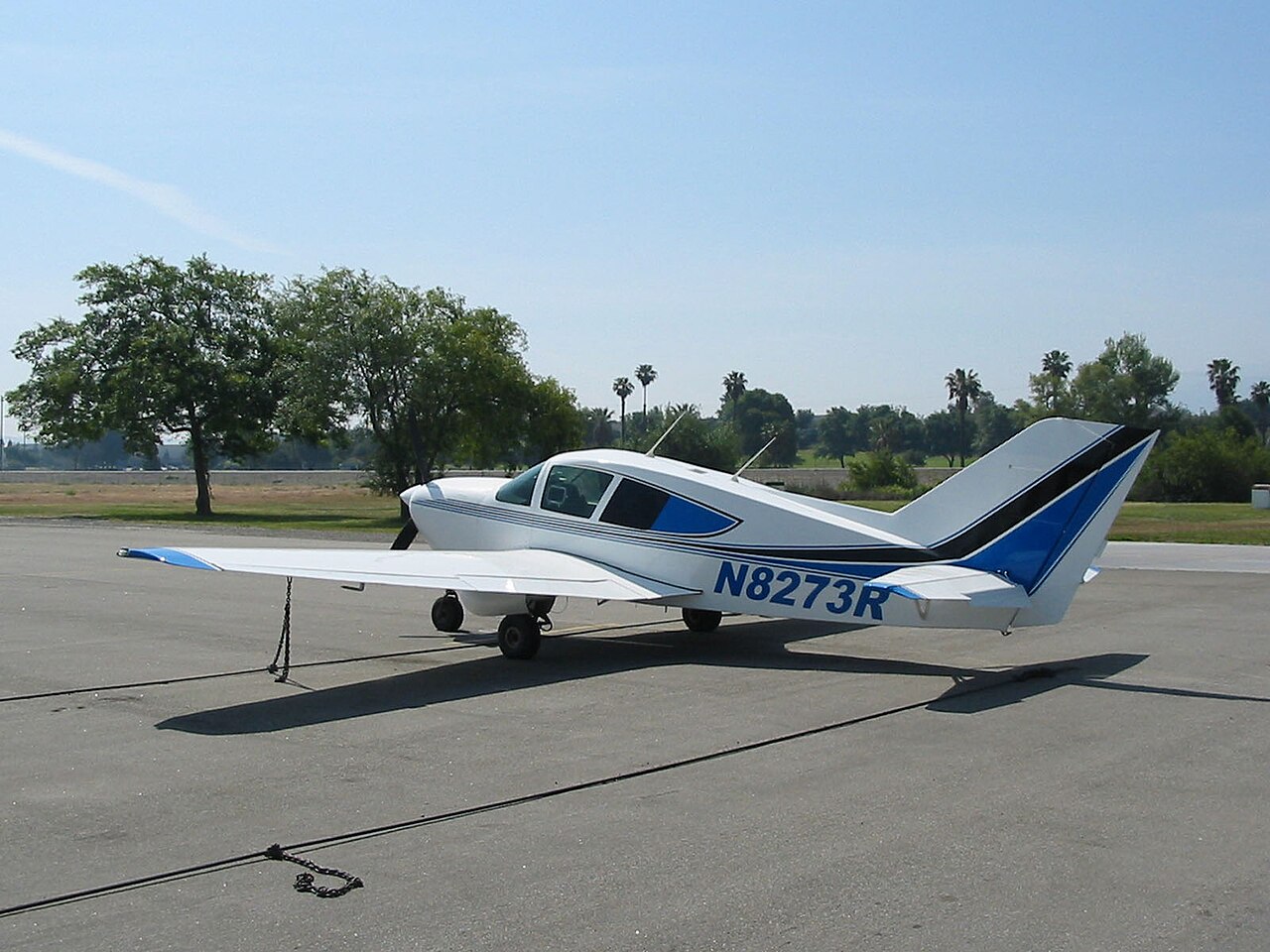
The Bellanca Super Viking is a single-engine, four-seat, high-performance retractable-gear touring aircraft with wooden wings and a fabric-covered steel-tube fuselage, developed from Giuseppe Bellanca's classic Cruisair and Cruisemaster designs and built in the United States from 1967 into the 2000s. Renowned for exceptionally sharp, harmonious handling for a light single, it earned a devoted following among American owner-pilots. In Microsoft Flight Simulator it is recreated as the 17-300A Super Viking payware add-on by Lionheart Creations (LHC).
The Bellanca Viking and Super Viking form a family of single-engine, four-seat, high-performance retractable-gear cabin monoplanes built in the USA through the 1960s, 1970s and beyond. They are a direct descendant of aviation pioneer Giuseppe Bellanca's earlier designs, combining a low, wooden Bellanca-B-section wing with a fabric-covered steel-tube fuselage and a distinctively oversized vertical fin. A total of 1,356 Vikings were produced, with most output concentrated between 1968 and 1975 (1,019 aircraft), making the type a well-known if numerically modest fixture of the American high-performance single-engine market.
The Super Viking's lineage runs back to the Bellanca Cruisair, a retractable-gear taildragger fitted with twin vertical fins on the tips of its horizontal stabiliser. The 14-13 Cruisair series was developed into the larger, more powerful 14-19 Cruisemaster in the early 1950s. After the original Bellanca company folded, Downer Aircraft took over the type certificate and built the 14-19-2 Cruisemaster around a 230 hp Continental O-470. In 1958 Downer redesigned the airframe with a nosewheel and a fuel-injected 260 hp IO-470, redesignating it the Model 260; the 14-19-3 260 kept the wire-braced triple tail until the 1962 model year, after which the design was changed to a single tail of the same aggregate area, sold as the Model 260A. Discussions at Downer about a bigger, at-least-300-horsepower version of the 260 led to the Viking, named for the many Scandinavians employed at the Minnesota factory who hand-crafted the spruce wing. The first Model 17 Viking, the 17-30, appeared in 1967 powered by a 300 hp Continental IO-520-K. In 1969 a Lycoming IO-540-powered version followed, offered normally aspirated (17-31) or turbocharged (17-31TC). The original hydraulic gear and flap system was redesigned in 1968 with electric flaps, and in 1969 the FAA issued Type Certificate A18CE covering the new 'A' series Super Vikings, which gained a gross weight increase to 3,325 lb. A complex five-tank, dual-selector fuel system was simplified to a left, right and auxiliary arrangement in 1974. After several loss-making years, Viking production became profitable again in 1978. In 1979 Continental-powered Vikings received a fully enclosed nosewheel and, consequently, cowl flaps, yielding a 12 mph speed increase; that same year production of the Lycoming-powered 17-31A ceased. The Continental IO-550 became an available option in 1996. Since 2002 the type has been supported by Alexandria Aircraft Co. LLC, formed when a group of six Bellanca enthusiasts bought the company from the state of Minnesota; they have produced one new aircraft, built in 2005, and continue to provide technical support and parts. In 2022 the operation relocated to Sulphur, Oklahoma, and now trades as Bellanca Aircraft, Inc.
The Super Viking's fuselage is built from tubular steel overlaid with fabric, while the wings are of spruce construction with a plywood skin, using the Bellanca B airfoil. The 1976 17-30A Super Viking 300A had a length of 26 ft 4 in (8.03 m), a wingspan of 34 ft 2 in (10.41 m), a height of 7 ft 4 in (2.24 m) and a wing area of 161.5 sq ft (15.00 sq m). Empty weight was 2,217 lb (1,006 kg) against a maximum take-off weight of 3,325 lb (1,508 kg), with seating for one pilot and three passengers. Fuel capacity was 60 US gal (230 L) usable in the normal configuration, extendable to 75 US gal (280 L) with auxiliary tanks. Power came from a single air-cooled Continental IO-520-K flat-six of 300 hp (220 kW), driving a two- or three-bladed McCauley constant-speed propeller of 6 ft 8 in (2.03 m) diameter. Lycoming-powered variants used a 290 hp, later 300 hp, IO-540 in place of the Continental, in either normally aspirated or turbocharged form.
The 1976 17-30A Super Viking 300A cruised at 188 mph (303 km/h, 163 kn) true airspeed at 75 percent power, with a never-exceed speed of 226 mph (364 km/h, 196 kn) indicated. Stall speed with wheels and flaps down was 70 mph (110 km/h, 61 kn) calibrated, and range was 923 mi (1,485 km, 802 nm). The turbocharged 17-31ATC was quoted with a service ceiling of 25,000 ft (7,600 m). Handling has long been the Super Viking's calling card: aviation journalist Bill Cox wrote that Vikings 'have long been famous for control response and harmony that seems almost psychic in nature', adding that 'owners almost unanimously pronounce the Viking the best handling airplane they've ever flown.' Contemporary pilot reports described the type as maneuverable yet forgiving, and notably stable in cruise despite its agility, with one account noting the aircraft would hold trim hands-off for extended periods.
The 17-30 Viking 300 was the original four-seat model, powered by a 300 hp Continental IO-520-K. The 17-31 Viking 300 substituted a 300 hp Lycoming IO-540, and the 17-31TC Viking 300 was the turbocharged equivalent of that Lycoming-powered version. Following the 1969 FAA type certificate, the 'A' series Super Vikings appeared: the 17-30A Super Viking 300A retained the Continental IO-520-K, the 17-31A Super Viking 300A used a Lycoming IO-540-K1E5, and the 17-31ATC Turbo Super Viking 300A paired the same Lycoming engine with twin Rajay turbochargers. Later Continental-powered aircraft, from 1979, gained a fully enclosed nosewheel and cowl flaps, and from 1996 the Continental IO-550 was offered as an engine option.
The Super Viking served principally as a fast, private touring and cross-country aircraft for owner-pilots, valued for combining high cruise speeds with genuinely enjoyable handling in a four-seat retractable single. Bellanca demonstrated the type's strength and agility on the air-show circuit through aerobat Debbie Gary, who toured in a stock Super Viking specially approved for aerobatics. The type built a strongly loyal ownership base, with new-aircraft buyers often being repeat Bellanca owners and the marque attracting self-described 'fanatics'. Production and support have continued in specialist hands long after the main manufacturing run ended, first under Alexandria Aircraft Co. LLC from 2002 and subsequently as Bellanca Aircraft, Inc. in Oklahoma, sustaining a active fleet of older airframes still flying and trading today.
The Super Viking is available for Microsoft Flight Simulator as a payware add-on from Lionheart Creations, modelled as the turbocharged 17-300A with 300 hp and a quoted service ceiling of 25,000 ft, a 75-percent-power cruise around 186 mph, a top speed of 226 mph and a range of roughly 700 nm. The package reproduces the type's wooden-skinned wings and steel-tube fabric fuselage, offers eight paint schemes with multiple instrument panel themes and interior fabric options, and includes a period-style Century III autopilot with roll, pitch, altitude-hold and heading modes plus an auto-bank orbit feature. Distinctive touches include clickable panel placards, a hidden autopilot placard, openable pilot and cargo hatches, working circuit breakers, three independently dimmable lighting sources for night flying, and a deliberately survivable gear-up belly-landing mode that requires only a propeller replacement afterwards. At launch, users reported a number of issues, including an overly forgiving flight model that made the aircraft resistant to stalling and capable of very short landings, a beacon light that shone through the cabin, reversed toe-brake axes, an erratic turn coordinator, and climb performance well above the figures quoted in the manual; a subsequent update addressed several of these, including turn coordinator malfunctions, stall behaviour, climb performance, reversed brake mapping and the interior beacon flash. Reviewers nonetheless praised the exterior modelling and interior detailing as a highlight, and regarded the aircraft as a strong candidate for regular flying once patched.