Departure
96%
vs 95% ▲ 1
 MY FS FLIGHTS
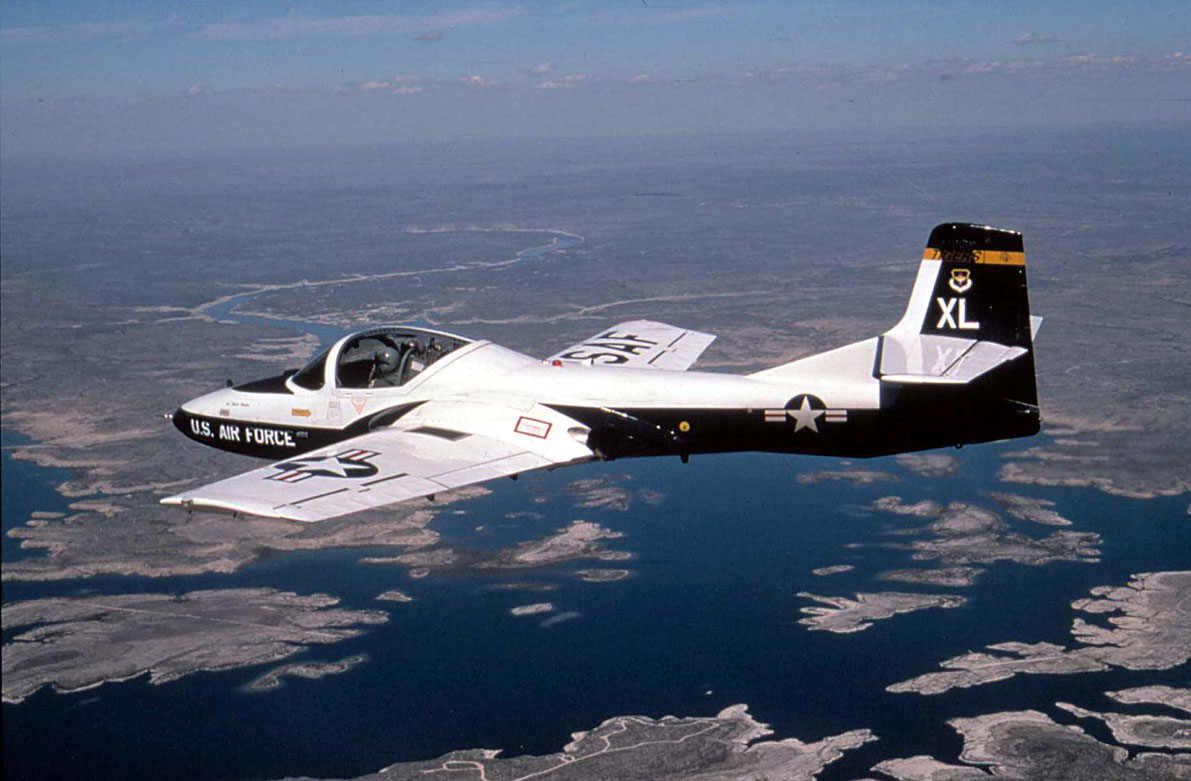
The Beechcraft T-34 Mentor, known to generations of Navy pilots by its early piston-engined models' informal nickname "Bravo" to distinguish them from the later turboprop "Charlie", is a tandem two-seat, single-engine military primary trainer derived directly from the civilian Beechcraft Bonanza. Developed by Walter Beech as a private venture in the late 1940s, the piston Mentor (T-34A for the US Air Force and T-34B for the US Navy) trained thousands of military pilots through the 1950s and remains a popular, aerobatic-capable warbird in private hands today. Its simple, rugged airframe and docile yet honest handling make it a favourite among sim pilots wanting an authentic taste of postwar primary flight training.
The T-34 Mentor is an American propeller-driven, single-engined military trainer built by Beechcraft, developed from the Beechcraft Model 35 Bonanza. It seats an instructor and student in tandem beneath a bubble canopy, and the earlier piston-engined variants -- the T-34A for the US Air Force and T-34B for the US Navy -- are the models informally referred to by pilots as the "Bravo" generation, in contrast to the later turboprop T-34C "Charlie". Over 2,300 Mentors of all types were built, and versions of the aircraft have served with the Japan Air Self-Defense Force and the Republic of China Air Force among other operators.
The T-34 originated as the Beechcraft Model 45, a private-venture design by Walter Beech intended as an economical alternative to the North American T-6/SNJ Texan at a time when no defense budget existed for a new trainer. Three initial design concepts were explored, including one with the Bonanza's signature V-tail, before the final 1948 configuration settled on conventional tail surfaces to suit conservative military tastes. The Bonanza's four-seat cabin was replaced by a narrower fuselage with a two-seat tandem cockpit and bubble canopy for improved instructor and student visibility, and the airframe was structurally strengthened to +10g and -4.5g limits, well beyond the Bonanza's. The prototype first flew on 2 December 1948, flown by Beechcraft test pilot Vern Carstens, powered by a Continental E-185 engine of 185 horsepower. Three further Model A45T aircraft followed, two with the same engine and the third with a Continental E-225 that proved close to the eventual production standard. In March 1950 the US Air Force ordered three test aircraft under the designation YT-34, and after evaluation the Air Force selected the design as its primary trainer. Production began in 1953 with the T-34A for the USAF and the similar Model B45 for export. The US Navy's T-34B followed in 1955 (with Navy deliveries recorded as beginning in 1954), featuring differential braking instead of nosewheel steering, additional wing dihedral, and adjustable rudder pedals in place of the T-34A's moveable seats. T-34A production ended in 1956 and T-34B production in October 1957, with Beechcraft delivering its last Model B45s in 1959. Licensed production continued abroad: 125 aircraft were built in Canada by Canadian Car and Foundry, 173 in Japan by Fuji Heavy Industries, and 75 in Argentina by FMA, the Argentine line running until 1958. Total production of the Continental piston-engined versions in the United States and abroad reached 1,904 aircraft. In 1955 Beechcraft also developed the jet-powered Model 73 Jet Mentor as a further private venture, but it lost out to the Cessna T-37 and Temco TT Pinto in USAF and Navy competitions respectively and was never put into production; the sole prototype survives at the Kansas Aviation Museum. After a production gap of almost fifteen years, the turboprop T-34C Turbo-Mentor was developed from 1973 at the Navy's request, with two T-34Bs converted to YT-34C standard and first flown with turboprop power on 21 September 1973, leading to renewed production from 1975.
The Bravo-generation Mentor retains the Bonanza's basic fuselage concept but with a narrower, tandem two-seat cockpit under a bubble canopy for good all-round visibility for both student and instructor. The airframe was built substantially stronger than the Bonanza's, stressed to +10g and -4.5g to suit the rigours of military flight training. Early prototypes used a Continental E-185 engine of 185 horsepower, with production aircraft adopting the more powerful Continental E-225 family; preserved and restored Bravo-model aircraft are commonly fitted with the Continental O-470-13 producing 225 horsepower, and many privately-owned examples today have been upgraded to Continental IO-520 or IO-550 engines of around 285 horsepower or more. The T-34B differed from the T-34A primarily in undercarriage control (differential braking rather than nosewheel steering), increased wing dihedral, and adjustable rudder pedals rather than the A model's moveable seats. Typical dimensions include a wingspan of 32.8 feet, a length of 25.9 feet, and a height of 9.6 feet, with an aircraft weight around 2,950 lb. Surviving Bravo airframes are noted for being amenable to complete rebuilding using mostly new components, since manufacturers continue to produce skins, actuators, gear components and major structural parts, and many restorations now use new front-end structure, factory-new Baron wing spars, steel-reinforced carry-through structures and aluminium control surfaces in place of the original magnesium components.
Representative figures for a restored piston Mentor include a maximum speed of 243 KIAS, a cruising speed of 173 KIAS, a range of 375 nautical miles, and a service ceiling of 13,500 feet. Pilot reports comparing the piston Bravo models to the later turboprop Charlie describe the older aircraft's take-off and initial climb as having a steady, truck-like feel down the runway rather than the turboprop's rushing acceleration, with the piston models limited to a 225-hp Continental in original configuration and consequently modest climb performance by comparison with the 500-horsepower turboprop successor. Owners who have upgraded piston Mentors to the Continental IO-550R report performance approaching that of the turboprop T-34C in climb and cruise up to around 7,000 feet, despite far lower fuel flows, aided by the piston aircraft's comparatively lighter weight.
The lineage begins with the private-venture Beechcraft Model 45 prototype and the USAF's three YT-34 test aircraft. Production variants include the T-34A for the US Air Force, the T-34B for the US Navy with its revised undercarriage control, dihedral and rudder pedal arrangement, and the export Model B45, license-built in Canada by Canadian Car and Foundry, in Japan by Fuji Heavy Industries, and in Argentina by FMA. A jet-powered derivative, the Model 73 Jet Mentor, was built as a single prototype but not put into production. The line was later revived as the turboprop T-34C Turbo-Mentor, powered by a Pratt & Whitney Canada PT6A-25 and fitted with a Beech Baron-derived wing and Beech Duke landing gear, including the T-34C-1 armed export version with underwing hardpoints.
The T-34A entered USAF service in 1953 as a primary trainer, with 350 built by Beech and a further 100 by Canadian Car and Foundry. The T-34B served the US Navy from the mid-1950s, with 423 delivered, and the Navy operated the type for over twenty years, accumulating almost 100,000 flight hours per year at the height of its use before production was halted to make way for jet trainers. Licensed and export variants saw service with a number of air forces, including Argentina and Japan, and later variants were used by the Philippines among others. The piston Mentor was eventually succeeded in US service by the turboprop T-34C, which itself remained in Navy training use for primary flight instruction and aerobatic familiarisation for future naval aviators until phased out from 2002 in favour of the T-6A Texan II.
For a sim pilot, the piston Bravo-model Mentor represents the gentler, more traditional end of the T-34 family: a tandem two-seat trainer with strong, aerobatic-rated structure but comparatively modest power, giving a steady rather than explosive takeoff roll and climb by the standards of later military trainers. Its docile, forgiving handling and stressed airframe made it well suited to teaching basic aerobatics and formation flying, qualities that continue to make original and re-engined Bravo-model Mentors popular with private warbird owners and formation flying groups today. Owners who have re-engined their aircraft with more powerful Continental IO-520 or IO-550 powerplants report performance noticeably ahead of the standard 225-hp original, narrowing the gap with the later turboprop Charlie model while retaining the classic piston Mentor's character.