Departure
92%
vs 95% ▼ 3
 MY FS FLIGHTS
The Bristell B23 is an all-metal, low-wing, two-seat light aircraft designed and built by BRM AERO at Kunovice in the Czech Republic, certified under EASA CS-23 and, in its B23-912 form, FAA Part 23. It sits at the top of the Bristell range as the company's type-certified flagship, aimed equally at flight schools running intensive training programmes and private owners touring under IFR, and it is of particular interest to simmers because Airfoillabs has modelled it for Microsoft Flight Simulator.
The Bristell B23 is a certified, all-metal, low-wing two-seater from BRM AERO's Kunovice factory in the Czech Republic. It is built to satisfy the European CS-23 and US FAR-23 certification bases, and forms the flagship of the wider Bristell family, which also includes ultralight and light-sport variants sharing a similar airframe lineage. The B23 spans everything from basic flight training to instrument-rated touring, with the same certified airframe offered across five variants distinguished chiefly by engine choice.
BRM AERO has been producing Bristell light aircraft since 2009, and by the time the B23 reached FAA certification the company had logged more than 1,100 global deliveries of its LSA-family aircraft. The B23 was developed as a next-generation evolution of the classic Bristell airframe: it carries the same visual lines but is a substantially reworked aircraft underneath, with a longer fuselage, a larger aluminium rudder, and bigger, more efficient flaps and stabiliser, engineered to withstand intensive flight-school use as well as private cross-country flying. The aircraft was EASA CS-23 certified first, and the B23-912 variant went on to receive FAA Part 23 Type Certification in September 2025, opening the US training market to the type; deliveries of the FAA-certified model began in late 2025. Further B23 variants remain in the process of FAA certification. In April 2026 the B23-915 IFR received EASA approval for its direct lightning strike protection system, described as the last major certification requirement on the path to unrestricted IFR operations.
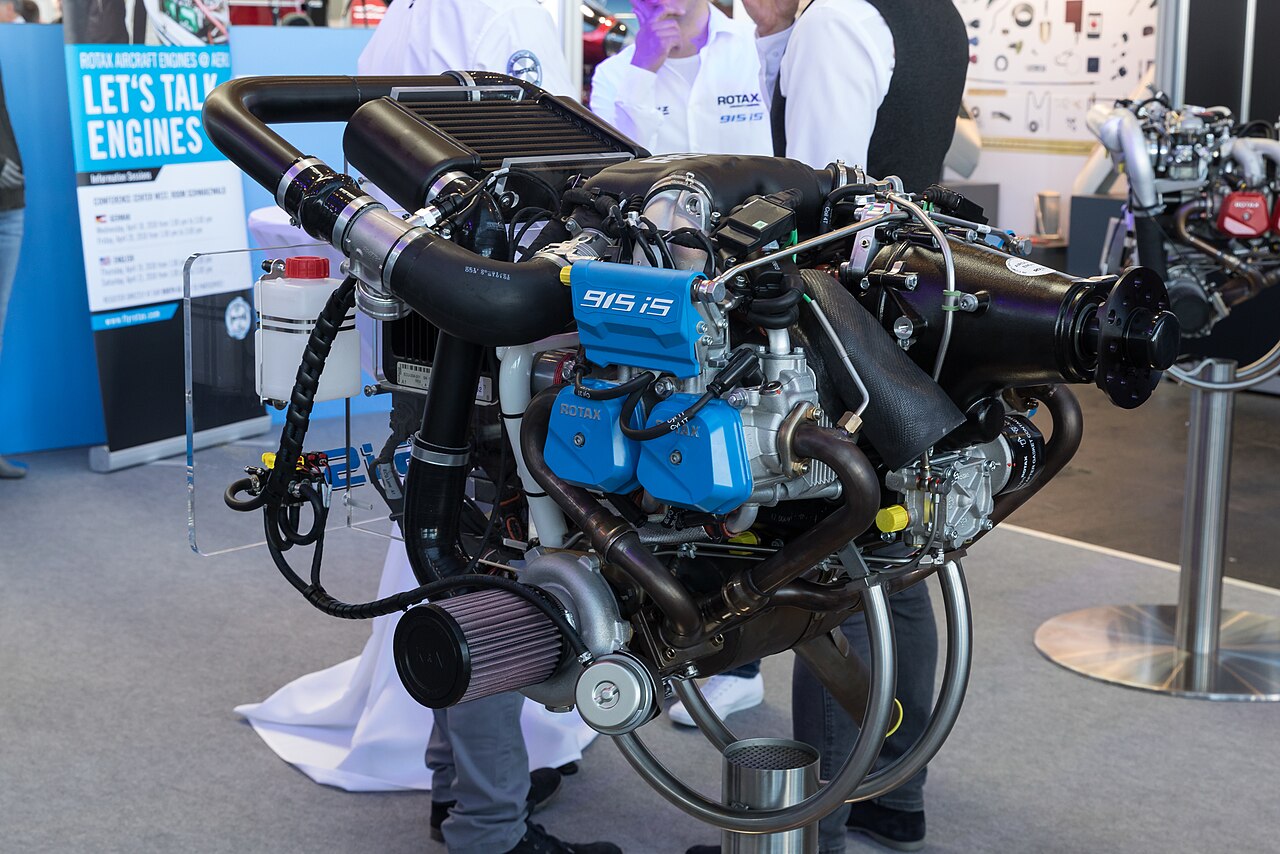
The B23 is an all-metal, low-wing design with a bubble canopy giving all-round visibility from both seats, dual sticks and adjustable rudder pedals. Its cabin is 130 cm (51.2 in) wide, described as the widest in its class. Maximum take-off weight is 750 kg (1,653 lbs); one published figure gives an empty weight of 465 kg against a useful load of 285 kg, while another source for the same airframe cites an empty weight of 450 kg and a useful load of 300 kg. Fuel capacity is 120 litres. Luggage capacity totals 55 kg (121 lbs), split between two 20 kg wing lockers and a 15 kg compartment behind the seats. A BRS whole-aircraft ballistic parachute is standard fitment. Four Rotax engine options are offered: the carbureted 912 ULS (100 HP / 73.5 kW, TBO 2,000 hours), the fuel-injected 912 iS Sport (100 HP / 73.5 kW, FADEC, TBO 2,000 hours), the turbocharged 915 iS (141 HP / 103.7 kW, FADEC, TBO 1,200 hours) and the turbocharged 916 iS (160 HP / 117.6 kW, FADEC, TBO 2,000 hours); all run on MOGAS or AVGAS. Every B23 leaves the factory with a three-blade MT-Propeller hydraulic constant-speed unit as standard - the MTV-34-1-A/175 on the 100 HP engines and the MTV-34-1-A/175-200 on the turbocharged variants - and the B23-912iS uses a Single Lever Power Control that combines throttle and propeller control with FADEC. Standard avionics comprise dual Garmin G3X Touch glass displays, a Garmin GMC 507 autopilot with a dedicated Blue LEVEL wings-level button, and a Garmin GNC 215A NAV/COM radio; an optional Garmin GTN 650Xi adds IFR GPS navigation with LPV approach capability, while the B23-915 IFR carries a full Garmin IFR instrument suite as standard. The aircraft is certified for Night VFR, with the glass cockpit, autopilot and lighting to support it.
Range is quoted at up to 780 NM (1,445 km) at 75% power, though the FAA-certified B23-912 is cited separately with a 700-nautical-mile range and a useful load of 662 lbs. Fuel burn for the B23-912 with its 100 HP Rotax 912S3 engine is around 4.5 gallons per hour, and the most efficient models in the range are said to cruise on as little as 14 L/h (3.7 US gal/h). The B23 is certified to +4/-2 g. Turbocharged variants, the 915 iS and 916 iS, hold their cruise performance at altitude thanks to their turbochargers. A pilot report on the B23 Turbo variant described it as a fully CS-23 certified aircraft that does
The B23 family currently comprises five certified variants sharing one airframe but differing by engine and equipment. The B23-912 uses the carbureted Rotax 912 ULS (100 HP) and holds both EASA CS-23 and FAA Part 23 certification. The B23-912iS uses the fuel-injected Rotax 912 iS Sport (100 HP) with FADEC and Single Lever Power Control, EASA certified with FAA certification pending. The B23-915iS is powered by the turbocharged Rotax 915 iS (141 HP), also EASA certified with FAA pending. The B23-915 IFR uses the same Rotax 915 iS engine but adds a full Garmin IFR instrument suite and has secured EASA approval for direct lightning strike protection, clearing the way toward unrestricted IFR operations. The B23-916iS is powered by the most powerful engine in the range, the turbocharged Rotax 916 iS (160 HP), and is EASA certified with FAA certification pending. A related but distinct MOSAIC-compliant LSA line, the B23M, is built on the same certified B23 platform and offered with the 912 iS Sport, 915 iS and 916 iS engines for the US Light Sport Aircraft category.
The B23 is used heavily by flight schools and Approved Training Organisations, which value its benign handling, dual-stick layout, Night VFR certification and MOGAS-compatible engines with TBOs up to 2,000 hours for training economics; the B23-915 IFR variant is specifically positioned as a certified instrument trainer for ATO programmes. Private owners also use the type for touring, taking advantage of its range and 55 kg luggage capacity. As a notable operator, a Bogota-based flight training organisation added the EASA CS-23 certified B23-916iS to its fleet for pilot training in Colombia. Nearly 100 Bristell aircraft, including B23s, were already operating in the United States prior to the B23-912's FAA certification, used by both private owners and flight schools.
Airfoillabs has produced the Bristell B23 for Microsoft Flight Simulator, marketed as the first simulation development of the type and available through the Microsoft Flight Simulator Marketplace. The add-on models the IFR-capable, CS-23/FAR-23 certified low-wing airframe, including its Night VFR certification, and reflects published real-world figures such as its 750 kg maximum take-off weight, 120-litre fuel tank and generous useful load. For simmers, it offers a chance to fly a genuinely certified European trainer-tourer rather than a homebuilt or ultralight type, with the same wide 130 cm cabin, constant-speed MT propeller and glass-cockpit workflow found in the real aircraft.