Departure
99%
vs 95% ▲ 4
 MY FS FLIGHTS
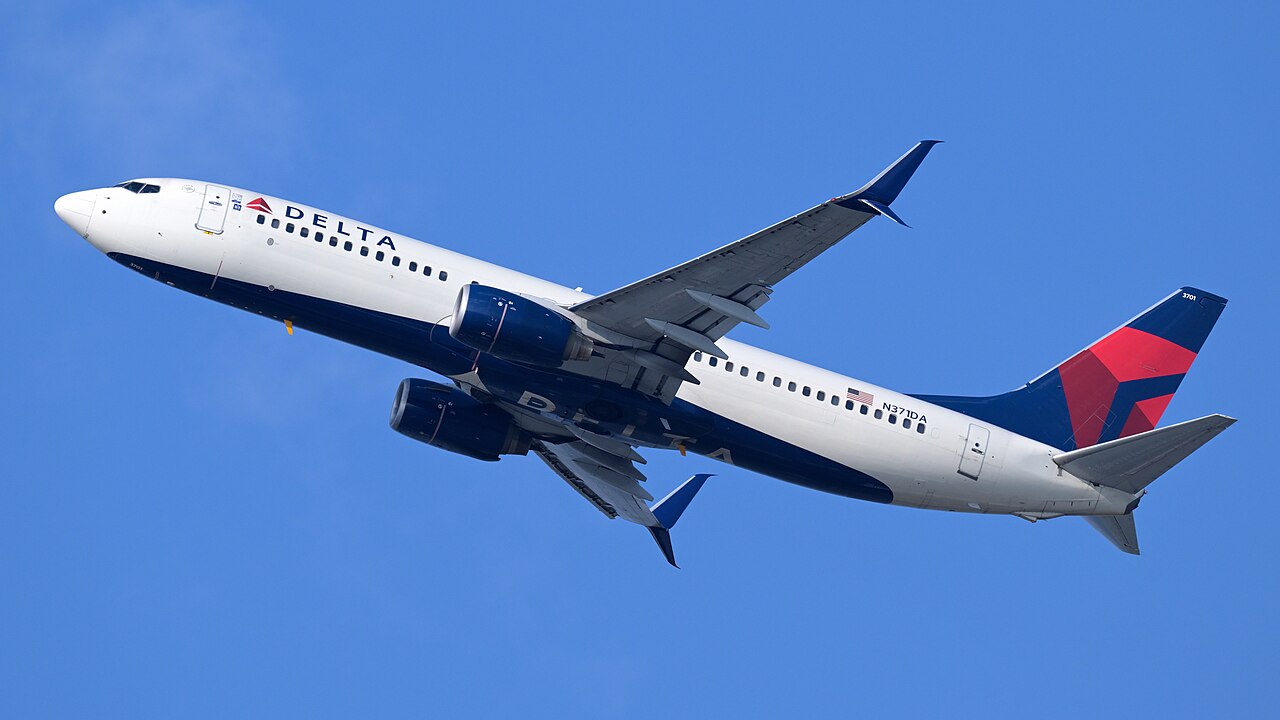
The Boeing 737-600 is the smallest member of Boeing's 737 Next Generation family, a twin-engine narrowbody airliner developed as the direct successor to the 737-500 Classic. Built for short and medium-haul routes with lower passenger demand, it combines the improved wing, CFM56-7B engines and 777-style EFIS flight deck of the NG family in a compact fuselage, making it of interest to sim pilots wanting the NG cockpit experience in the smallest available airframe.
The 737-600 is a twin-engined, short-to-medium-range narrowbody airliner built by Boeing Commercial Airplanes in Renton, Washington. It is the smallest of the four Next Generation 737 variants (600/700/800/900) and was designed as a modern replacement for the earlier 737-500 Classic, matching that aircraft's size while offering the NG family's updated wing, avionics and CFM56-7B turbofans. Typical seating runs from 110 passengers in a two-class layout up to 132 in a single-class configuration.
Boeing responded to competitive pressure from the Airbus A320 family by announcing the 737-X programme on 29 June 1993, with the Next Generation family formally launched in November 1993 after Southwest Airlines placed a landmark order for 63 737-700s. The 737-700 was the first NG variant developed, based on the 737-300, while the 737-600 was based on the 737-500 and was the last NG variant to be launched, receiving its go-ahead on 16 March 1996 when Scandinavian Airlines (SAS) placed a launch order for 35 aircraft powered by CFM56-7B engines. The aircraft was rolled out at the Renton factory on 8 December 1997, and its first flight took place on 22 January 1998 from Renton Municipal Airport with Boeing test pilots Mike Carriker and Ken Higgins at the controls. FAA type certification followed on 18 August 1998, with JAA certification granted in September 1998, and the 737-600 entered airline service with launch customer SAS that same month. By October 2002, 81 aircraft had been ordered and 47 delivered, a modest total reflecting competition from regional jets on one side and larger 737NG models on the other.
The 737-600 carries over the Next Generation family's redesigned wing of greater chord, span and area, along with larger tail surfaces and two CFM56-7B turbofans; the standard engine is the CFM56-7B18 rated at 86.7kN (19,500lb), with the CFM56-7B22 at 101kN (22,700lb) fitted to the high gross weight (HGW) version. The flight deck features a 777-style EFIS suite with six flat-panel LCDs, which can be configured to display information either as on the 777 or in the style of the 737-300/400/500 series, allowing a common pilot type rating across the two 737 generations. Wing span is 34.31m (112ft 7in), overall length 31.24m (102ft 6in) and tail height 12.57m (41ft 3in), with a wing area of 125.0 square metres (1,344 sq ft). Operating empty weight is 37,104kg (81,800lb); maximum takeoff weight is 56,245kg (124,000lb) on the standard aircraft, rising to 65,090kg (143,500lb) on the HGW version. Cabin width is 3.53m (11ft 7in) and cabin height 2.20m (7ft 3in). The aircraft accommodates a flightcrew of two and up to 132 passengers in a single-class layout, or 110 in a typical two-class configuration.
Typical cruising speed is Mach 0.785, with a maximum certificated altitude of 41,000ft. Range with 110 passengers is 2,480km (1,340nm) on the standard aircraft, extending to 5,648km (3,050nm) on the HGW version. Published performance figures also cite a maximum cruise speed of around 453kt (521mph, 839km/h), an approach speed of 130kt (150mph, 241km/h), a climb rate of roughly 3,000ft/min, a takeoff distance of about 6,250ft (1,900m) and a landing distance of about 4,250ft (1,300m).
The 737-600 sits alongside the 737-700, 737-800 and 737-900 within the Next Generation family. Where the 737-700 was developed from the 737-300 and the -600 from the 737-500, all four share the family's common wing, CFM56-7B powerplants and EFIS flight deck, differing chiefly in fuselage length and seating capacity: the -600 is equivalent in size to the Classic 737-500 and seats 110 to 132 passengers, compared with 128 to 149 seats on the -700, 160 to 189 on the -800 and 177 to 189 on the -900.
Scandinavian Airlines (SAS) was the launch customer, placing the original order for 35 aircraft and taking delivery of the first examples when the type entered service in September 1998. The 737-600 has seen use with a range of operators on short and medium-haul routes suited to its smaller seating capacity, including carriers such as Tunisair. Overall sales remained modest by 737NG standards, constrained by competition from regional jets at the lower end of the market and from Boeing's own larger 737NG variants at the upper end, and the type has continued in limited service with a small number of operators.
For a sim pilot already familiar with other Next Generation 737s, the -600 offers the same 777-style EFIS flight deck and handling qualities within a shorter, lighter airframe than the -700, -800 or -900. Its shared type rating across the NG family means the flying experience mirrors its larger siblings closely, with a Mach 0.785 cruise and 41,000ft ceiling typical of the type, while its smaller fuselage and lower typical seating make it best suited to shorter sectors and thinner routes than the more widely flown -700 and -800.