 MY FS FLIGHTS
MY FS FLIGHTS
MY FS FLIGHTS
6 articles on this topic.
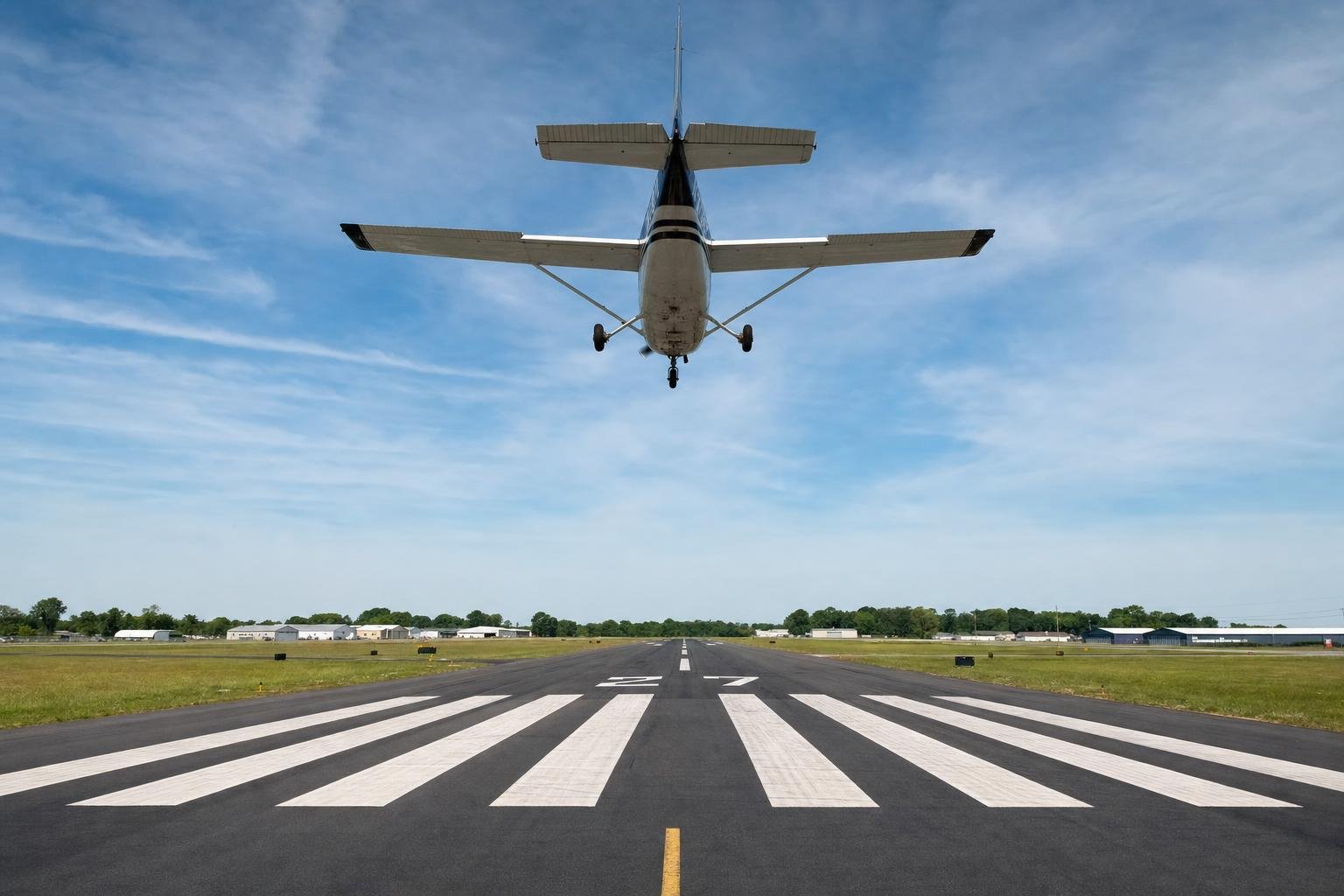
Why 'flare at thirty feet' keeps producing hard landings: a sink-rate schedule you can fly by radio altitude, a two-number table for diagnosing floats and drop-ins, and sim-only drills for the last fifty feet.

How crab and sideslip techniques actually work, what a monitor, twist stick and forgiving ground physics do to them, and the three touchdown numbers that reveal whether your crosswind landings are genuinely good.
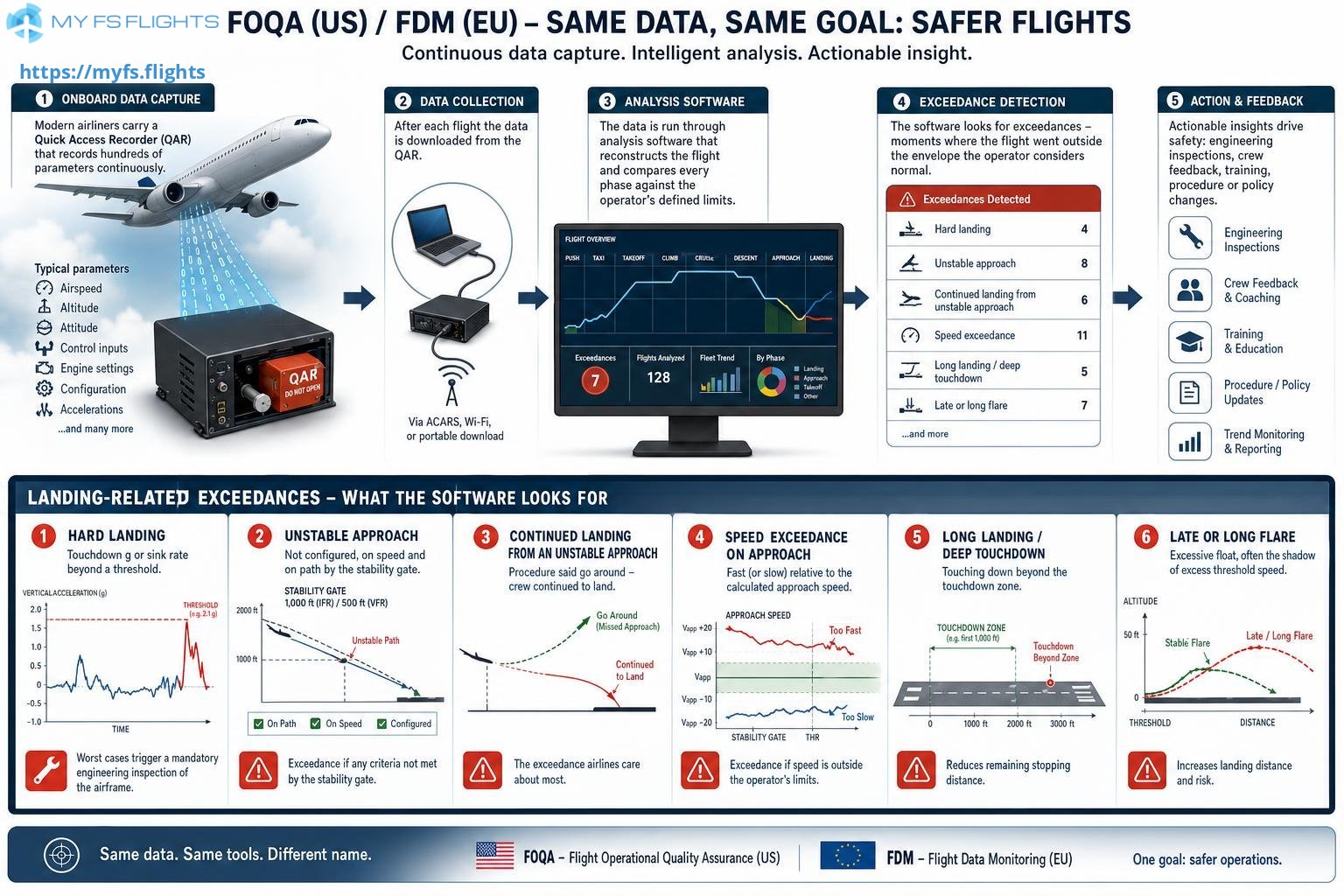
Every airline flight you have ever been on was recorded, measured and graded - touchdown rate, approach stability, landing distance and more. Inside FOQA, the safety programme that fixed airline landings, and how to apply it to your own sim flying.
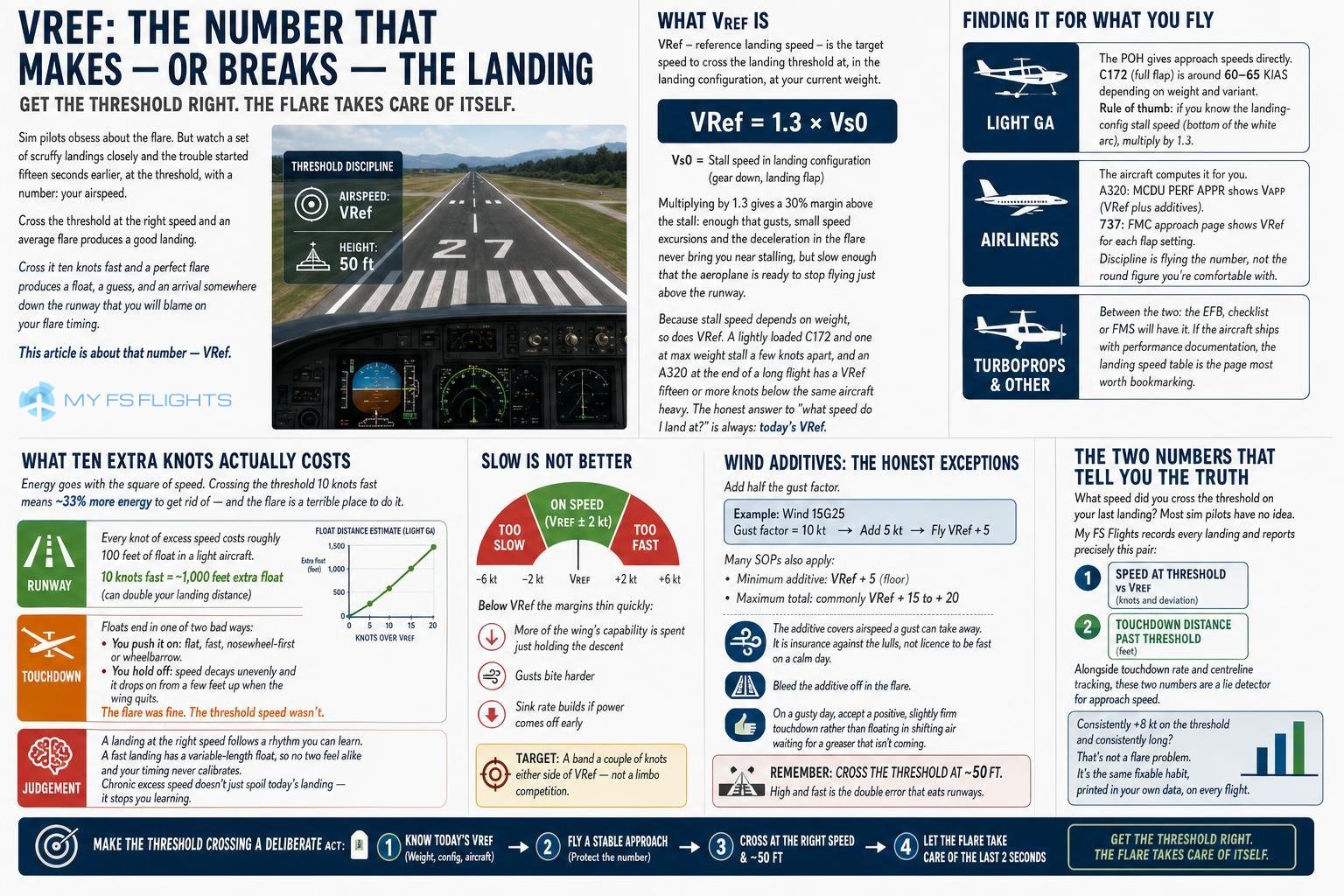
Where VRef comes from, what every knot above or below it costs in float, distance and sink, why wind additives creep, and drills for flying the number consistently at a desk without stick force or peripheral cues.
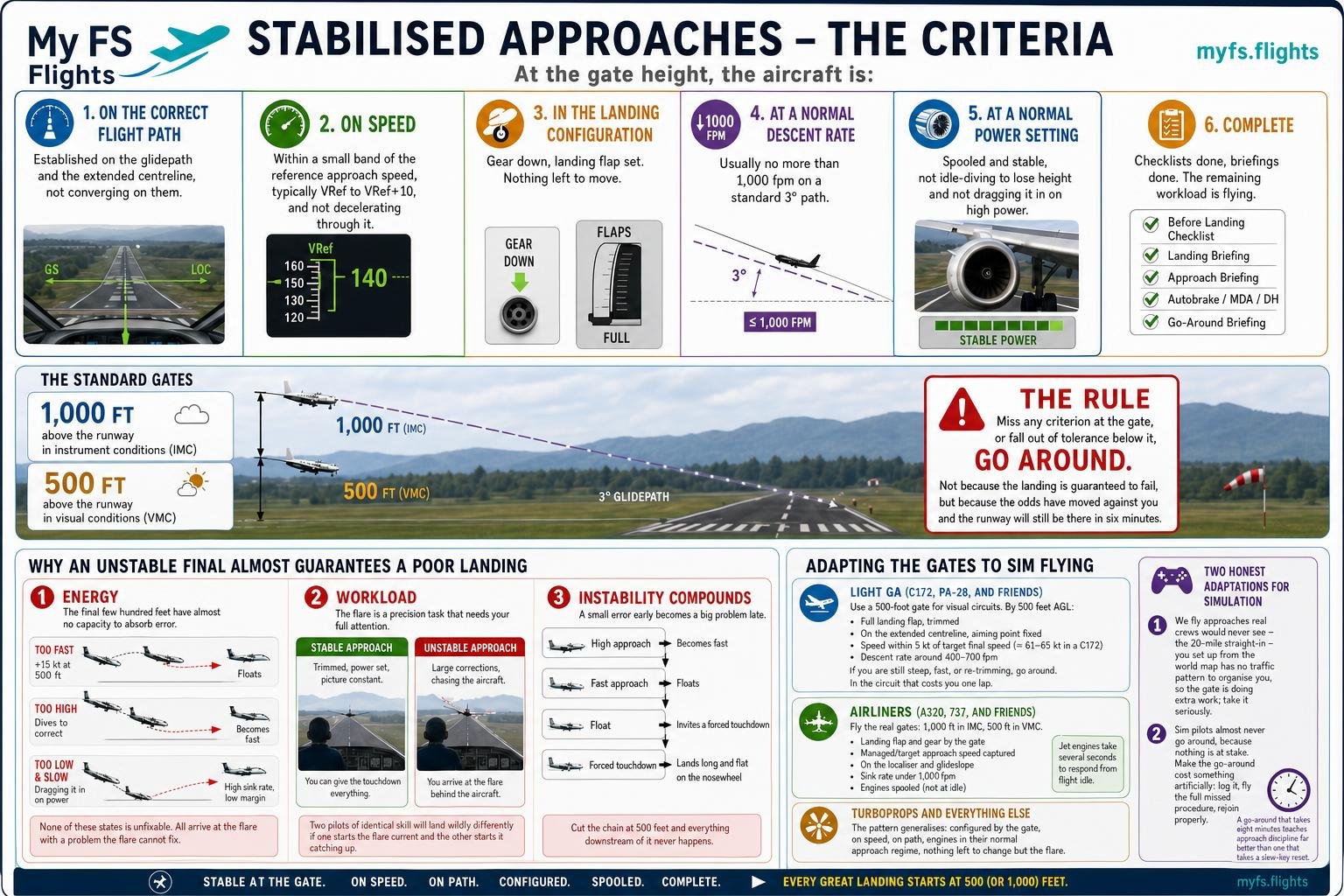
Why most bad landings are decided long before the flare, how airline stabilised-approach gates work, and how to adapt them for sim flying on the simulator — with drills, a diagnostic table and ways to measure your consistency.
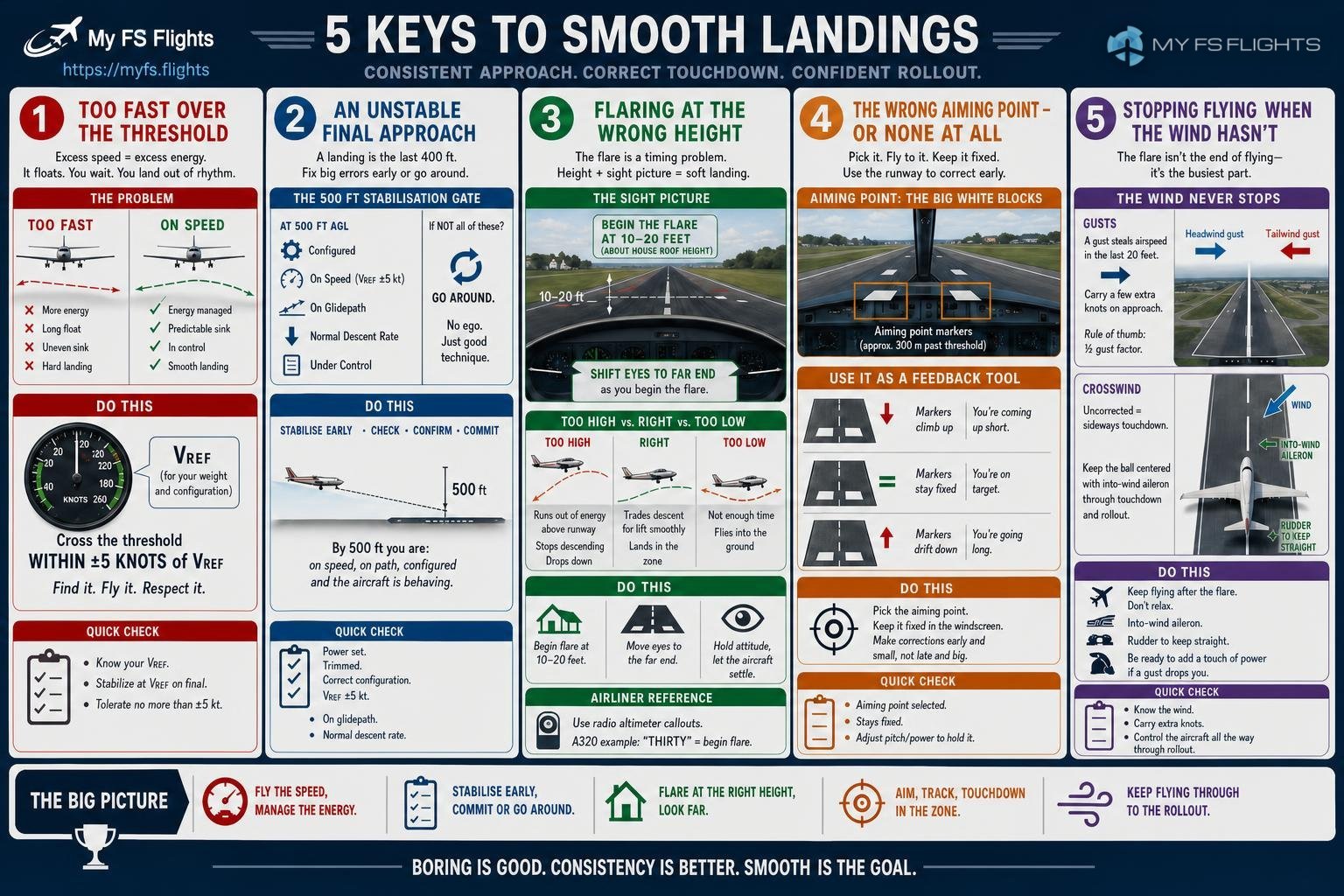
Smooth landings are an output of a stable approach, not a last-second trick. Learn what touchdown rate to aim for, how the flare trades energy, why monitors sabotage your timing, and the five faults behind hard landings.
My FS Flights records, analyses and scores every flight you fly in MSFS, X-Plane and P3D.
Get started free All posts