 MY FS FLIGHTS
MY FS FLIGHTS
MY FS FLIGHTS
12 articles on this topic.
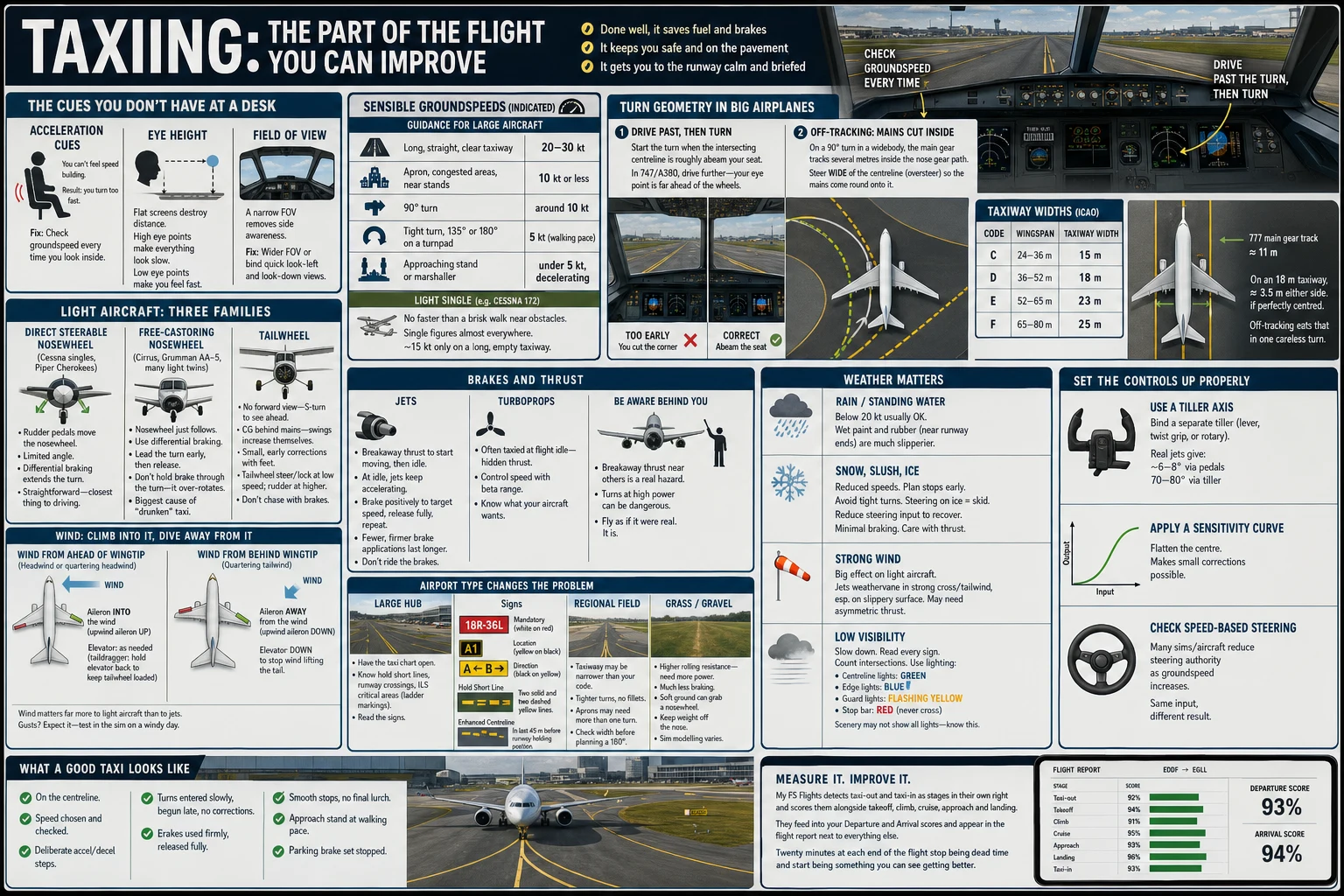
Why corner-cutting, snaking and overspeed taxiing happen on a desktop sim, from eye-to-gear geometry and missing peripheral vision to rudder axis setup, with drills, aircraft-specific techniques and data patterns to fix each fault.

Why handbook short-field and soft-field technique fails at a desk, and how to rebuild it: the energy equation, sight-picture workarounds, the five classic failure modes, and measured drills built for MSFS 2024's bush trips.

Why hot, high-altitude departures make a piston aircraft feel powerless: the physics behind density altitude, the rules of thumb worth memorising, and drills for measuring your own aircraft's performance in the sim.
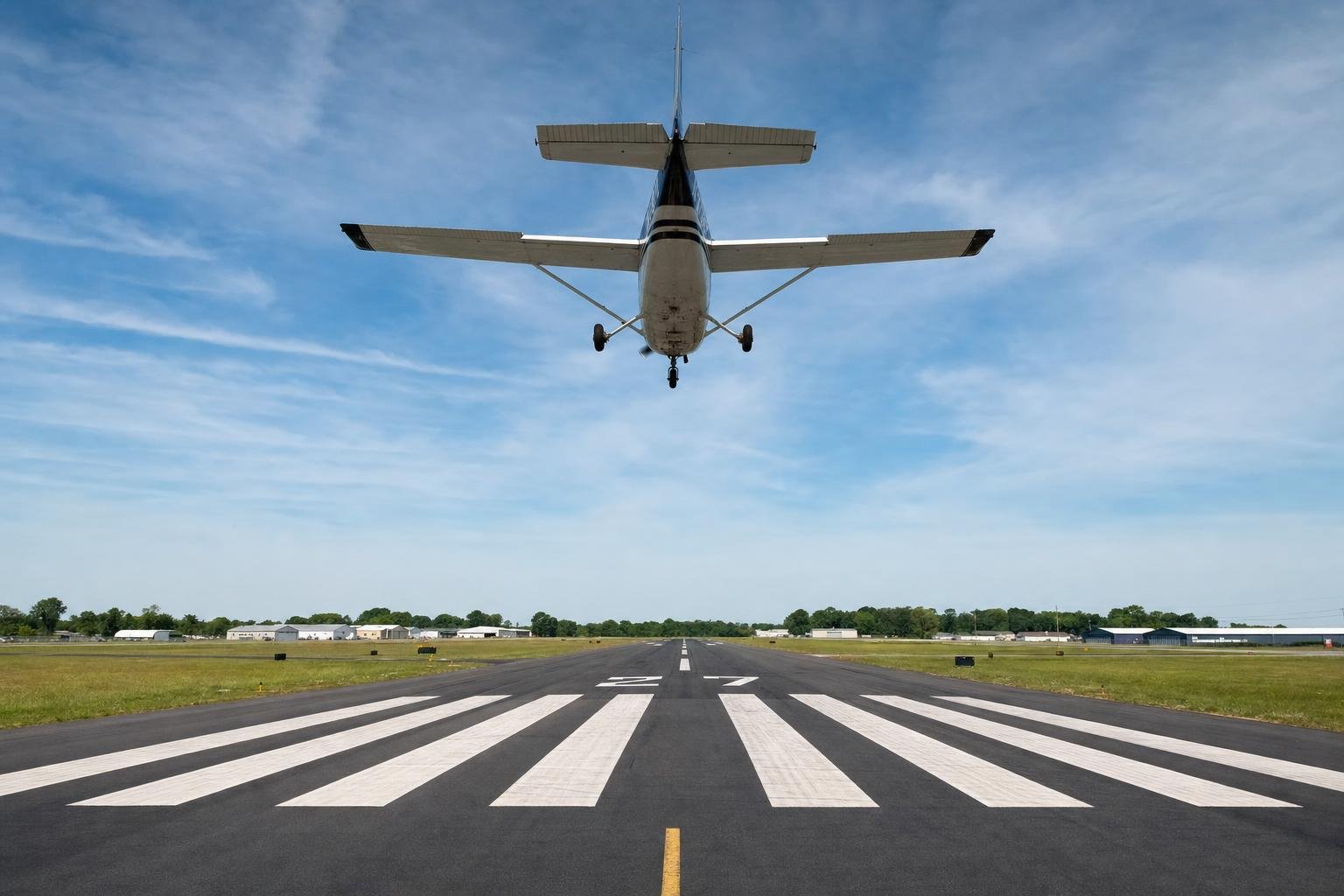
Why 'flare at thirty feet' keeps producing hard landings: a sink-rate schedule you can fly by radio altitude, a two-number table for diagnosing floats and drop-ins, and sim-only drills for the last fifty feet.
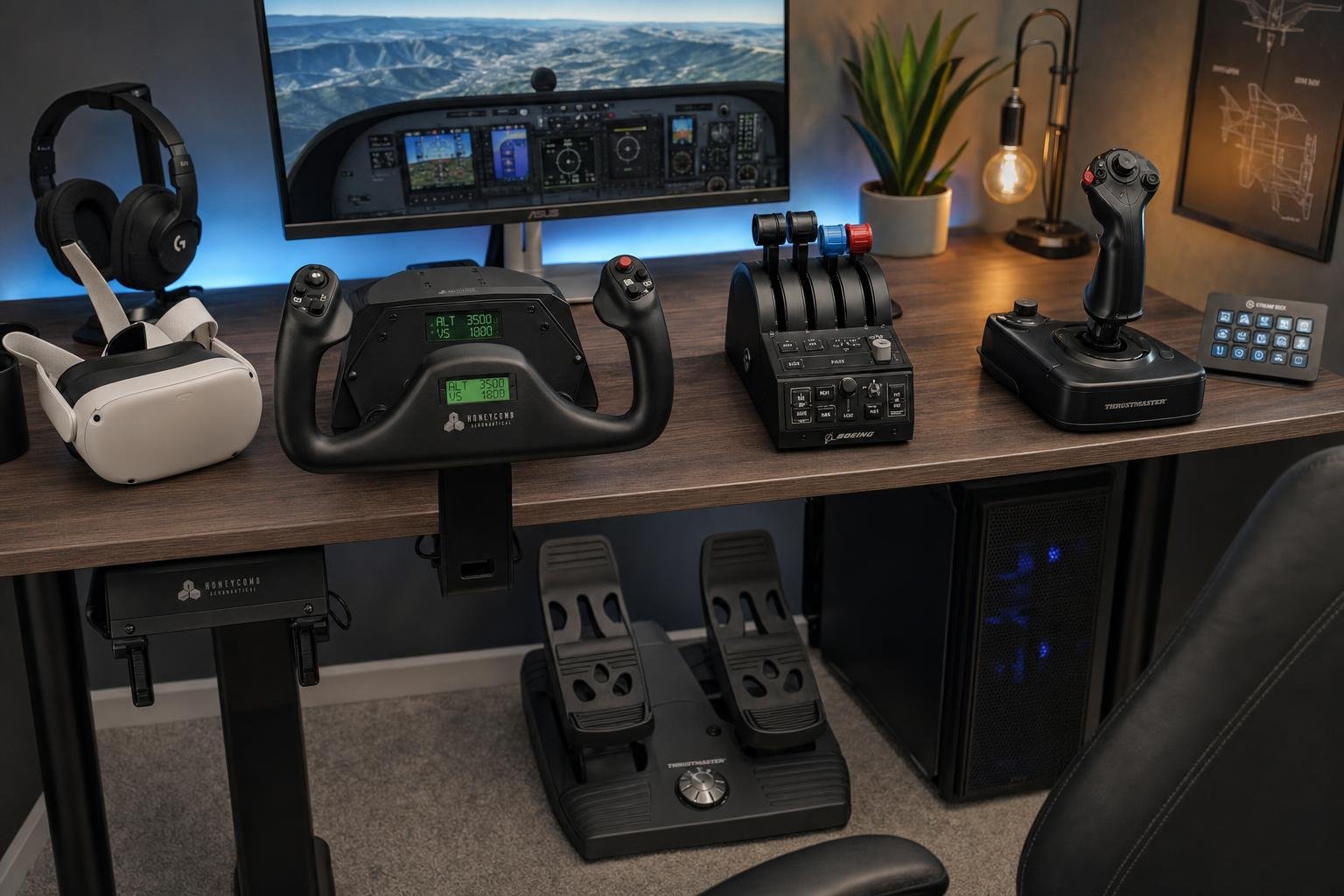
Rudder pedals do more for your landings than any GPU, and there is a way to prove it from your own flying. A fault-by-fault diagnosis of common landing errors, a ranked buying order, and drills for when the pedals arrive.

Why pilots continue 97% of unstable approaches, why the go-around manoeuvre itself bites the unprepared — trim, spool lag, flap handling — and six sim drills that make the decision and the hands automatic.
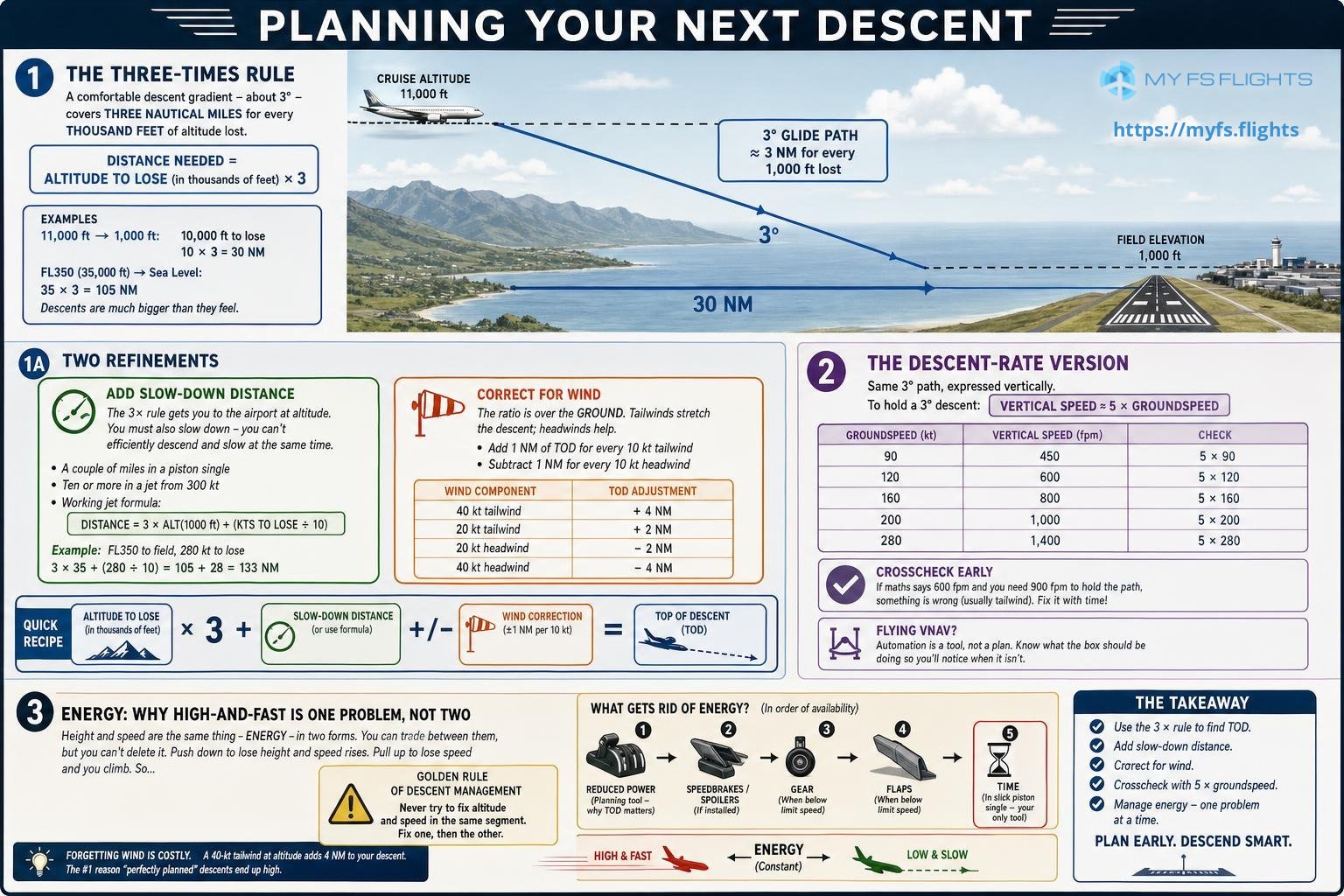
The three-times rule keeps failing you because it's taught as an incantation rather than arithmetic. Rebuild descent planning from energy principles, learn the fixes for being kept high, and make boring, on-profile arrivals a habit.
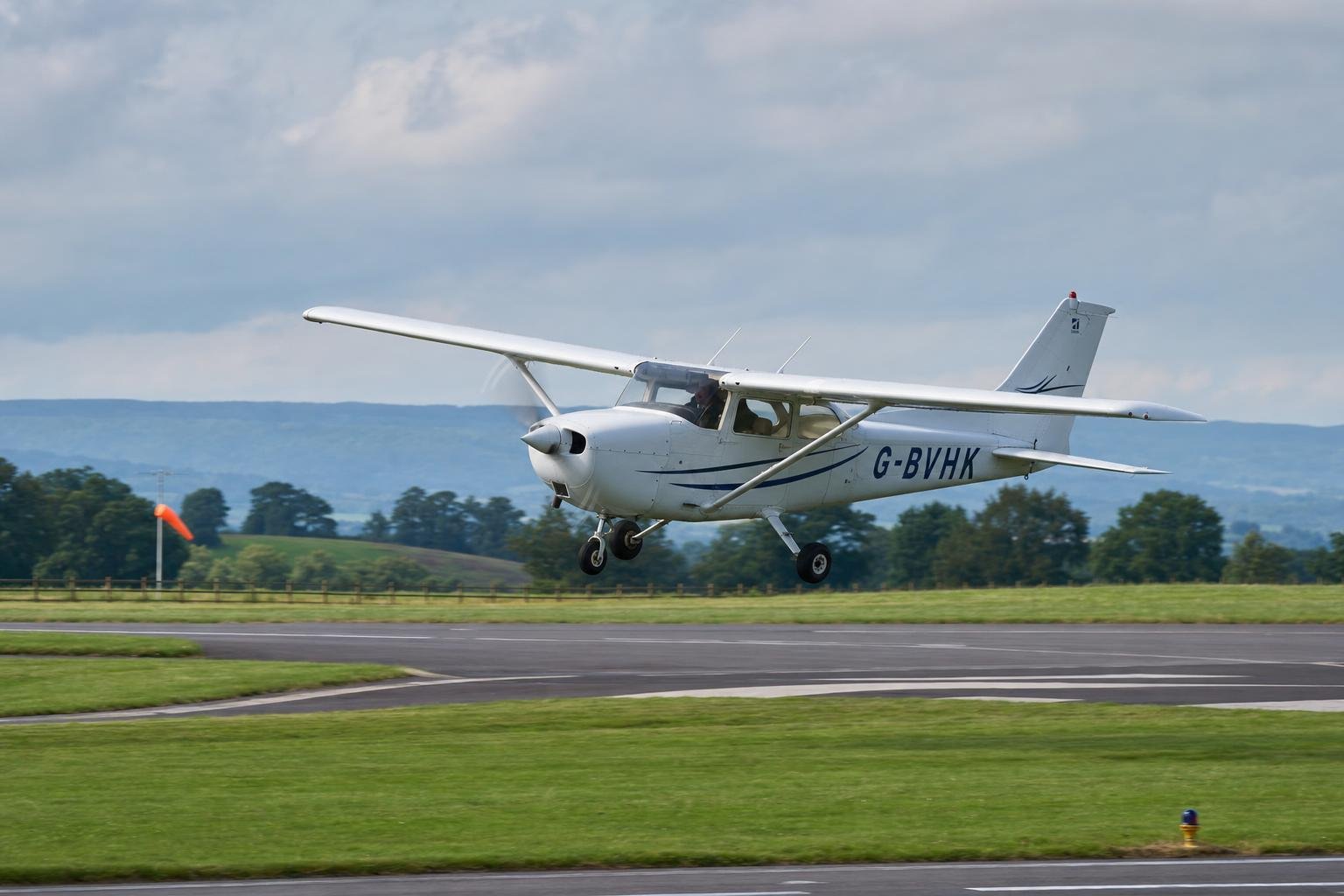
Circuits are the densest landing practice available: roughly ten landings an hour under identical conditions. Leg-by-leg numbers, three self-check gates, desk-specific workarounds for the base turn, common failure modes and drills that turn repetition into measurable improvement.

How crab and sideslip techniques actually work, what a monitor, twist stick and forgiving ground physics do to them, and the three touchdown numbers that reveal whether your crosswind landings are genuinely good.
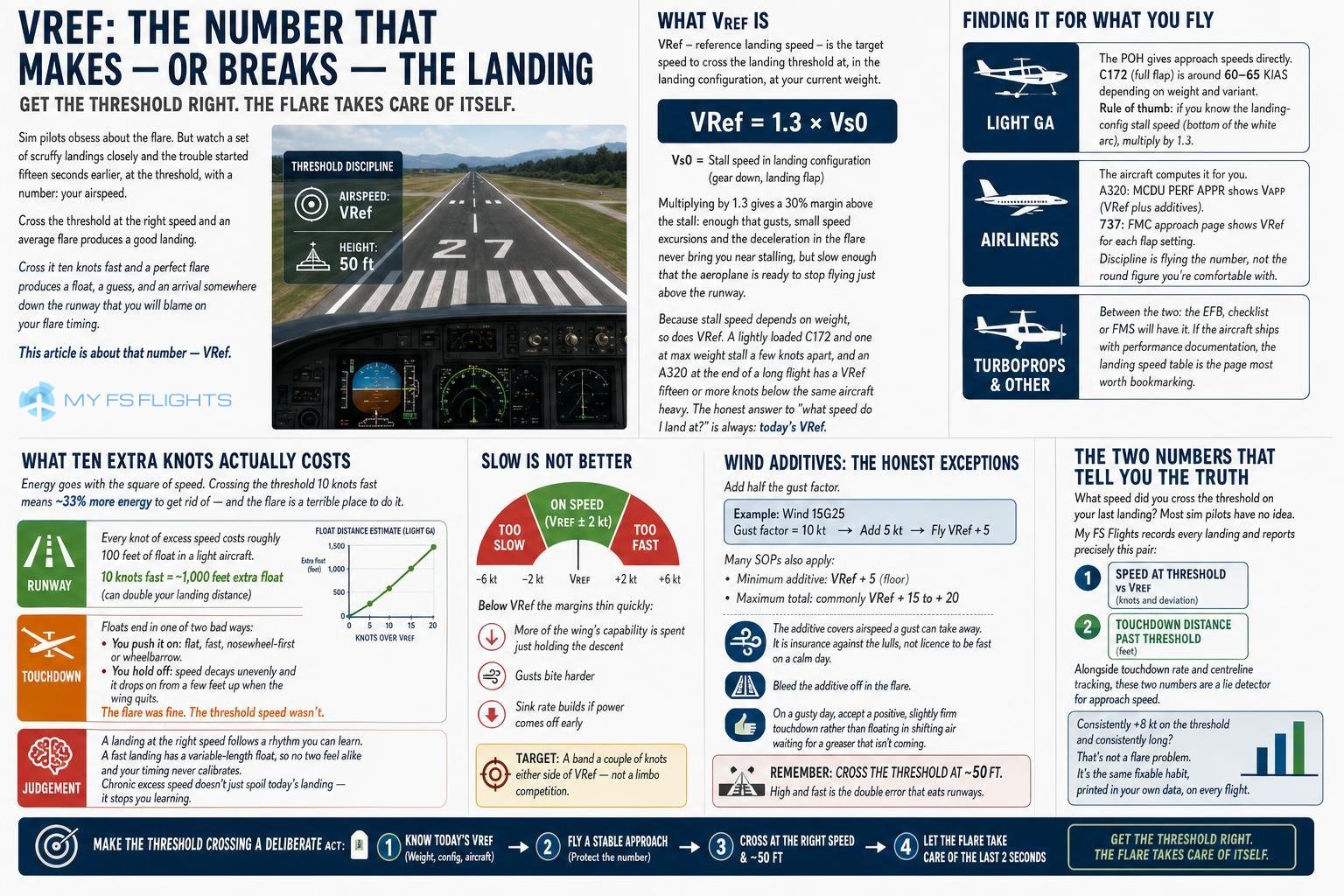
Where VRef comes from, what every knot above or below it costs in float, distance and sink, why wind additives creep, and drills for flying the number consistently at a desk without stick force or peripheral cues.
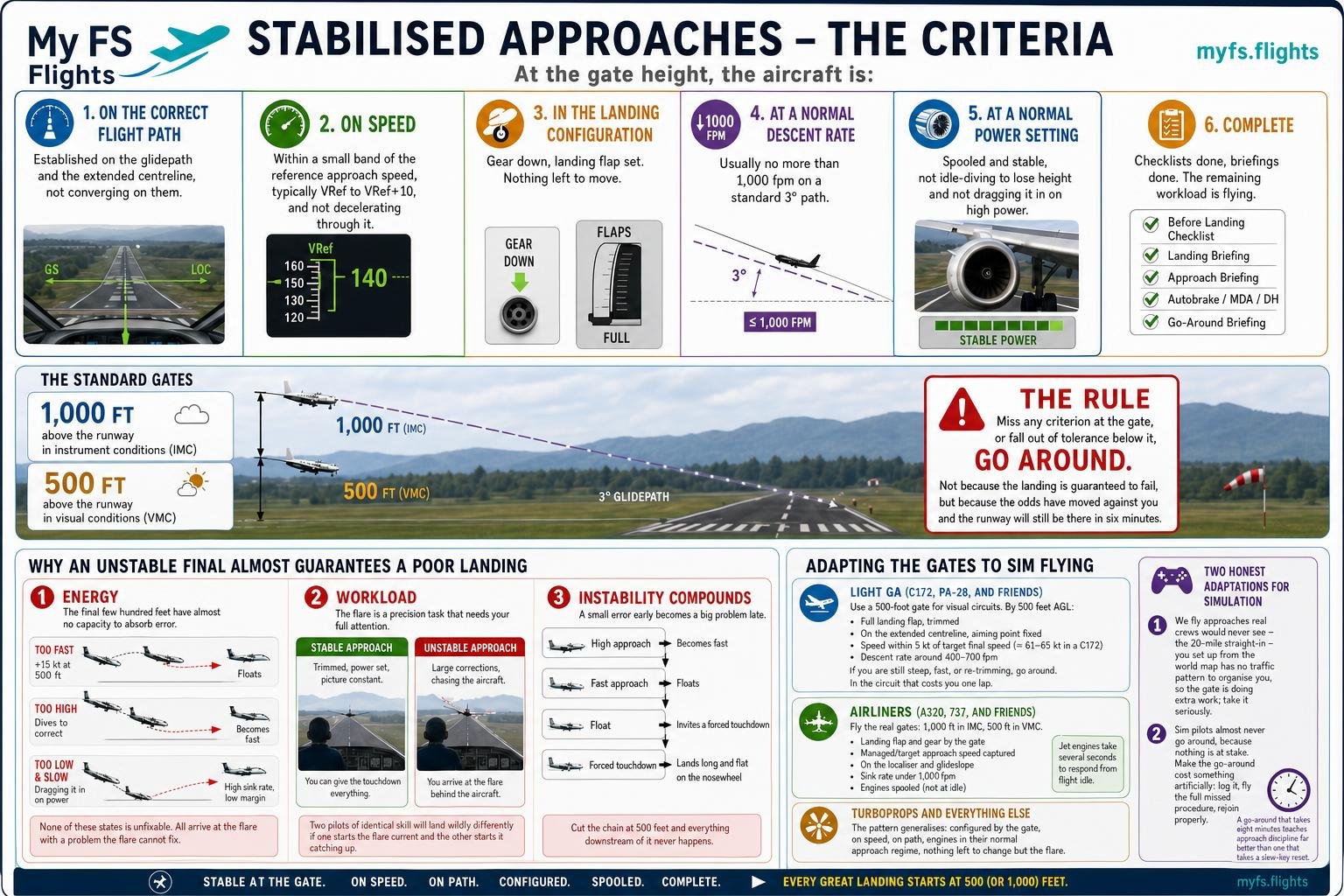
Why most bad landings are decided long before the flare, how airline stabilised-approach gates work, and how to adapt them for sim flying on the simulator — with drills, a diagnostic table and ways to measure your consistency.
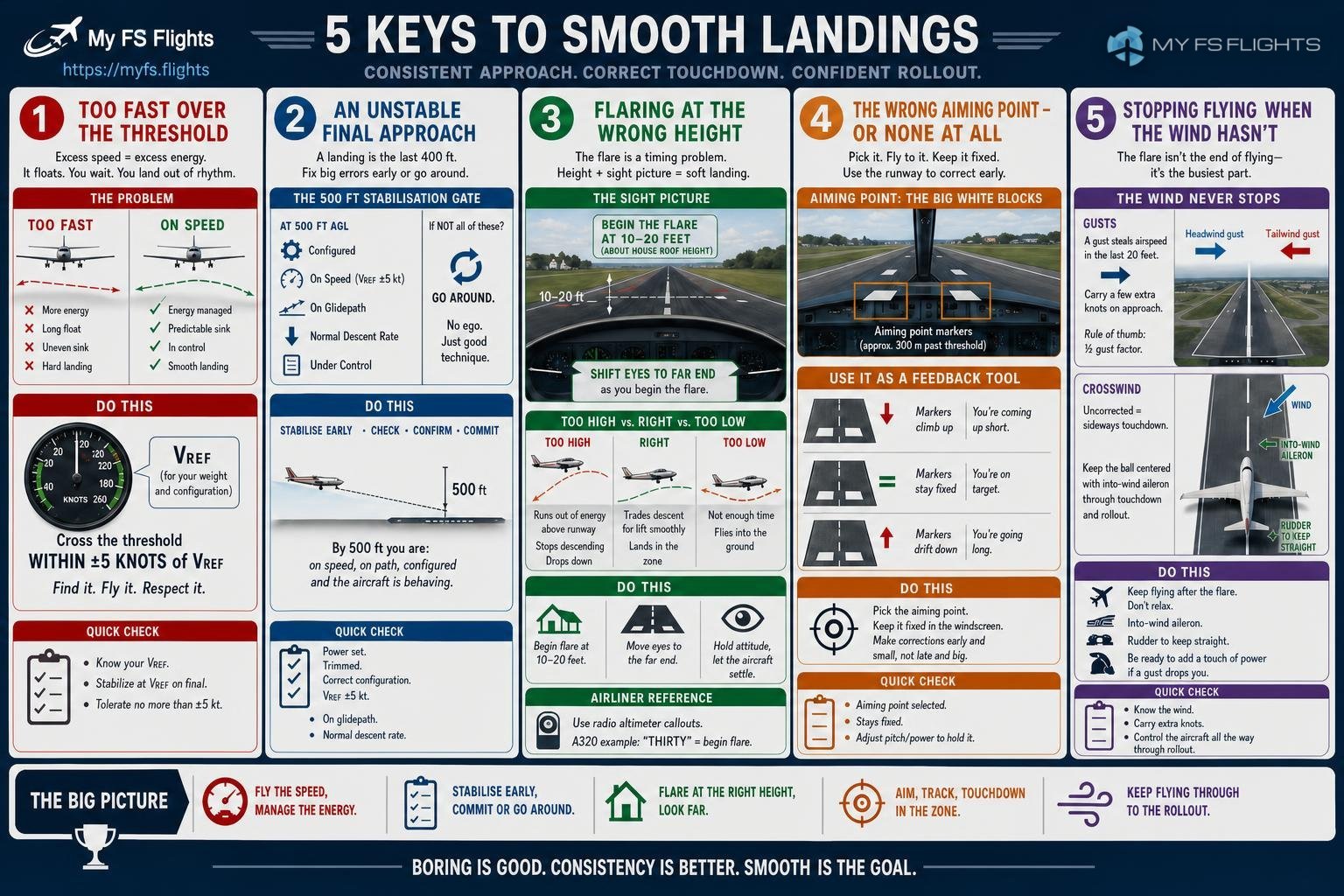
Smooth landings are an output of a stable approach, not a last-second trick. Learn what touchdown rate to aim for, how the flare trades energy, why monitors sabotage your timing, and the five faults behind hard landings.
My FS Flights records, analyses and scores every flight you fly in MSFS, X-Plane and P3D.
Get started free All posts