
The Go-Around: Why Good Pilots Quit Bad Approaches
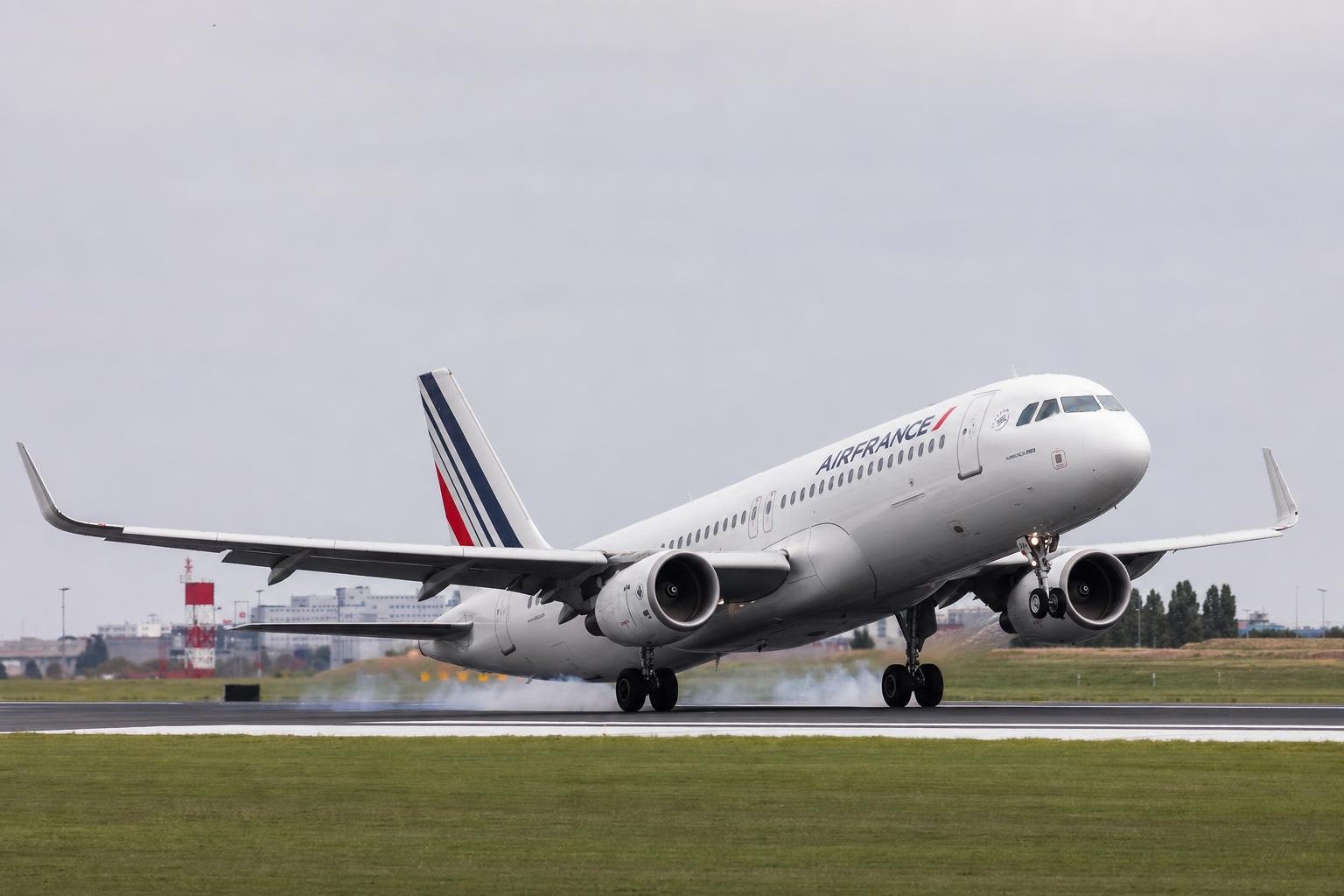
Somewhere behind this search is one of two experiences. Either you called a go-around and the aeroplane turned on you, TOGA pressed at minimums, the nose ballooning towards a stall warning while you shoved against it and tried to remember what came next. Or you have never called one at all, across hundreds of logged landings, and some part of you suspects that a logbook with no missed approaches in it is less a record of skill than a record of never having quit.
Both readers need the same article, because the two problems feed each other. A pilot who can't fly the manoeuvre cleanly won't call it when it matters, and a pilot who never calls it never gets the practice that would make it clean. The slogan everyone has already read, that a go-around is never a failure, is true and useless on its own. In what follows I want to cover the part the slogan leaves out. Why pilots continue bad approaches even when nothing real is at stake, why the manoeuvre itself bites the unprepared, and how to use the one training environment on earth where go-arounds cost nothing.
Ninety-seven times out of a hundred, pilots press on
The Flight Safety Foundation spent years studying unstable approaches in airline operations, and its most quoted finding is brutal. When a crew flies an approach that fails their own operator's stability criteria, they continue and land roughly 97 per cent of the time. Only about three in a hundred unstable approaches end in a go-around. The same body of research puts approach and landing at roughly half of all accidents, despite occupying a small fraction of total flight time. The industry's single most identified safety problem is pilots not quitting approaches they know are bad.
The comfortable assumption is that this is about real-world pressure, schedule, fuel, passengers, the chief pilot's opinion, and that at a desk, with nothing at stake, you would behave better. You won't, and your logbook probably proves it. Continuation bias isn't built from external stakes. It's built from sunk cost, and a sim pilot has plenty of that. Two hours of cruise you don't want to "waste". A landing-rate streak. A flight score. On VATSIM, an audience. For many online pilots the frightening part of a go-around isn't the flying but the radio call, announcing to a controller and everyone on frequency that the approach didn't work. Pilots land unstable approaches to avoid saying four words.
There's a subtler corrosion too. At a desk you always know the approach can be reflown, and that quiet knowledge drains the finality out of the decision. Nothing is ever really committed, so nothing is ever really decided, and "I'll see if it works out" becomes the default posture on every final. The FSF's 97 per cent isn't an airline number. It's a human number, and it survives the removal of every real consequence.
What the thousand-foot gate is actually for
The standard stabilised-approach criteria are widely published. By 1,000 ft above the runway in instrument conditions (500 ft in visual conditions) the aircraft should be in the landing configuration, on the correct path, on speed, typically somewhere between VRef and VRef+20 with little or no allowance below, and sinking at less than 1,000 ft per minute. Those five gates deserve, and will get, an article of their own. What matters here is why the gate sits at 1,000 ft, because most pilots treat the height as arbitrary and therefore negotiable.
On a three-degree slope, 1,000 ft above the field puts you about three nautical miles from the threshold, roughly ninety seconds from touchdown at typical approach speeds. Ninety seconds sounds like plenty. It isn't, because below the gate corrections stop being independent. Pull power to fix a fast approach and you sag below the glideslope. Pitch up to fix the sag and the speed decays. Add power to fix the speed and you're fast again, now at 400 ft instead of 1,000. Each fix induces the next error, and the oscillation converges on the runway rather than on stability. The gate exists because above it there's room for corrections to settle, and below it there provably isn't.
Geometry sharpens the point. Glideslope deviation is angular, so the same needle picture means less and less actual height as you close on the antenna. One dot low is on the order of 35 ft of height at one mile. A needle you could ignore at eight miles is describing a real and shrinking margin at two. And at a desk this all matters more, not less, because a monitor's narrow field of view strips out the peripheral cues, drift, float, sink rate in the corner of the eye, that let a real pilot feel destabilisation coming. On a screen, the instruments and the gates are most of what you have. Use them as a binary. Stable at the gate, or going around. "Nearly stable and improving" is the phrase that produces the 97 per cent.
Why the manoeuvre bites back
The go-around has a reputation as an escape hatch, something you can always pull if things get ugly. It deserves more respect than that, because the aircraft at minimums is configured almost perfectly wrongly for what you're about to ask of it.
Start with trim. On a stable approach the aircraft is trimmed for approach speed at low thrust, a substantially nose-up trim state. Press TOGA and, on anything with underslung engines, go-around thrust adds a strong pitch-up moment on top of that trim. The balloon that sim pilots blame on the flight model is physics behaving correctly. The aircraft is doing exactly what its trim and thrust line dictate, and it will keep pitching towards the stall until you push and retrim. In the real aeroplane this is announced through your arms, and the push force in a mishandled go-around can approach the limit of one arm's strength. A spring-centred desktop stick tells you none of this, which means the single most physical part of the manoeuvre is invisible at a desk. Knowing that in advance is most of the defence. Expect to push, and expect to trim forward early.
Then thrust. A jet engine at approach idle needs several seconds to spool up to go-around thrust. That lag has two consequences worth internalising. First, a go-around called in the flare may still end with the wheels touching the runway while the engines wind up. That touchdown is expected, accounted for, and fine. Hold the attitude and continue the go-around. The catastrophic response is to pull harder to prevent the touchdown, trading your remaining airspeed for a tail strike. Second, the manoeuvre begun at decision altitude will carry you below decision altitude during the transition. Procedure designers assess obstacles on that assumption, which is why the momentary sag below minimums during a go-around isn't a bust of anything.
Configuration comes next, and here light aircraft deserve a specific warning. In some GA types, older Cessna 172s with 40 degrees of flap are the usual example, full-flap climb performance at high weight and high density altitude can be marginal to nonexistent. Retracting to the go-around flap setting isn't housekeeping to be done when convenient. It's the step that makes the climb possible. Retract in stages, though. Dumping all the flap at once trades a large amount of lift for a sink at exactly the height you can least afford one.
The pitch target is a climb attitude, around 15 degrees in transport jets before the flight director takes over, and emphatically not maximum pitch. The acceleration and flap-retraction segment is part of the manoeuvre, and the missed approach climb has a job to do. US procedure design assesses the standard missed against 200 ft per nautical mile, and some procedures publish considerably steeper requirements. The arithmetic is worth memorising because it converts a plate to a vertical speed. Required feet per minute is roughly the gradient in feet per mile times groundspeed in knots, divided by 60. The standard 200 ft/nm at 120 kt is about 400 fpm, which is trivial. A 400 ft/nm missed at 150 kt is 1,000 fpm, which a lazy, shallow go-around will not deliver, and terrain-critical procedures are steep precisely because the terrain is there.
Two boundaries close the subject. A go-around after the reversers have deployed is prohibited in real jet operations, because a reverser isn't guaranteed to restow. The sim will let you change your mind halfway down the rollout, and rehearsing that teaches a habit with no real-world equivalent. And the balked landing, the go-around from the flare or a bounce, is a different manoeuvre from the missed approach at DA, with a different energy state and a much shorter list of immediate actions. Bounce recovery is its own technique and its own article. The point here is only that applying the full DA cleanup sequence at ten feet is the wrong tool.
The recognisable ways it goes wrong
Every botched go-around leaves a signature, and diagnosing which one you flew is more useful than resolving to do better.
- The balloon. Nose pitches hard up under TOGA thrust, speed decays, the aircraft feels like it's fighting you. The wrong response is pulling harder towards a flight director bar or retrimming late. The cause is trim state, as above.
- The sink-through. Go-around called low with engines at idle, and the aircraft settles towards or onto the runway while the engines spool. Wrong response, pull. Right response, hold the attitude, accept the touchdown, continue.
- The flap dump. All the flap retracted in one movement, followed by a sink. Distinguishable from spool lag because airspeed is decaying rather than building.
- The half go-around. Partial power added while drifting down the runway "waiting to see if it works out". This is the signature of a pilot who never made a binary decision, and it collects the worst of both outcomes. Too much energy to land well, too little commitment to climb away.
- Gear mishandled. Retracted before a positive rate, or never retracted at all. The latter is usually discovered as a mysterious noise and drag problem on the second approach.
- Mode confusion. TOGA pressed and the autopilot quietly disconnects, or the go-around mode never arms, and the pilot faithfully flies a flight director that's commanding the wrong thing. This behaviour varies enormously between sim aircraft, so the failure is add-on-specific.
- The wrong lateral path. Runway heading flown instead of the published missed approach. At most fields this is untidy. At Innsbruck or Aspen the published procedure exists because straight ahead doesn't work.
- The level bust. Missed approach altitudes are often low, commonly 2,000 to 4,000 ft above the airfield, while a lightly loaded jet going around can climb at well over 3,000 fpm. Crews who fly a flawless go-around and then blast through the level-off because the cleanup absorbed all their attention are a well-documented pattern, and it reproduces perfectly at a desk.
Your aircraft's go-around, not the generic one
The pitch-power-flaps-gear skeleton is universal. The hands are not. In an Airbus, TOGA is a thrust-lever detent. In a Boeing, it's switches on the levers, and several types offer a reduced-thrust "soft" go-around mode. A GA piston has no TOGA and no flight director rescue. Throttle, carb heat in, pitch, flaps up in stages, all from memory, in that order. Study-level airliner add-ons model the mode logic properly, while default aircraft often don't, which means practising the button choreography transfers only within your add-on, while practising the decision transfers everywhere. Autoflight mode logic by aircraft family is a subject for another article. The actionable point here fits in one sentence. Before the next flight, find out where TOGA is mapped on your hardware, because a remarkable number of sim go-arounds fail in the first three seconds to button-hunting rather than airmanship.
Two special cases deserve a flag so you don't apply the standard sequence to them. A windshear go-around is a different manoeuvre, full thrust, configuration held, stall warning respected, and the ordinary cleanup sequence is actively wrong in it. Windshear escape gets its own treatment. A go-around from a circling approach begins with a turn towards the runway, not directly onto the missed approach course, which is one of the places the plate's text matters more than the magenta line.
One more calibration point. Runway length changes the consequence of continuing, and it shouldn't change the decision. Floating 3,000 ft down a 12,000 ft runway and logging it as a fine landing trains a habit that your next short-field approach will punish. Gliders, for what it's worth, can't go around at all, and glider pilots are consequently the most decision-disciplined aviators flying. The option's absence is what makes the discipline visible.
What the desk can teach, and what it cannot
The honest accounting cuts both ways. The decision transfers almost perfectly, because it's procedural rather than sensory. Gate-based thinking, briefing the missed approach before commencing the approach, and speaking the callouts aloud ("go around, flaps, positive rate, gear up") build exactly the verbal scaffolding real training uses, and they cost nothing to build at a desk.
The body of the manoeuvre doesn't transfer. There's no vestibular system in a chair, so the somatogravic illusion, the false sensation of pitching up under go-around acceleration that has led real crews to push into the ground, doesn't exist at a desk. That illusion, and the family of vestibular traps around it, is its own article. For now, know that it's a fidelity gap you're not training against, not a hazard you've mastered. Likewise the out-of-trim push forces described earlier. Your stick will never tell you about them. A sim-trained pilot's first real go-around will feel violently unfamiliar, and expecting that is the useful preparation.
Two desk-specific hazards round this out. Big-airport scenery drops frame rate exactly on short final, which means the simulator degrades at precisely the decision point, and a stutter at 200 ft is a strong argument for having already made the decision at 1,000. And default offline ATC handles go-arounds poorly or not at all, so offline pilots only ever rehearse the pitch-and-power fragment and never the full procedure loop. Plate, climb, hold or re-vector, second approach or diversion. Diversion planning is another subject with its own article. The fragment worth stealing now is that a briefed missed approach should end somewhere, not just up.
Reading a logbook honestly
A single flight can't tell you whether continuing was the right call. Plenty of unstable approaches end in smooth touchdowns, which is exactly why one-flight self-assessment always vindicates the pilot. The FSF's finding is only visible statistically, across many approaches, where the correlation between failed stability gates and poor touchdowns becomes undeniable. The same is true of your own flying. A go-around rate of zero across a hundred flights doesn't mean a hundred stable approaches were flown. It means every unstable one was continued.
This is where automatic measurement earns its keep, because self-assessment is precisely the mechanism that produces the 97 per cent. I built My FS Flights to assess every approach against a five-criteria stabilised-approach gate, gear, flaps, sink rate, glideslope and centreline, at 1,000 ft, which is the go-around decision made objectively, on every flight, without asking your opinion. The landing report then shows what a continued unstable approach actually cost in touchdown rate, threshold speed against VRef and centreline tracking, and the logbook makes the trends visible. Stabilisation rate, threshold-speed drift, and the go-around rate itself. I'll say this plainly. Any scoring system, my own platform's included, can tempt a pilot to complete a flight they should abandon. The better target is a nonzero, honestly measured go-around rate, and a scored missed approach beats a completed bad landing on any metric that matters.
Making the decision automatic
The economics of the go-around are inverted at a desk, and almost nobody exploits it. A real go-around costs a full circuit, fuel and instructor time. A sim go-around costs ninety seconds and can be repositioned instantly. It's the cheapest manoeuvre the simulator offers and the least practised one in the hobby, which spends its repetitions on crosswind landings for the screenshot instead.
A programme that fixes both the hands and the head.
- The mandatory-go-around session. Ten approaches, every one deliberately ending in a go-around. No landings permitted. This makes the manoeuvre the default outcome rather than the exception, which no real training budget could ever afford.
- Reposition-and-repeat by height. Go-arounds initiated from 1,000 ft, 500 ft, minimums, the flare, and after a deliberate bounce. Five distinct energy states, and each behaves differently. Ten repetitions of each is an hour's work.
- The coin-flip drill. At minimums, an external randomiser decides land or go around. Decoupling the decision from pride, and from the quality of the approach, trains the execution independently of the judgement.
- The recoverability experiment. Repeatedly start finals 20 kt fast and one dot high at 1,500 ft and find out empirically what is fixable by the gate and what never is. This calibrates the 1,000 ft decision from experience instead of doctrine.
- Real triggers. Set the visibility at exactly minimums so some approaches produce a legitimate missed approach rather than a staged one, and fly the full published procedure to its end.
- The hard one. An engine failure at the moment of go-around thrust, arguably the most demanding routine manoeuvre in flying, and nearly free to rehearse at a desk.
Run the drills blocked first, the same go-around, ten times, until the sequence is fluent, and only then interleave them, randomising height and cause. Variability after fluency is what makes the skill available under surprise, and surprise is the only condition under which a real go-around ever arrives.
The next time you fly, brief the missed approach out loud before you start down, including where TOGA is and what altitude you're climbing to. Approaches flown with a fully briefed exit get abandoned when they should be, and approaches flown without one get landed. That, more than any of the handling, is the difference the 97 per cent never closed.