
World Update 22: A Pilot's Guide to Flying America's National Parks
World Update 22 arrived today - two days ahead of its announced July 4th date, just in time for America's 250th birthday - and it is a different kind of World Update. Instead of a country, it takes on an idea: 31 US National Parks and monuments rebuilt with fresh photogrammetry, terrain texturing and elevation work, 46 points of interest, nine discovery flights, and the debut of an entirely new mission type - guided tours, in which a narrator flies you through a park's highlights with the history included. Add a hand-crafted Jackson Hole (KJAC) by Gaya - the only airport inside a US national park - and, courtesy of iniBuilds, the Goodyear Blimp, and you have the most GA-flavoured update the sim has shipped in years. Free, as ever, for all MSFS 2024 owners.
Parks are scattered across two million square miles, so the download needs an itinerary. Here is ours, region by region, Australia-guide style: where to base yourself, what to fly, and which arrivals will test you.
Utah: the Big Five loop
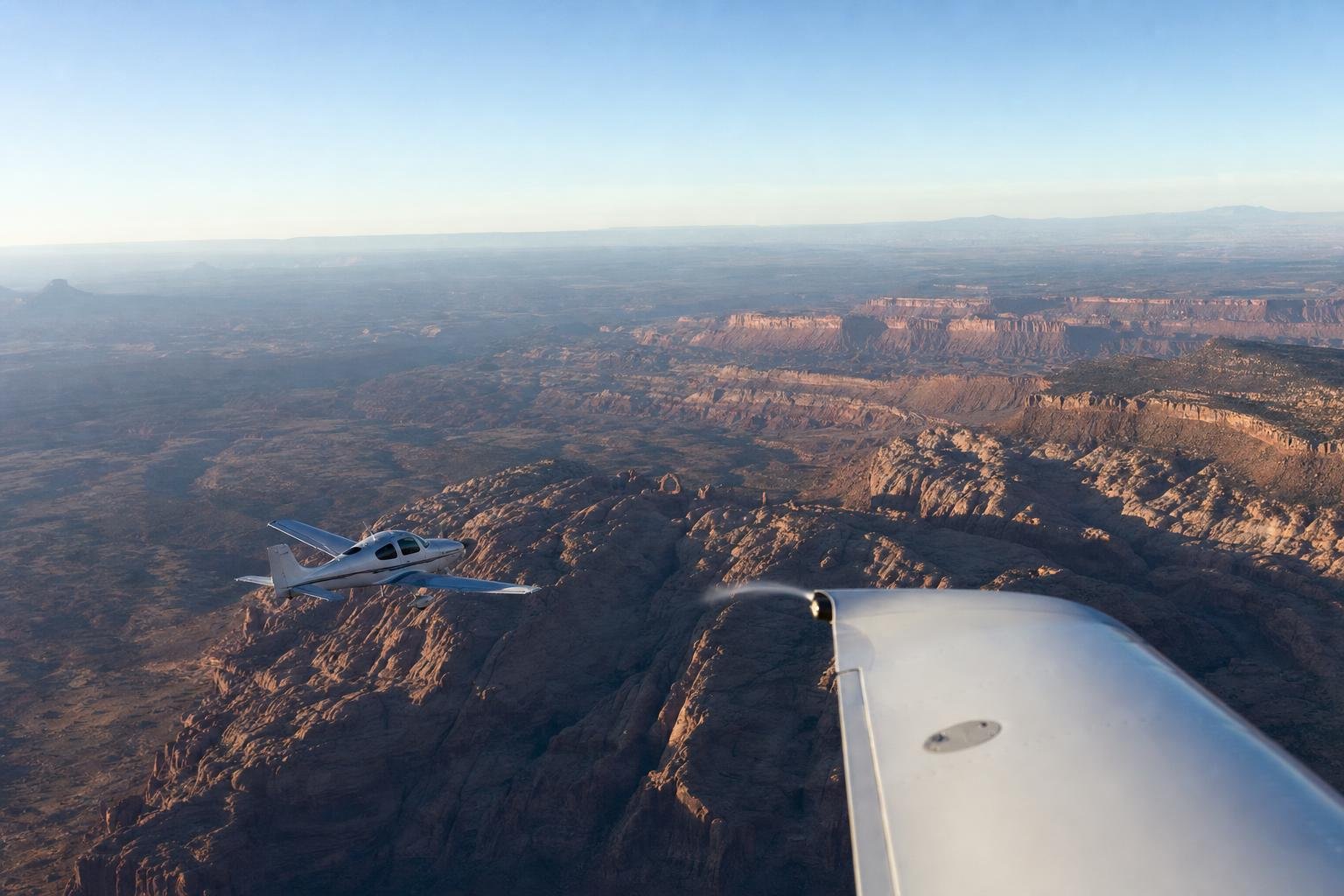
The densest concentration of spectacle in the update: Zion, Bryce Canyon, Capitol Reef, Canyonlands and Arches, all within a light aircraft's morning of each other. Base at Moab (KCNY) for the eastern pair - Canyonlands' river-carved abyss and Arches' improbable stone (Delicate Arch is among the 46 new points of interest) - then work southwest via Capitol Reef's hundred-mile wrinkle to Bryce (KBCE sits right beside the amphitheatre of hoodoos) and finish over Zion's sandstone walls into St. George (KSGU). Two days of flying, five parks, and the single best advertisement for the update. A C182 or SR22 is ideal - fast enough to connect, slow enough to look. Fly Bryce's H125 helicopter guided tour first and let the narrator show you what everything is called.
Wyoming: Jackson Hole and the Tetons
The update's centrepiece airport deserves its own trip. Jackson Hole (KJAC) is famous in aviation for being gorgeous and unforgiving in the same breath - a valley-floor strip at 6,451 feet under the Teton front, where density altitude is a daily briefing item and the mountain wave is real. Fly the Grand Teton guided tour in the DA62 for orientation, then do your own dawn lap of the range and land back at KJAC with threshold speed discipline fully switched on: high-elevation approaches mean higher true airspeeds and longer landing distances - the classic trap. Continue north over Yellowstone country, or east to Rocky Mountain, Great Sand Dunes, Black Canyon of the Gunnison and Mesa Verde for a Colorado week.
Pacific Northwest: weather flying with scenery
Olympic, North Cascades, Crater Lake and Mount Hood make the best live-weather flying in the update - marine layers, mountain cloud, real IFR-or-wait decisions. The tour: Port Angeles (KCLM) around Olympic's rainforest coast; the jagged North Cascades from Bellingham; then south to Crater Lake, whose caldera at 7,000+ feet is a genuinely humbling thing to circle. Its discovery flight is one of the nine - take it. A turboprop earns its keep out here; so does a proper look at the weather before you launch.
California and the desert: contrast flying
The California list runs from the tallest trees on Earth to the hottest place in North America: Redwood, Lassen Volcanic, Kings Canyon, Sequoia, Pinnacles, Joshua Tree and Death Valley. The connoisseur's leg is Sequoia-to-Death Valley - Sierra granite at 14,000 feet falling away to Badwater Basin at 282 feet below sea level in about twenty minutes of flying, the greatest elevation change on the continent. Land at Furnace Creek (L06, -210 feet, one of the lowest airfields in the world) and watch your true airspeed lie to you in the opposite direction from Jackson Hole. Texas pilots get their own desert pair in Big Bend and Guadalupe Mountains - Big Bend's Rio Grande canyons make a superb low-level river run - while the Dakotas contribute Badlands, Wind Cave and Theodore Roosevelt for the prairie-and-canyon crowd. The Dakota trio actually chains into one satisfying day: Rapid City (KRAP) south over the Badlands' striped erosion, west past Wind Cave's rolling grassland to the Black Hills, then the long northern leg to Theodore Roosevelt's broken country near Dickinson (KDIK). Empty airspace, huge skies, and some of the least-flown scenery in the update.
The eastern postscript
The rebuilt parks cluster west, but the discovery flights reach east and are worth your evenings: Acadia (Maine's rock-and-lighthouse coast), Great Smoky Mountains (fly it at dawn for the layered blue ridgelines that named it), the Everglades, and - the sleeper - Dry Tortugas, the sea fort seventy miles off Key West, a proper overwater navigation exercise disguised as sightseeing. None needed new photogrammetry to be worth the flight; the discovery flights are the excuse.
Two practical tips for the whole tour. Fly the desert Southwest parks in the morning: summer convection over Utah and Arizona builds real (and simulated) turbulence and towering cumulus by afternoon, and live weather will happily serve you a monsoon-season thunderstorm over Canyonlands. And resist the sim-rate temptation on the long connecting legs - the update's whole argument is the ground beneath them.
The blimp
The Goodyear Blimp sounds like a novelty and turns out to be the update's secret weapon. Twenty knots of cruise, panoramic windows, no hurry whatsoever: it is purpose-built for exactly this scenery, and an hour drifting over Zion or the Tetons is the closest the sim has come to the observation-deck experience the parks deserve. It is also - genuinely - a handling education: lighter-than-air flight makes you think about wind the way crosswind circuits only gesture at.
Guided tours: worth your attention
The new mission type matters beyond this update. A narrated flight - Bryce in the H125, the Grand Canyon in the Draco X, Grand Teton in the DA62 - is the sim finally doing what the real scenic-flight industry does: context. Flying over Bryce is pretty; flying over Bryce while being told what a hoodoo is and why the Paiute named it is a different experience. If the format lands with the community, expect it everywhere. Try one this weekend and you will see why we think it will.
Make it a summer project
Thirty-one parks is not a weekend; it is a season, and it is best flown as one. Our suggestion: treat the parks like the collection they are. One region per week through the summer - Utah, Wyoming/Colorado, the Northwest, California - flown low, slow and recorded, so every park lands in your logbook and on your personal world map as you go. My FS Flights tracks the airports, regions and states you collect automatically, and scores every one of those high-elevation, density-altitude arrivals while it is at it - KJAC and Furnace Creek will bracket your logbook nicely, 6,700 feet apart in field elevation.
The national parks were called America's best idea. Thirty-one of them just got rebuilt in your simulator, with a narrator on standby and a blimp in the hangar. Go collect them.